


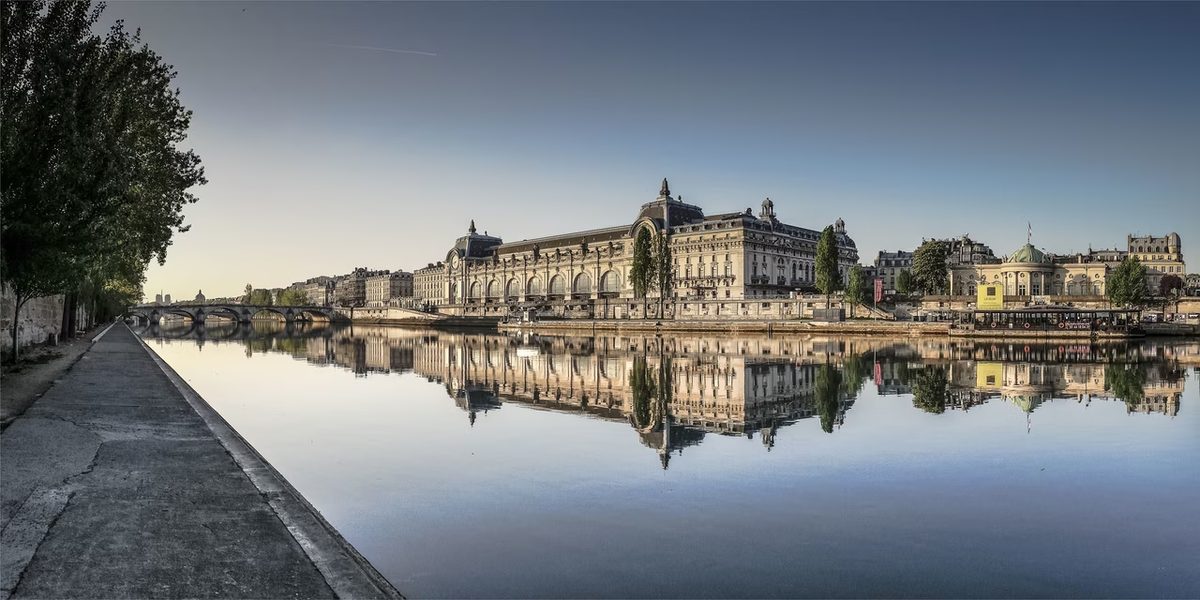
The building that now houses one of the world’s most beloved art collections has a violent history. It was originally constructed in 1810 as the Palais d’Orsay. But it never stayed a palace for long. By 1840, the French government had repurposed the space for the Conseil d’État. Two years later, it became the seat of the Cour des comptes. It was a hub of bureaucracy, not beauty.
Then came the fire.
During the Paris Commune in 1871, the structure was burned. The flames gutted the interior, leaving behind a hollow shell of ruins. For decades, that scarred facade sat in the center of Paris, a reminder of political chaos. Most people assumed the site would be demolished. They were wrong.
A Station for the Modern Age
The change began with a logistical need. The 1900 Exposition Universelle was approaching. Paris needed to handle a massive influx of international visitors. The Compagnie des chemins de fer (Railway Company) had a problem. Their existing terminals were scattered and inefficient. They needed a central hub to connect the city to the rest of France.
They looked at the ruins of the old Palais d’Orsay. It was prime real estate. It sat right on the Left Bank, accessible and central.
Enter Victor Laloux. He was a renowned architect of the era. In 1898, he took on the challenge. He didn’t just build a station. He built a statement. The goal was to marry industrial function with Beaux-Arts grandeur. The result was the Gare d’Orsay.
Construction was shockingly fast. Laloux and his team finished the project in just two years. The station opened in time for the 1900 Exposition. It was a triumph of engineering. Steel, glass, and stone worked together to create a vast, light-filled hall. Trains arrived. Passengers departed. The city moved.
From Tracks to Galleries
The Gare d’Orsay served the railway network for decades. It handled millions of travelers. But the world was changing. High-speed rail began to render the station less relevant. Maintenance costs climbed. The building struggled to adapt to modern transit needs.
By the 1970s, the railway operations wound down. The station closed. Again, demolition seemed inevitable. The building was too large for most commercial uses. It was too fragile for cheap conversion.
But Parisians refused to let it disappear.
There was a growing recognition of the building’s architectural value. It was a masterpiece of late 19th-century design. It represented a specific moment in French industrial history. Campaigners argued that destroying it would be a cultural loss.
The solution was radical at the time. Instead of tearing it down, they would turn it into a museum. The focus would be on art from 1848 to 1914. This period bridged the gap between the Louvre and the Centre Pompidou. There was a void in the market. No major museum covered this specific era of Impressionism and Post-Impressionism.
In 1986, the Musée d’Orsay opened its doors. The transformation
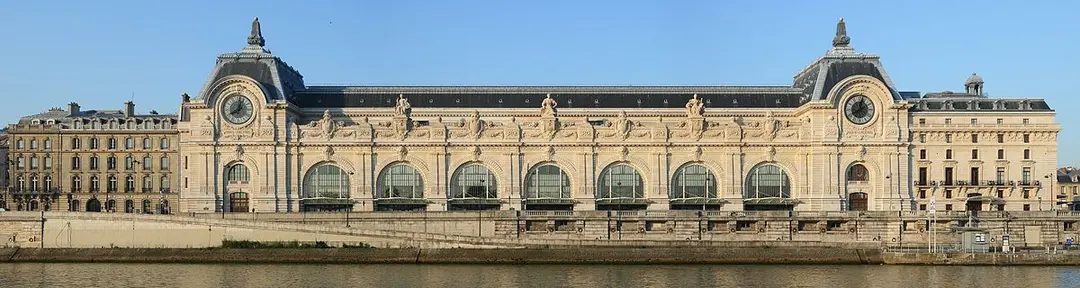

Why the former Gare d’Orsay is an architectural masterpiece
The building itself is the first exhibit. When Victor Laloux’s 1900 Beaux-Arts railway station was converted into a museum in 1979, architects made a deliberate choice. They didn’t hide the structure. They kept the ironwork. They kept the glass.
The result is a space that breathes. The central nave acts as a massive light well. Sunlight floods the three levels, illuminating thousands of artworks without relying entirely on artificial bulbs. It’s rare to find a gallery this open, this airy, and this historically preserved in one place.
Where to find the world’s best Impressionist collection
If you are hunting for the definitive museum of Impressionism in Paris, look no further than Orsay. It holds the largest collection of Impressionist and Post-Impressionist art globally. Over 5,000 pieces reside within its walls. This isn’t just a sampling. It’s the core archive of the movement.
You will see the masters here. Van Gogh’s self-portraits hang alongside Renoir’s Bal du moulin de la Galette. Cézanne, Monet, Degas—they are all present. The density of high-quality works is staggering. Walking through these halls, you aren’t just seeing isolated paintings. You’re tracing the evolution of modern vision.
The scale of the space changes how you view the art. Large canvases fit naturally into the vast nave. Small studies feel intimate in the side galleries. The architecture supports the art, rather than competing with it.
This preservation matters. It keeps the original context alive. The grandeur of the train shed mirrors the ambition of the artists who rebelled against traditional salon painting. They wanted to capture light. The building gives them exactly that.
What happens when you stand beneath that glass roof, surrounded by a century of visual rebellion? The distinction between the container and the content blurs. You realize the museum isn’t just a warehouse for old pictures. It’s a monument to how we learned to see differently.


