NASA has successfully conducted a record-breaking test of an experimental plasma thruster, marking a significant milestone in the development of propulsion systems capable of carrying humans to Mars. The engine, powered by lithium metal vapor, operated at 120 kilowatts —the highest power level ever achieved in the United States for this class of electric propulsion.
This breakthrough demonstrates that the technology can handle the extreme conditions required for deep-space travel. By validating the engine’s performance at these unprecedented levels, NASA moves closer to realizing nuclear electric propulsion, a system essential for reducing the time and mass required for crewed missions to the Red Planet.
A Record-Breaking Test
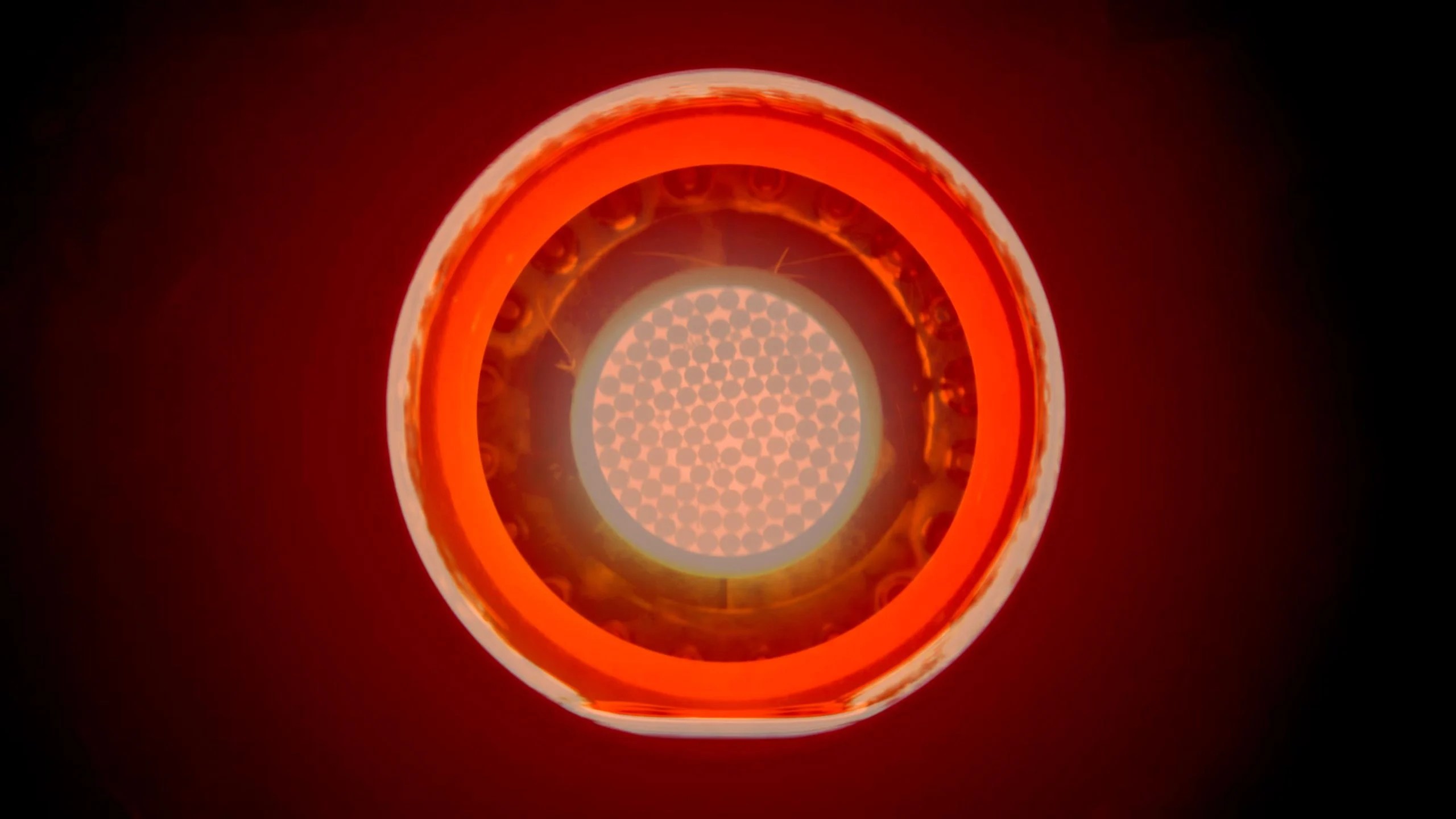
The test took place on February 24 at NASA’s Jet Propulsion Laboratory (JPL) in Southern California. Engineers fired the magnetoplasmadynamic (MPD) thruster inside a specialized, water-cooled vacuum chamber designed for high-power electric propulsion research.
During five separate ignition sequences, the thruster’s tungsten electrode reached temperatures exceeding 5,000 degrees Fahrenheit (2,800 degrees Celsius), glowing brilliant white. The engine produced a vivid red plasma plume, accelerating ionized gas to create thrust. This specific type of thruster uses electric currents and magnetic fields to accelerate plasma, offering a different approach than the ion thrusters currently in use.
“This marks the first time in the United States that an electric propulsion system has operated at power levels this high,” said NASA Administrator Jared Isaacman. “The successful performance of our thruster in this test demonstrates real progress toward sending an American astronaut to set foot on the Red Planet.”
Why This Technology Matters for Mars
Current spacecraft rely on chemical rockets for launch and initial acceleration, but these systems are inefficient for long-duration interplanetary travel. Electric propulsion offers a compelling alternative: it is up to 90% more fuel-efficient than chemical rockets.
However, traditional electric thrusters provide very low thrust, requiring years to accelerate a spacecraft. The new MPD thruster aims to solve this by combining high efficiency with significantly higher thrust.
- Efficiency: Uses far less propellant than chemical rockets.
- Power: The recent test reached 120 kilowatts, which is more than 25 times greater than the power of the thrusters currently flying on NASA’s Psyche mission.
- Speed Potential: While Psyche uses electric propulsion to reach speeds of 124,000 mph over time, MPD thrusters could deliver much greater thrust, potentially shortening transit times to Mars.
Although MPD technology has been studied since the 1960s, it has never been used operationally in space. This test proves that the hardware can survive the intense heat and power demands required for practical use.
Scaling Up for Human Exploration
The 120-kilowatt test was a critical proof-of-concept, but the ultimate goal is much larger. For a crewed mission to Mars, NASA estimates a need for between 2 and 4 megawatts of total power. This would likely require an array of MPD thrusters operating continuously for over 23,000 hours.
The next major challenge is scaling up the technology. Researchers aim to increase individual thruster output to between 500 kilowatts and 1 megawatt. To achieve this, engineers must ensure that components like electrodes can withstand prolonged exposure to extreme temperatures without degrading.
James Polk, a senior research scientist at JPL who contributed to previous missions like Dawn and Deep Space 1, noted the significance of the current success.
“It’s a huge moment for us because we not only showed the thruster works, but we also hit the power levels we were targeting. And we know we have a good testbed to begin addressing the challenges to scaling up,” said Polk.
The Path Forward: Nuclear Electric Propulsion
This project is part of NASA’s broader Space Nuclear Propulsion initiative, which began in 2020. The strategy involves pairing these high-power electric thrusters with nuclear reactors. Nuclear power sources can provide the massive electrical energy required to run MPD thrusters at megawatt levels, something solar panels cannot do efficiently at the distance of Mars.
The development is a collaboration between JPL, Princeton University, and NASA’s Glenn Research Center, managed by the Marshall Space Flight Center. By integrating nuclear power with advanced plasma thrusters, NASA hopes to reduce launch mass and carry the heavy payloads necessary for life support and habitat modules on future Mars missions.
Conclusion
NASA’s successful test of a 120-kilowatt MPD thruster confirms that high-power electric propulsion is technically feasible. While significant engineering challenges remain in scaling the technology to megawatt levels and ensuring long-term durability, this milestone validates the core design. This progress brings the agency one step closer to developing the efficient, high-thrust systems needed to safely transport humans to Mars.