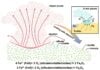
Physical activity is widely recognized as beneficial for cognitive health, but the precise biological mechanisms linking movement to brain function have remained somewhat elusive. New research from Pennsylvania State University suggests that the act of moving—specifically the contraction of abdominal muscles—triggers a hydraulic mechanism that flushes waste products from the brain. This discovery provides a tangible physiological explanation for why regular movement is critical for preventing neurodegeneration.
The Abdominal-Brain Connection
The study, led by neuroscientist Patrick Drew and biomedical engineer Francesco Costanzo, challenges the traditional view of the brain as an isolated organ. Instead, it highlights a direct mechanical link between the body’s core and the brain’s internal cleaning system.
The researchers focused on the role of cerebrospinal fluid (CSF), a liquid that surrounds the brain and spinal cord. CSF is essential for removing metabolic waste products that accumulate during daily neural activity. If these toxins are not cleared effectively, they can contribute to conditions such as Alzheimer’s disease and other forms of neurodegeneration.
The core finding is that contractions of the abdominal muscles act like a pump. When these muscles tense—a routine occurrence during walking, standing up, or even twisting—they push blood and fluid from the abdomen into the spinal cord. This pressure travels upward, causing the brain to shift slightly within the skull. This subtle movement facilitates the flow of CSF through the brain’s sponge-like tissue, pushing waste out into the subarachnoid space (the layer between the brain and the skull) where it can be absorbed and removed by the body.
Observing the Mechanism in Action
To visualize this process, the team utilized advanced imaging techniques on mice, whose physiology closely mirrors that of humans. By creating small windows in the skulls of living mice, researchers used two-photon microscopy to capture high-definition images of brain movement in real time.
Key observations included:
* Immediate Response: When mice walked on treadmills, their brains shifted immediately following abdominal contractions that precede each step.
* Causality Confirmed: In experiments with anesthetized mice, researchers applied light pressure to the abdomen. This mimicked natural muscle contraction and resulted in identical brain shifts, confirming that abdominal pressure is the direct driver of this movement.
* Reversibility: The brain returned to its baseline position as soon as the abdominal pressure was released, indicating a rapid and responsive hydraulic system.
“Our research explains how just moving around might serve as an important physiological mechanism promoting brain health,” says Patrick Drew. “The motion is so small—it’s what’s generated when you walk or just contract your abdominal muscles—but it could make such a difference for your brain health.”
Modeling the “Dirty Sponge”
To understand the fluid dynamics involved, the team employed computer simulations. Francesco Costanzo, who led the computational modeling, likened the brain to a sponge.
“If you have a dirty sponge, how do you clean it? You run it under a tap and squeeze it out,” Costanzo explains. In this analogy, the abdominal contractions provide the “squeeze,” while the resulting pressure changes drive the CSF through the brain’s soft tissue, effectively washing away cellular debris.
Micro-computed tomography (CT) scans further mapped the network of veins connecting the abdominal cavity, spinal cord, and brain, revealing the physical infrastructure of this “pump.” While the brain is far more complex than a simple sponge, this model offers a clear framework for understanding how mechanical forces influence fluid flow in the central nervous system.
Resolving the Sleep vs. Wakefulness Paradox
This research also sheds light on a long-standing mystery in neuroscience: why CSF flow direction changes between sleep and wakefulness.
- During Sleep: CSF flows into the brain from the subarachnoid space, helping to clear waste accumulated during the day. This is part of the brain’s glymphatic system, which is most active during rest.
- During Wakefulness: The new study suggests that physical movement drives CSF out of the brain. This bidirectional flow ensures that waste is continuously managed, rather than accumulating unchecked.
Until now, the variation in flow direction was not fully understood. The Penn State study proposes that physical activity provides the mechanical force necessary to expel waste during waking hours, complementing the passive clearance processes that occur during sleep.
Why This Matters
This finding underscores that brain health is inextricably linked to bodily movement. It is not merely about cardiovascular fitness or muscle strength; it is about the mechanical hygiene of the brain itself.
For readers, the implication is straightforward: sedentary behavior may hinder the brain’s natural cleaning processes. Even minor movements—such as shifting weight while standing, taking short walks, or engaging in core-strengthening exercises—can activate this hydraulic pump. This offers a compelling, science-backed reason to incorporate regular movement into daily routines, not just for physical fitness, but for long-term cognitive preservation.
In summary, the body and brain function as an integrated hydraulic system. By moving our bodies, we actively participate in clearing the neural pathways that keep our minds sharp and healthy.