


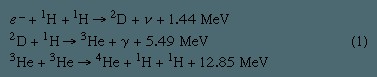
The Sun’s core is a violent place. Immense pressure and density force nuclei together, overcoming the natural electrostatic repulsion that keeps protons apart. It is a high-stakes game of nuclear physics. In this environment, energy is generated through a specific chain of events.
But there was a problem. A decades-long puzzle in astrophysics known as the solar neutrino problem. Detectors on Earth saw far fewer neutrinos coming from the Sun than theory predicted. The missing particles weren’t just a measurement error. They pointed to a deeper mystery in how matter works.
The Inverse Beta-Decay Process
To understand the deficit, you have to look at the source. The Sun runs on fusion. Specifically, it relies on the proton-proton chain. Most of the time, protons bounce off each other. Occasionally, one proton gets close enough to another to interact. This doesn’t happen every second. It is a rare collision for any single proton.
When they do connect, an inverse beta-decay occurs. One proton transforms into a neutron. It combines with the second proton to form a deuteron. This process releases energy. It also releases two other particles.
- An electron (e −).
- A neutrino (ν).
The neutrino is a subatomic particle. It has almost no mass. It interacts with matter extremely weakly. It passes through planets like light through glass. Yet, billions of them stream through your body every second.
The Missing Count
Theory stated that for every fusion event, a neutrino is produced. If the Sun’s core is fusing hydrogen as models suggest, Earth should be bombarded with a specific, steady flux of these particles. Experimental physicists built detectors to catch them. They waited. They counted.
The numbers didn’t match.
The observed flux was significantly lower than the predicted flux. The gap was large. It wasn’t a small margin of error. It was a fundamental discrepancy. For a long time, scientists wondered if the solar models were wrong. Did the Sun burn differently than calculated? Was the core cooler? Were the fusion rates inaccurate?
The data suggested otherwise. The Sun seemed to be working exactly as theory said. The energy output matched the predictions. The core temperature held steady. The only variable that didn’t fit was the neutrino count itself.
The Sun was shining brightly. The math worked. The neutrinos simply weren’t arriving in the expected numbers.
This wasn’t just a minor adjustment. It required rethinking the nature of the neutrino. If the particles were disappearing, were they vanishing? Or were they changing identity before reaching Earth? The answer would require a shift in the Standard Model of particle physics. The missing neutrinos weren’t lost. They were hiding in plain sight, transformed into types our early detectors couldn’t see.
The Mechanics of Stellar Fusion
Most hydrogen atoms will never fuse. They drift through space, too cold, too far apart. But hydrogen is so abundant that rare events add up. This scarcity is exactly why fusion dominates the Sun’s energy budget. The chain reaction is slow at first. A deuteron meets a proton to create helium-3. Those particles collide again to form helium-4. Four hydrogen atoms vanish. One helium atom remains. The excess energy escapes as gamma rays and neutrinos.
Temperature matters immensely here. Nuclei must smash through an electrostatic barrier to touch. If they lack heat, they bounce off. The reaction rate scales with the fourth power of temperature. A small rise in heat means a massive jump in energy output.
Tracking the Invisible Particles
Equation (1) tracks this conversion. For every two hydrogen atoms processed, one neutrino emerges. It carries an average energy of 0.26 MeV. That is only 1.3 percent of the total release. Yet the flux is staggering. Eight times ten to the tenth power neutrinos strike every square centimeter of Earth every second. They pass through us without a trace.
Detecting them required digging. Raymond Davis built his experiment deep inside the Homestake gold mine in Lead, South Dakota. He went underground to shield his detectors from cosmic noise. The Nobel Prize followed in 2002. But the early results were wrong. Or so it seemed.
The neutrinos from the first step of the chain have low energy. Below 0.42 MeV. Davis’s equipment could not see them. He relied on higher-energy neutrinos from later steps. The count was far lower than theory predicted. The Sun was running dark? Or was the physics broken?
Solving the Solar Neutrino Problem
Two explanations floated. One: the subatomic rates are miscalculated. The Sun burns differently than we thought. It is a mundane possibility. It keeps the standard model intact. It is also likely wrong.
The other option was stranger. What if the neutrinos change? As they travel through the Sun’s dense mass, do they transform into a type our detectors cannot catch? This oscillation would imply neutrinos have mass. A tiny mass, but a mass nonetheless. This contradicted the prevailing belief that they were massless.
The answer arrived from 2,100 meters underground. The Sudbury Neutrino Observatory sits in a Creighton nickel mine near Sudbury, Ontario. The data was clear. The missing neutrinos had not vanished. They had changed flavor. The solar neutrino problem was solved. Neutrinos oscillate. They have weight. The Sun is brighter than the early detectors could see, but the universe is weirder than we expected.