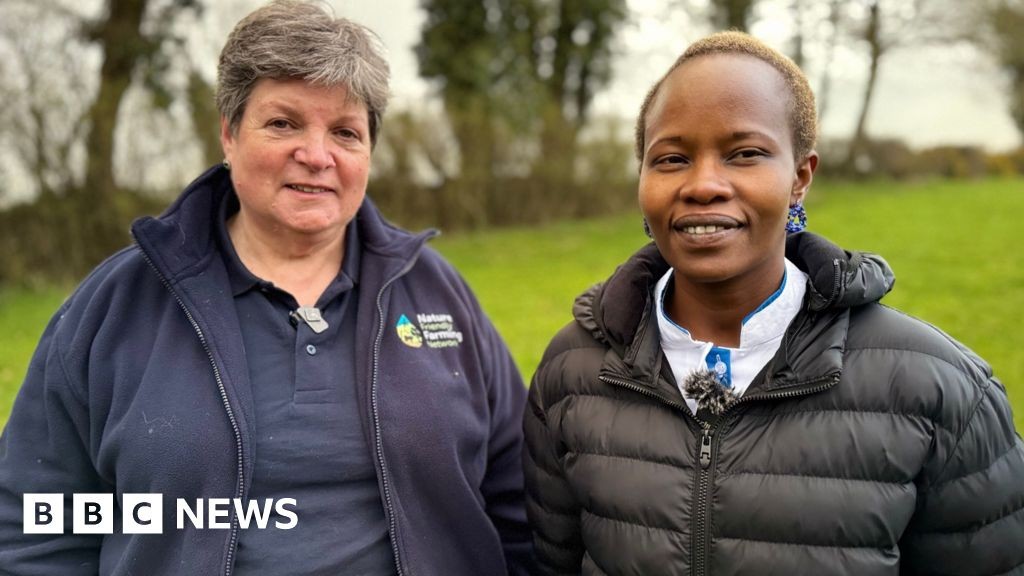
Two farmers, separated by thousands of miles and vastly different landscapes, are united by a single, growing threat: climate change. Jackline Mugoboka, a Rwandan farmer, and Louise Skelly, a sheep farmer from County Down, recently connected to share their experiences with increasingly erratic weather patterns and the urgent need for adaptation. Their stories highlight a global crisis that impacts agriculture everywhere, though in uneven ways.
The Uneven Burden of Climate Change
Mugoboka’s farm in Rwanda, though small at just 2.5 acres, represents the average agricultural plot for many in the country. Women make up 90% of Rwandan farmers, making them disproportionately vulnerable to climate shocks. Rwanda is still recovering from devastating floods and landslides in 2023, which underscores the severity of the crisis. Mugoboka explains that climate change isn’t just an environmental issue, but a profound economic and social burden for women who shoulder most of the agricultural labor.
Skelly, on the other hand, farms in a more developed agricultural system. Still, she has witnessed firsthand the escalation of extreme weather events in Northern Ireland over the last decade. Floods are becoming more frequent and intense, a trend that contradicts historical norms and challenges traditional farming practices.
Shared Experiences, Different Resources
Both farmers note that climate change is driving new and unpredictable outbreaks of disease. In Rwanda, farmers face sudden disease outbreaks in crops and livestock, while Skelly is now considering vaccinating her sheep against bluetongue virus—a disease previously confined to Africa. The virus recently reached Northern Ireland via midges traveling up the Irish seaboard from England, where nearly 300 cases were reported since July.
The key difference, Mugoboka points out, isn’t the existence of the problem but access to resources. Africa produces only 4% of global greenhouse gas emissions, yet bears a disproportionate share of the impacts due to limited capacity for adaptation and mitigation. Northern Ireland, while experiencing its own challenges, has greater infrastructure and financial means to respond.
Adaptation and Resilience
Despite the dire circumstances, both farmers are taking steps toward resilience. Skelly has implemented tree planting to combat flooding and provide shade for livestock during hotter summers. Mugoboka works with farmers to improve sustainable practices, recognizing that local solutions are vital in the face of a global crisis.
“No one is immune from climate shocks,” Mugoboka stated, “only that maybe you have different coping strategies.”
The shared experiences of these two women demonstrate that climate change is not a distant threat but a present reality impacting farmers worldwide. While the burdens are unevenly distributed, the need for adaptation and mitigation is universal.