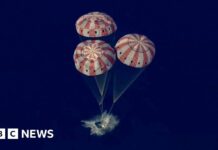
The successful completion of NASA’s Artemis II mission has provided a moment of profound inspiration. By sending four astronauts on a sweeping loop around the far side of the Moon and returning them safely to Earth, the Orion spacecraft has proven that human deep-space travel is once again a reality. However, while the mission was a technical triumph, it also highlighted a sobering truth: circling the Moon is a relatively simple feat. The true challenge—landing humans on the lunar surface and staying there —remains a daunting engineering and logistical mountain to climb.
The Shift from Cold War Politics to a Lunar Economy
To understand why the current Artemis program is different from the Apollo era, one must look at the motivation behind them. The Apollo missions of the 1960s were driven by the geopolitical urgency of the Cold War; once the United States demonstrated superiority over the Soviet Union, public and political interest evaporated, and the program was scrapped.
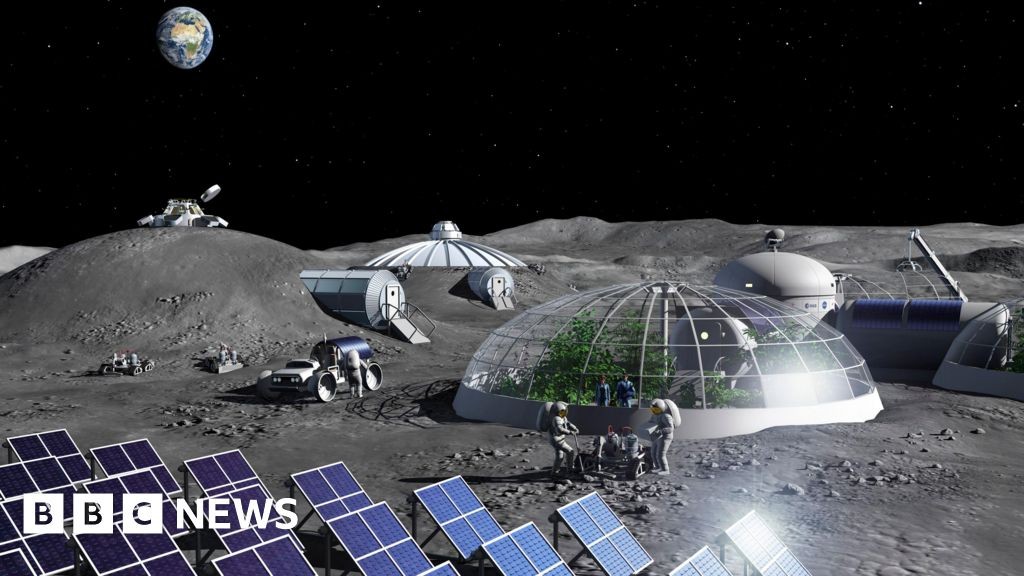
In contrast, NASA’s current vision is built on sustainability and economic development. The goal is not just a “flag and footprints” mission, but the establishment of a permanent lunar base.
– The Ambition: NASA aims for one crewed lunar landing per year starting in 2028.
– The Vision: ESA Director General Josef Aschbacher suggests that a “Moon economy” is inevitable, though it will require significant time to build the necessary infrastructure.
The “Lander Problem” and Engineering Hurdles
The most significant bottleneck in the Artemis timeline is the development of lunar landers. Unlike the compact Apollo modules, modern missions require massive landers capable of transporting heavy infrastructure, including pressurized rovers and base components.
NASA has turned to the private sector to solve this, contracting two giants: SpaceX and Blue Origin. However, both are facing significant setbacks:
– SpaceX’s Starship: Currently estimated to be at least two years behind schedule.
– Blue Origin’s Blue Moon: Facing delays of at least eight months, with unresolved design issues.
Furthermore, the logistics of getting these heavy loads to the Moon are incredibly complex. NASA plans to use an orbital refueling strategy, where a depot in Earth’s orbit is topped up by more than ten separate tanker flights. This requires transferring super-cold liquid oxygen and methane in the vacuum of space—a process so difficult that experts warn if it cannot be mastered easily on a launch pad, doing it in orbit will be “fiendishly difficult.”
A New Space Race: The China Factor
The pressure to meet the 2028 landing target is not just technical; it is deeply political. The deadline aligns with renewed U.S. space policies, but independent analysts remain skeptical of its feasibility.
Adding to the urgency is the rapid ascent of China, which aims to land astronauts on the Moon by approximately 2030. Interestingly, China’s approach may be more pragmatic: they are utilizing a simpler two-rocket system that avoids the high-risk, high-complexity in-orbit refueling that the American Artemis program relies upon. If NASA’s complex logistics fail to materialize, China could potentially claim the lunar surface first.
The Long Road to Mars
While the Moon is the immediate stepping stone, Mars remains the ultimate prize. While figures like Elon Musk suggest Mars could be reached by the end of this decade, most experts point toward the 2040s as a more realistic timeframe.
The leap from the Moon to Mars is astronomical in scale. A journey to the Red Planet involves:
– Seven to nine months of travel through intense radiation.
– Zero possibility of rescue once the journey begins.
– Extreme landing complexities due to Mars’s thin atmosphere.
Conclusion
The Artemis II mission has successfully reignited the human spirit of exploration, but the path to a lunar base is fraught with technical risks and intense international competition. Whether humanity establishes a permanent presence on the Moon or falls behind in a new space race depends on mastering the incredibly complex physics of orbital refueling and heavy-lift landings.