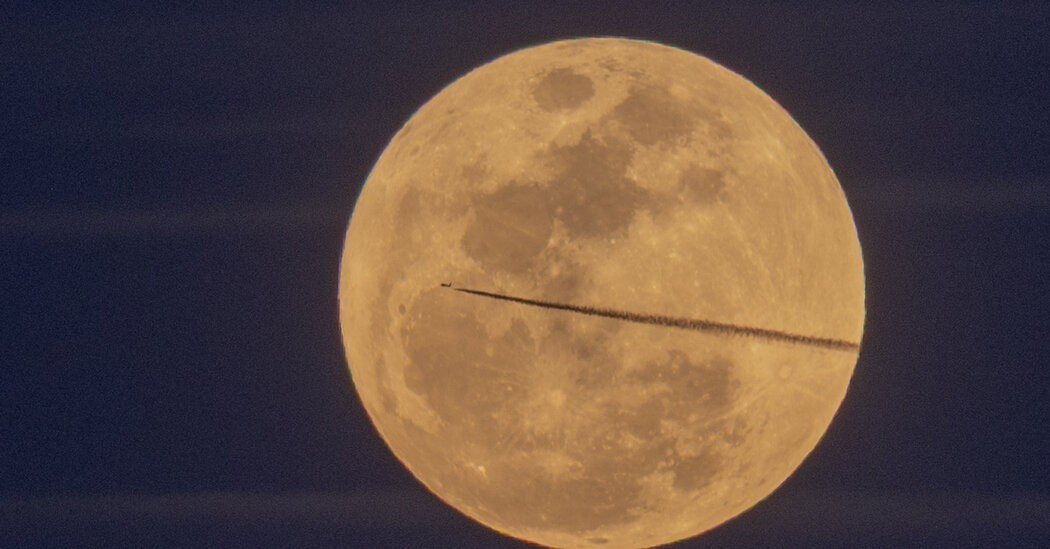
The phrase “the dark side of the moon” carries a heavy weight of mystery and poetic allure. From the psychedelic rock of Pink Floyd to countless works of science fiction, it has become a metaphor for the unknown. However, in the realm of astronomy, the term is more of a linguistic misunderstanding than a scientific reality.
The Science of Light and Rotation
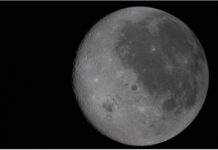
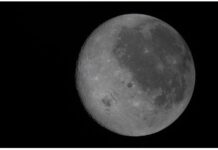
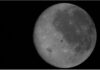
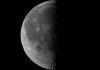
To understand why the term is technically incorrect, one must look at how the Moon interacts with both the Earth and the Sun. Because the Moon is tidally locked to our planet, it rotates on its axis at the same rate it orbits the Earth. This means one side—the “near side”—always faces us.
The opposite side is often called the “dark side,” but this is a misconception. If “dark” implies a lack of light, the term fails:
– The far side of the Moon receives just as much sunlight as the near side.
– It experiences day and night cycles just like any other part of the lunar surface.
– It is only “dark” in the sense that it is hidden from the view of Earth.
In scientific circles, the correct designation is the far side.
A History of Hidden Landscapes
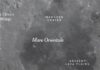
For much of human history, the far side was a literal void of knowledge. While we could watch the lunar phases from our backyards, the far side remained a mystery until the dawn of the space age.
The process of unveiling this landscape has been a gradual, international effort:
– The Late 1950s: Soviet probes began the first photographic attempts to capture the far side’s surface.
– 1968: The NASA Apollo 8 mission provided the first human glimpse of the Moon’s hidden face.
– 2019: China’s Chang’e 4 mission achieved a historic milestone by making the first successful soft landing on the lunar far side.
These missions revealed a landscape that is starkly different from what we see from Earth: a densely cratered, rugged, and battered expanse.
The Expanding Circle of Witnesses
Humanity’s encounter with the far side is moving from remote photography to direct human observation. Currently, only 24 astronauts —all Americans from the Apollo era—have seen the far side with their own eyes.
This number is poised to grow. The upcoming Artemis II mission is set to expand this exclusive group. The crew, consisting of Reid Wiseman, Christina Koch, Victor Glover (USA), and Jeremy Hansen (Canada), will provide the next set of human eyes to survey the lunar terrain.
As space agencies from the United States and China continue their lunar programs, the number of people who have witnessed this “hidden” world will likely surpass 30 in the near future.
The Power of Language
While scientists prefer “far side,” the term “dark side” persists because of its deeper, more archaic meaning. Historically, “dark” has been used to describe things that are hidden from view or knowledge.
“To be drawen to heuenly thynges, to know that thynge that god hath hydde and kepte darke.” — Gherit von der Gouda, 1532
By clinging to the term “dark side,” we aren’t necessarily miscalculating the physics of light; rather, we are honoring the ancient human impulse to name the things we cannot yet see.
Conclusion
While the “dark side” is a scientific misnomer, it remains a powerful cultural symbol for the unknown. As modern space exploration brings more humans to the Moon’s far side, we are steadily transforming a legendary mystery into a well-mapped reality.