New research from the University of British Columbia suggests raccoons aren’t simply motivated by hunger when tackling complex problems; they genuinely enjoy figuring things out. This behavior could explain their remarkable success in adapting to urban environments, where problem-solving skills are key to survival.
The Experiment: Puzzle Boxes and Persistent Raccoons
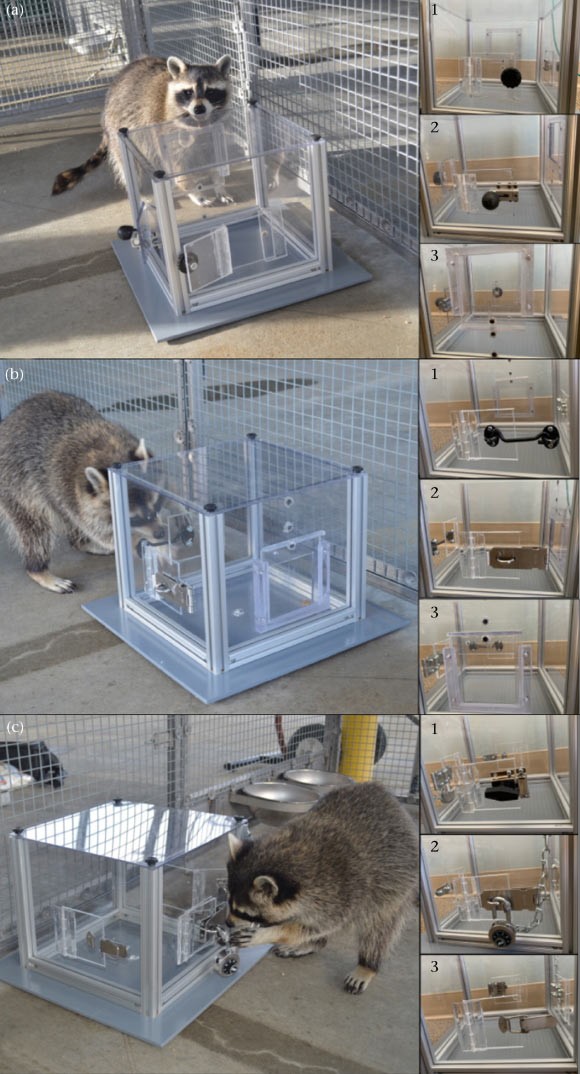
Researchers led by Ph.D. student Hannah Griebling designed a custom puzzle box with multiple entry points ranging in difficulty. Each box held only one marshmallow reward, but the team observed something surprising: raccoons kept opening additional mechanisms even after they’d already eaten the treat. This indicates a clear drive to gather information beyond basic sustenance.
“We weren’t expecting them to open all three solutions in a single trial,” Griebling noted. “They kept problem solving even when there was no marshmallow at the end.”
Curiosity vs. Efficiency: How Raccoons Approach Challenges
The study revealed that raccoons adjust their strategies based on the perceived effort and risk. When solutions were easy, they explored broadly, testing different methods. As the puzzles became harder, they favored reliable techniques but still maintained a willingness to experiment.
This behavior mirrors decision-making patterns seen in other animals – including humans. “It’s a pattern familiar to anyone ordering at a restaurant,” Griebling explained. “Do you order your favorite dish or try something new? If the risk is high — an expensive meal you might not like — you choose the safe option.”
Urban Adaptation: Why Raccoons Thrive in Cities
Raccoons’ cognitive flexibility, combined with their physical traits, gives them an edge in complex urban landscapes. Their highly sensitive forepaws are perfectly suited for manipulating human-made objects like latches and handles. By solving problems for information, not just food, they can efficiently access resources like garbage bins.
The findings have broader implications: understanding why raccoons succeed could inform strategies for managing other species struggling in human-altered environments.
What This Means
Raccoons are not just intelligent opportunists; they’re naturally curious problem-solvers. Their drive to explore and gather information, even without immediate reward, is a key factor in their adaptability and success. This research provides empirical evidence supporting long-held folklore about raccoon intelligence, opening new avenues for studying animal cognition and urban wildlife management.