


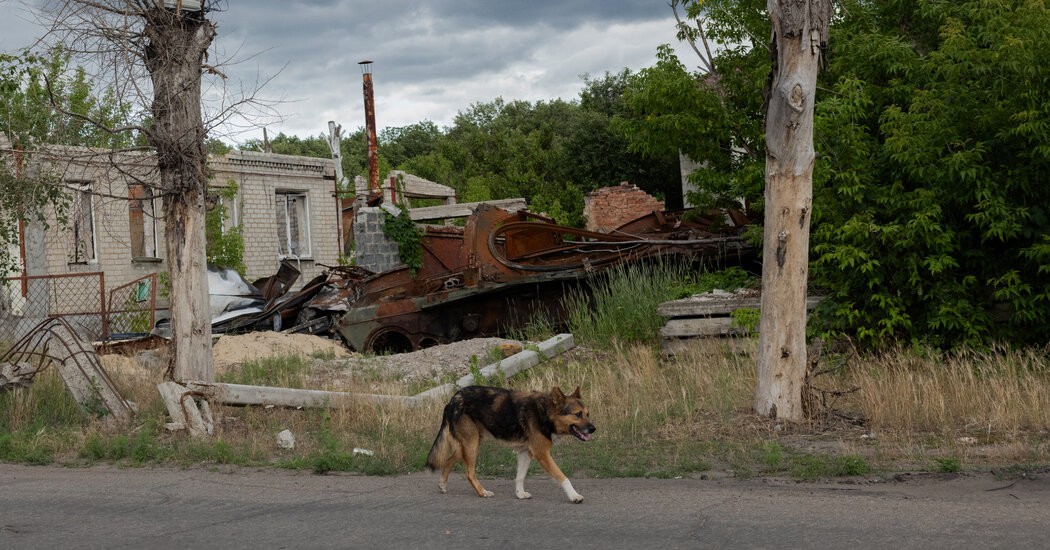
The ongoing war in Ukraine is not only reshaping the country’s human landscape but is also triggering remarkable and accelerated evolutionary shifts in its dog population. A recent study reveals that dogs exposed to prolonged conflict conditions are displaying behavioral changes typically observed in wild or feral canines, demonstrating an unprecedented adaptation to extreme stress and survival pressures.
The Study’s Findings
Researchers analyzed data from 763 dogs across nine Ukrainian regions, examining both domestic pets and strays. The team found that dogs in active or recently contested areas exhibited heightened fear responses, aggression, and increased independence — traits that would improve their survival in a volatile environment. This suggests that the constant exposure to artillery fire, explosions, and scarcity of resources is forcing dogs to revert to more primal instincts.
The study, published in Evolutionary Applications, highlights the speed at which these changes are occurring. Normally, such behavioral shifts would take generations; here, they are observable within just two years of sustained warfare.
Frontline Observations
The most striking data came from territories near intense fighting. Ihor Dykyy, a zoologist who volunteered with the Ukrainian Armed Forces for two years, collected firsthand observations near Lyman in the Donetsk region and Kharkhiv.
Dykyy reported seeing dogs with untreated injuries, shell shock, and sensory impairments surviving in war-torn areas. “Many stray dogs lived with us in the village of Zarichne,” he recalled. “They were terrified by the hostilities; some suffered from shell shock. One small dog had a broken leg that hadn’t healed properly, leaving it with a permanent limp.”
Despite the horrific conditions, these animals were still exhibiting remarkable resilience, often scavenging for food and seeking shelter alongside soldiers. This suggests a rapid adaptation to reliance on themselves and humans for survival in extreme conditions.
Why This Matters
The changes observed in these dogs have implications beyond animal behavior. They provide a stark illustration of how war can act as an extreme selective pressure, accelerating evolutionary processes. The study also raises questions about the long-term psychological impact on animals exposed to prolonged trauma.
If the conflict continues, these behavioral shifts could become permanent, leading to a generation of dogs that are fundamentally different from their pre-war counterparts. This highlights the unseen costs of war, extending beyond human suffering to the very fabric of the natural world.
The rapid adaptation of these animals serves as a grim reminder that war leaves no species untouched.


