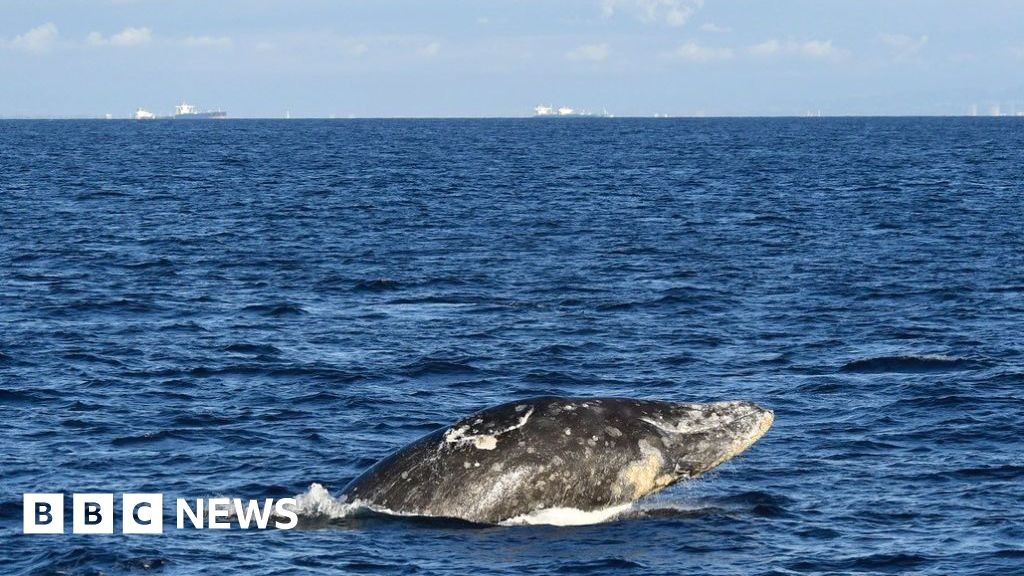
A young gray whale, which had captured the attention of locals and researchers after swimming 20 miles inland into Washington’s Willapa River, has been found dead. The incident has raised urgent concerns regarding the declining health and food security of the species.
The Journey of “Willapa Willy”
The juvenile whale, nicknamed “Willapa Willy” by the local community, was first spotted last Wednesday in the north fork of the Willapa River, located approximately 145 miles southwest of Seattle.
While the whale initially appeared to be behaving normally, researchers from the Cascadia Research Collective noted that the animal was visibly thin. Despite hopes that the whale would successfully navigate its way back to the open ocean, it was unable to do so and has since passed away.
A Growing Nutritional Crisis
Experts believe the whale’s decision to swim so far upriver was a desperate attempt to find food. According to John Calambokidis, a research biologist with the Cascadia Research Collective, this behavior is a symptom of a much larger environmental issue.
- Migration Patterns: Gray whales migrate north along the Pacific Coast toward the Arctic during the spring. During this journey, they rely on stored nutritional reserves.
- Food Scarcity: In recent years, gray whales in the eastern Pacific have faced a significant reduction in prey availability in the northern Bering and Chukchi seas off the coast of Alaska.
- Desperate Foraging: When traditional feeding grounds fail to provide enough sustenance, whales may wander into unusual areas—such as river systems—in a “desperate search” for new food sources.
“Gray whales are facing a major crisis and the heart of it does seem to be feeding on their prey in the Arctic,” noted Calambokidis.
Broader Threats to the Species
The death of “Willapa Willy” is not an isolated event, but rather part of a troubling trend for the species. Earlier this April, two adult gray whales—a male and a female—washed up dead near Ocean Shores, also showing signs of severe malnourishment. In that instance, the male also exhibited head trauma consistent with a ship strike.
Gray whales face a multifaceted set of survival challenges, including:
– Nutritional Stress: Shrinking prey populations in Arctic feeding grounds.
– Vessel Strikes: Collisions with large ships during migration.
– Fishing Gear Entanglement: Getting caught in commercial fishing equipment.
– Isolation: Unlike some other species, gray whales tend to travel alone, lacking long-term social bonds that might assist in group survival.
Conclusion
The death of the juvenile whale in the Willapa River serves as a grim indicator of the ecological pressures facing gray whales. The combination of vanishing food sources in the Arctic and physical threats along migration routes continues to jeopardize the stability of this iconic marine species.