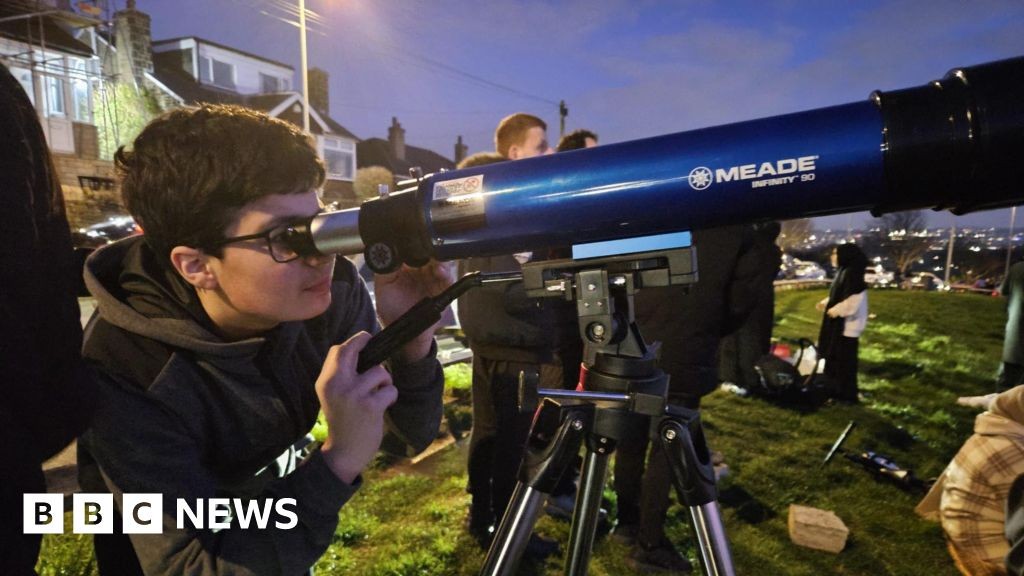
For British Muslims, determining the date of Eid al-Fitr – the festival marking the end of Ramadan – is often a matter of local observation rather than simply following declarations from abroad. This year, families and amateur astronomers gathered across the UK, particularly in Bradford, to personally sight the new crescent moon. This practice, steeped in Islamic tradition, emphasizes community and independent verification over reliance on foreign announcements.
The Lunar Calendar and Eid Timing
Islam follows a lunar calendar, meaning the start of each month is determined by the visible sighting of the new moon. Eid al-Fitr falls on the first day of the tenth month, Shawwal, and signals the end of Ramadan’s month-long fast. However, interpretations vary: some British Muslims follow Saudi Arabia’s pronouncements, while others look to Morocco or, increasingly, attempt to establish a unified UK-based sighting.
The New Crescent Society’s Growing Influence
The New Crescent Society (NCS), founded in 2016, champions the latter approach. This grassroots astronomy network encourages British Muslims to determine the date independently. According to organizer Hamza Mutahir Khan, the group has grown from just a few participants six years ago to a thriving communal effort.
“The mission is to unite English Muslims, regardless of background, under one moon… If you don’t want to import the moon, there’s always the moon above us to follow.”
The cloudy weather on Thursday led NCS to declare Eid for Saturday, while sightings in Saudi Arabia and Morocco resulted in celebrations for some communities as early as Friday. The difference highlights the ongoing debate over centralized versus localized lunar observations.
Bridging Tradition and Modern Science
The event also draws support from academic institutions. Erin McNeill, from the University of Leeds, collaborated with NCS to engage the public in astronomical observation. She emphasized the potential benefits of a unified British lunar calendar.
“The beauty of a united calendar is that you would be able to have this network across the country and celebrate Eid on one day.”
This collaboration merges religious practice with scientific engagement, fostering both cultural continuity and accessible education.
Passing Down Knowledge
For many families, moon-sighting is a tradition passed down through generations. Nazish, an enthusiastic astronomer, brought her nieces and nephews to learn the practice firsthand. She explained that the activity serves to instill an understanding of Islamic traditions and the importance of personal verification. The goal is to teach young Muslims not only when to celebrate, but why the tradition matters.
The effort to reconcile tradition, science, and community in moon-sighting underscores the evolving identity of British Muslims and their desire for greater autonomy in religious observance.