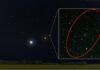
The United Nations maintains a low-profile but critical operation: monitoring and responding to potential asteroid impacts with Earth. While often unseen, this work came into sharp focus in early 2025 when a robotic telescope spotted asteroid 2024 YR4, initially estimated as building-sized, on a possible collision course. This wasn’t a drill; it was the first real-world test of the UN’s planetary defense protocols.
The Protocol: From Detection to Global Alert
Aarti Holla-Maini, director of the UN’s Office for Outer Space Affairs (Unoosa), is the designated official who would notify the UN secretary-general if a large asteroid posed a credible threat. This triggers a cascade of alerts to 193 member states – virtually every government on Earth. The process, refined through years of simulations, was activated when 2024 YR4’s impact probability rose from under 0.05% to over 1% within three weeks.
Why this matters: While a 1% chance seems low, the asteroid’s size and speed meant a direct hit could release energy equivalent to hundreds of Hiroshima bombs, capable of wiping out a city or even a region. The UN’s role is not about panic; it’s about ensuring coordinated, informed response.
Real-World Scenarios: Beyond Hypothetical Threats
The threat from space isn’t theoretical. In 2013, a 20-meter meteor exploded over Chelyabinsk, Russia, releasing energy equivalent to 500 kilotonnes of TNT. Over 1,200 people were injured by shattered glass. This demonstrated that even smaller space rocks can cause mass casualties without warning.
The 2024 YR4 scare pushed the UN’s response system into action. Romana Kofler, Unoosa’s program officer for planetary defense, worked with international astronomers, NASA, and ESA to assess the threat. The asteroid was classified as a level three on the Torino Impact Hazard Scale (ranging from zero to ten, with ten representing civilization-ending impact), triggering the Space Mission Planning Advisory Group to explore deflection options.
Beyond Asteroids: Managing Orbital Chaos
Unoosa’s primary function extends beyond asteroid alerts. The agency manages the growing congestion in Earth’s orbit, tracking over 10,000 satellites and anticipating future launches. This has become a critical task, particularly as more nations enter the space race.
The challenge: The lack of direct communication between some countries creates dangerous situations. In June 2024, a non-maneuverable Malaysian satellite came within 75 meters of a North Korean satellite. Without official channels, Unoosa sent information to known North Korean contacts, and the satellite moved out of the way without a response. This highlights the agency’s role as an informal “hotline” in a politically fractured space environment.
The Agency Behind the Scenes
Unoosa operates with a small team of 35 employees in Vienna, far from the spotlight of larger UN hubs. Established in the 1950s, its mandate is to prevent the extension of terrestrial conflicts into space. While often underfunded and understaffed, the agency has become remarkably efficient, managing satellite registration, disaster response (using satellite imagery), and promoting international space law.
The 2024 YR4 asteroid scare proved Unoosa’s protocols work. The asteroid’s impact probability has since dropped to negligible levels, but the event served as a vital real-world test. The agency continues to monitor space, preparing for the inevitable next threat, whether from a rogue asteroid or a collision in orbit.
Ultimately, Unoosa’s quiet vigilance is essential. The office doesn’t seek headlines, but its work ensures that when danger arrives from above, the world is not caught unprepared.