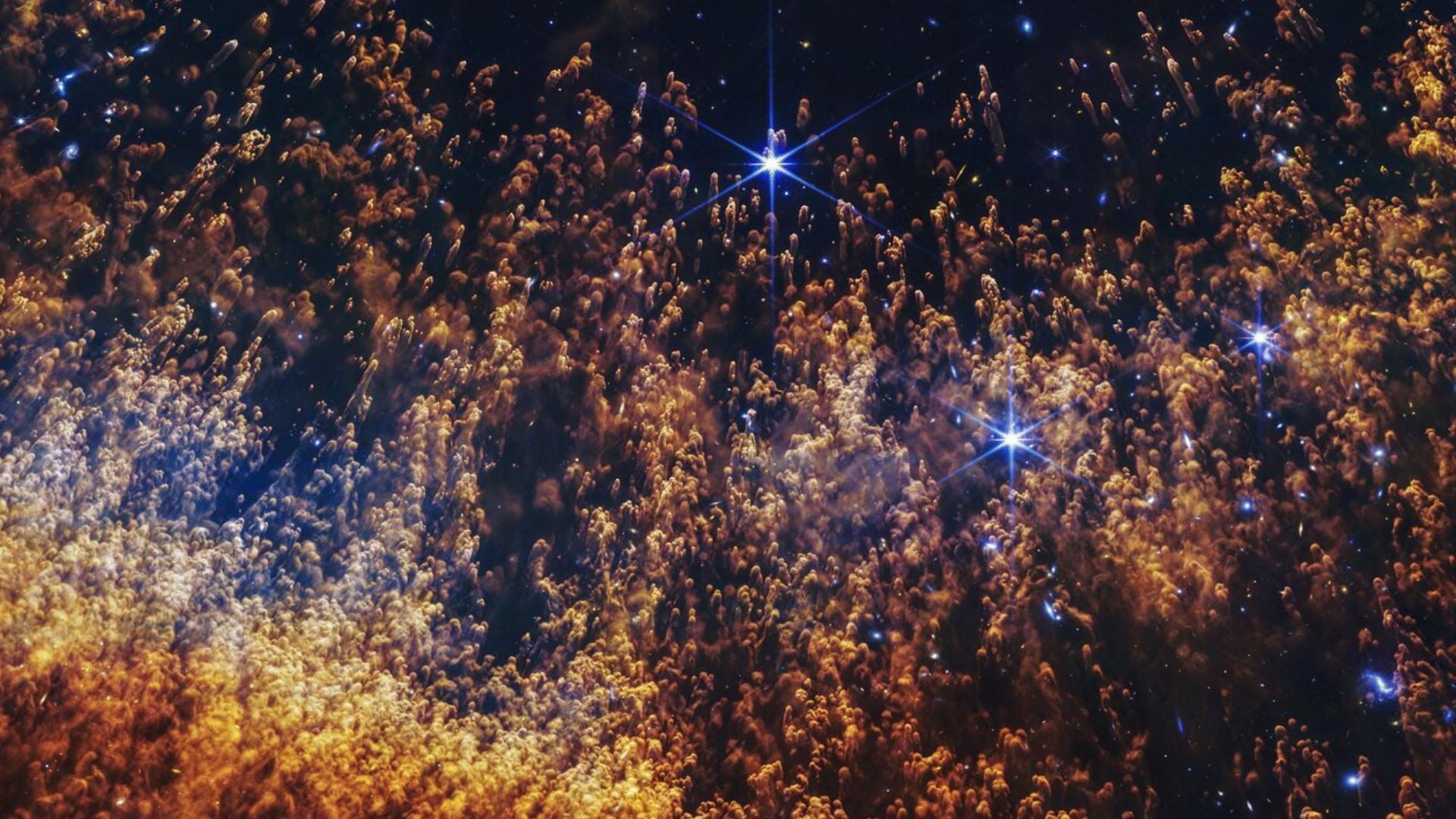
The James Webb Space Telescope (JWST) has captured a breathtaking new image of the Helix Nebula, a dying star’s final act that offers crucial insights into the lifecycle of matter and the very origins of elements necessary for life. Dubbed the “Eye of God” due to its striking resemblance to a cosmic iris, this nebula is more than just a beautiful space photo; it’s a glimpse into our own solar system’s distant future and the galactic recycling process that fuels new star formation.
The Death of a Sun-Like Star
The Helix Nebula is a planetary nebula – a misnomer, as it has nothing to do with planets. Instead, it’s the expanding shell of gas and dust ejected by a star similar to our sun as it nears the end of its life. The central white dwarf, a dense remnant of the star’s core, emits intense radiation that ionizes the surrounding gas, causing it to glow in vibrant colors. This process is fundamental to understanding stellar evolution, as it demonstrates how stars redistribute elements into the cosmos.
This is critical because these ejected materials—carbon, oxygen, and nitrogen—are the very building blocks of life. Without dying stars seeding the universe with these elements, planets like Earth could not have formed.
JWST’s Unprecedented View
JWST’s near-infrared camera has revealed details previously hidden from other telescopes. Thousands of comet-like pillars, known as “cometary knots,” are streaming away from the central white dwarf. These knots represent high-speed stellar winds interacting with older layers of gas shed earlier in the star’s death throes.
The image also highlights temperature variations within the nebula:
- Blue glow: Indicates regions closest to the star, heated by ultraviolet radiation.
- Yellow: Shows cooler molecular hydrogen further out.
- Deep red: Represents even cooler dust at the nebula’s periphery.
Cosmic Recycling and Our Solar System’s Fate
The Helix Nebula serves as a cosmic recycling center, where the remnants of one star become the raw materials for future generations of stars and planets. The expelled dust and gases create environments where complex molecules can survive and grow, increasing the probability of new life-supporting systems forming.
This is not merely theoretical; it’s a preview of our own sun’s fate. In approximately 5 billion years, our sun will expand into a red giant, shed its outer layers, and ultimately collapse into a white dwarf, leaving behind a similar planetary nebula.
The Helix Nebula isn’t just a pretty picture; it’s a fundamental illustration of stellar life cycles and galactic evolution. It underscores the universe’s continuous process of death and rebirth, where the remnants of one star become the seeds for the next.