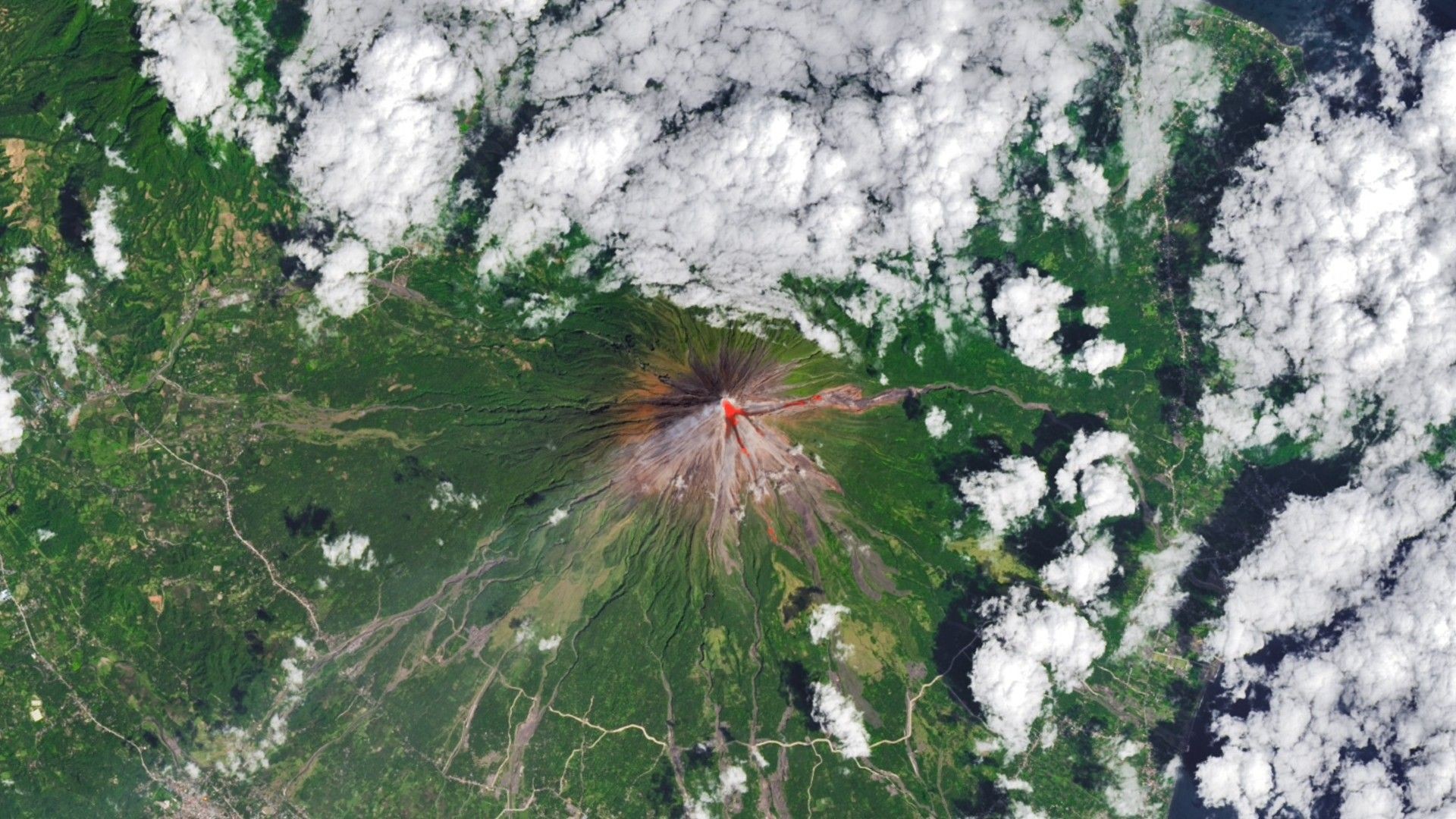
A recently released satellite image provides a dramatic view of the ongoing eruption at Mayon Volcano in the Philippines, showcasing bright lava flows against the surrounding landscape. The image, captured by NASA’s Landsat 8 satellite on February 26, 2026, highlights the power and beauty of natural geological events.
The Eruption and its Impact
Mayon Volcano, located on Luzon Island, is the most active volcano in the Philippines. The current eruption began in January 2026, with lava and ash pouring from its crater. The eruption has already displaced hundreds of families in nearby areas, underscoring the immediate human cost of such events.
This is not the first time Mayon has caused widespread disruption. The Smithsonian Institution’s Global Volcanism Program records at least 77 fatalities from a major eruption in 1993. This history reinforces the need for ongoing monitoring and preparedness in the region.
How the Image Was Captured
The Landsat 8 satellite’s Operational Land Imager (OLI) captured the image using both visible and near-infrared light. Combining these observations allows scientists to see details that would be impossible to detect from the ground. The bright red lava stands out sharply against the vivid green vegetation, creating a striking visual contrast. This type of imagery is crucial for understanding volcanic activity and assessing risks.
The ability to monitor volcanic eruptions from space is invaluable. It provides real-time data for scientists, emergency responders, and communities at risk.
Why This Matters
Volcanic eruptions are powerful reminders of Earth’s dynamic processes. While they can be destructive, they also shape landscapes and create fertile soils over time. Satellite imagery plays a key role in tracking these events, not just for scientific understanding but also for disaster management and public safety. The data gathered from missions like Landsat 8 contributes to better prediction and mitigation strategies for volcanic hazards.
The ongoing eruption of Mayon serves as a case study of the intersection between natural forces and human populations. Continued monitoring and analysis are essential for minimizing future risks and maximizing the benefits of living in volcanic regions.