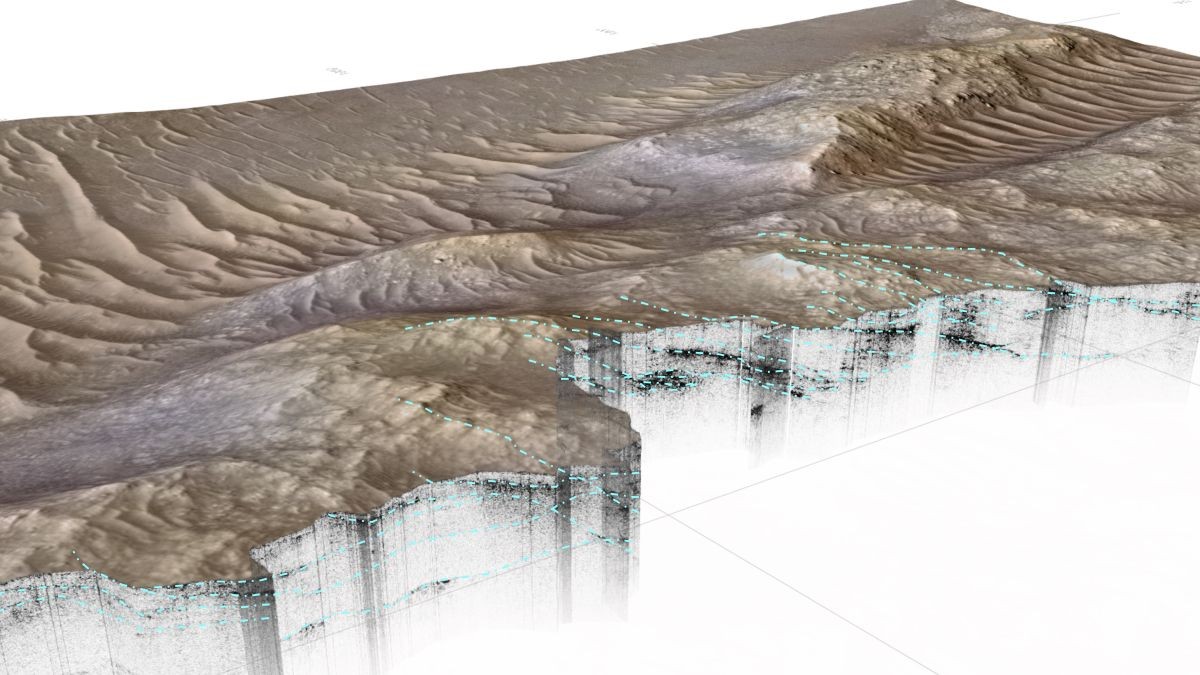
NASA’s Perseverance rover has uncovered a hidden, ancient river system buried deep beneath the surface of Mars’ Jezero crater, indicating that the planet sustained liquid water—and potentially habitable conditions—for a far longer period than previously believed. The discovery, made using the rover’s RIMFAX ground-penetrating radar instrument, reveals a complex deltaic environment predating the well-studied Jezero Delta, suggesting an extended window for microbial life to emerge.
Extended Period of Habitability
For years, scientists have known that Mars wasn’t always the arid, red world it is today. Evidence of past water has been abundant, from carved landscapes to water-formed minerals. But the question of how long liquid water persisted on the surface remained central to determining if life could have evolved there. The new findings suggest that flowing water shaped the Martian landscape for hundreds of millions of years longer than previously estimated.
“The subsurface deltaic environment discovered under the current Jezero Delta extends the period of potential habitability back further in time,” explains geomicrobiologist Emily Cardarelli.
How the Discovery Was Made
Perseverance’s RIMFAX instrument probed beneath the surface over 78 traverses between September 2023 and February 2024, collecting data along a 6.1-kilometer trail to depths exceeding 35 meters. The radar data revealed layered rock formations arranged in sloping patterns, consistent with sediment deposition in flowing water. Researchers also identified lobes, channels, and buried boulders – features common in river systems on Earth.
The Margin unit, a region rich in carbonates and olivine, proved particularly revealing. Analysis of RIMFAX data showed that the Margin extends at least 85–90 meters deep, built up over multiple episodes of sediment deposition and erosion. The geological context suggests this delta system formed as early as 4.2–3.7 billion years ago, during the Noachian period.
Implications for Life on Mars
The discovery has significant implications for the search for past life on Mars. A prolonged period of liquid water means a longer timeframe for the emergence of microbial life, which scientists consider the most likely form of life to have existed on the planet.
The preservation of subsurface structures could also mean that biosignatures—evidence of past life—may be preserved in mineral compositions and geochemical conditions deep underground.
The Martian landscape is remarkably well-preserved due to the planet’s lack of tectonic activity and severe weather. This means that evidence of past habitability may still be intact, waiting to be uncovered.
In conclusion, the discovery of this ancient subsurface river system reinforces the idea that Mars was once a far more water-rich and potentially habitable planet. Further exploration and analysis will be crucial in determining whether life ever took hold in this long-lost Martian past.