For decades, scientists have understood that greenhouse gas emissions are the primary driver of today’s rapid climate change. However, new research from ancient Antarctic ice cores indicates that ocean temperatures played a more significant role in Earth’s climate fluctuations over the last three million years than previously assumed. This discovery doesn’t negate the impact of greenhouse gases today but highlights the complexity of Earth’s climate system and suggests past changes might have been triggered by different mechanisms.
Decoding Earth’s Climate History in Antarctic Ice
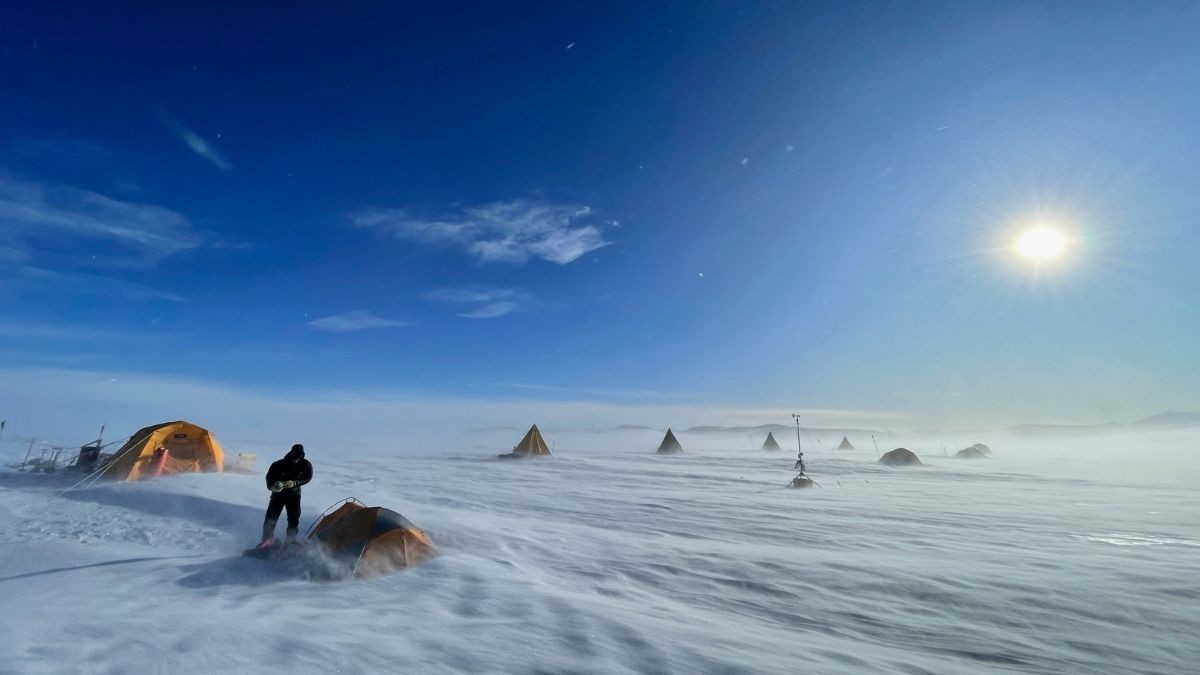
Two independent research teams analyzed ice cores extracted from the Allan Hills region of Antarctica, a unique geological site where ancient ice is exposed due to strong winds removing newer snowfall. These cores, some dating back six million years, represent a rare opportunity to examine the climate of a distant past. While not providing a continuous record, the layers within these cores contain invaluable climate snapshots: isotopic signatures indicating ocean temperatures, traces of volcanic ash, and crucially, trapped air bubbles revealing historical atmospheric composition.
Ocean Cooling and Climate Transitions
The first study, led by Sarah Shackleton of the Woods Hole Oceanographic Institute, used noble gases dissolved in seawater—xenon and krypton—to estimate past ocean temperatures. The data suggest a drastic cooling of the ocean around 2.7 million years ago, coinciding with the Plio-Pleistocene Transition, when Earth shifted from a warmer climate to one characterized by expanding glaciers in the Northern Hemisphere. Surprisingly, the research found ocean temperatures remained relatively stable during the Mid-Pleistocene Transition (1.2 to 0.8 million years ago), despite changes in glacial cycles.
Stable Greenhouse Gases, Shifting Climates
Meanwhile, a team led by Julia Marks-Peterson at Oregon State University discovered that atmospheric carbon dioxide and methane levels were “broadly stable” across the same three-million-year period. This decoupling of greenhouse gas levels from climate shifts raises critical questions. Either ice sheet growth was remarkably sensitive to even slight changes in CO₂ levels, or other factors—primarily ocean dynamics—were dominant forces in driving past climate changes.
Implications for Today’s Climate Crisis
Understanding how Earth’s climate worked before human intervention is vital for stabilizing the planet. As Cambridge climatologist Eric Wolff notes, the new findings suggest that past climate shifts may have been driven by something other than greenhouse gases alone.
However, interpreting these ancient ice records isn’t without challenges. The ice is compressed and the records are complex, making it difficult to isolate how climate evolved during glacial and interglacial periods. Despite these limitations, the research underscores that climate systems are not always as simple as cause and effect.
The past climate system was far more complex than we once believed, and the interplay between ocean dynamics and greenhouse gases needs further study to predict how Earth will respond to current and future warming.