


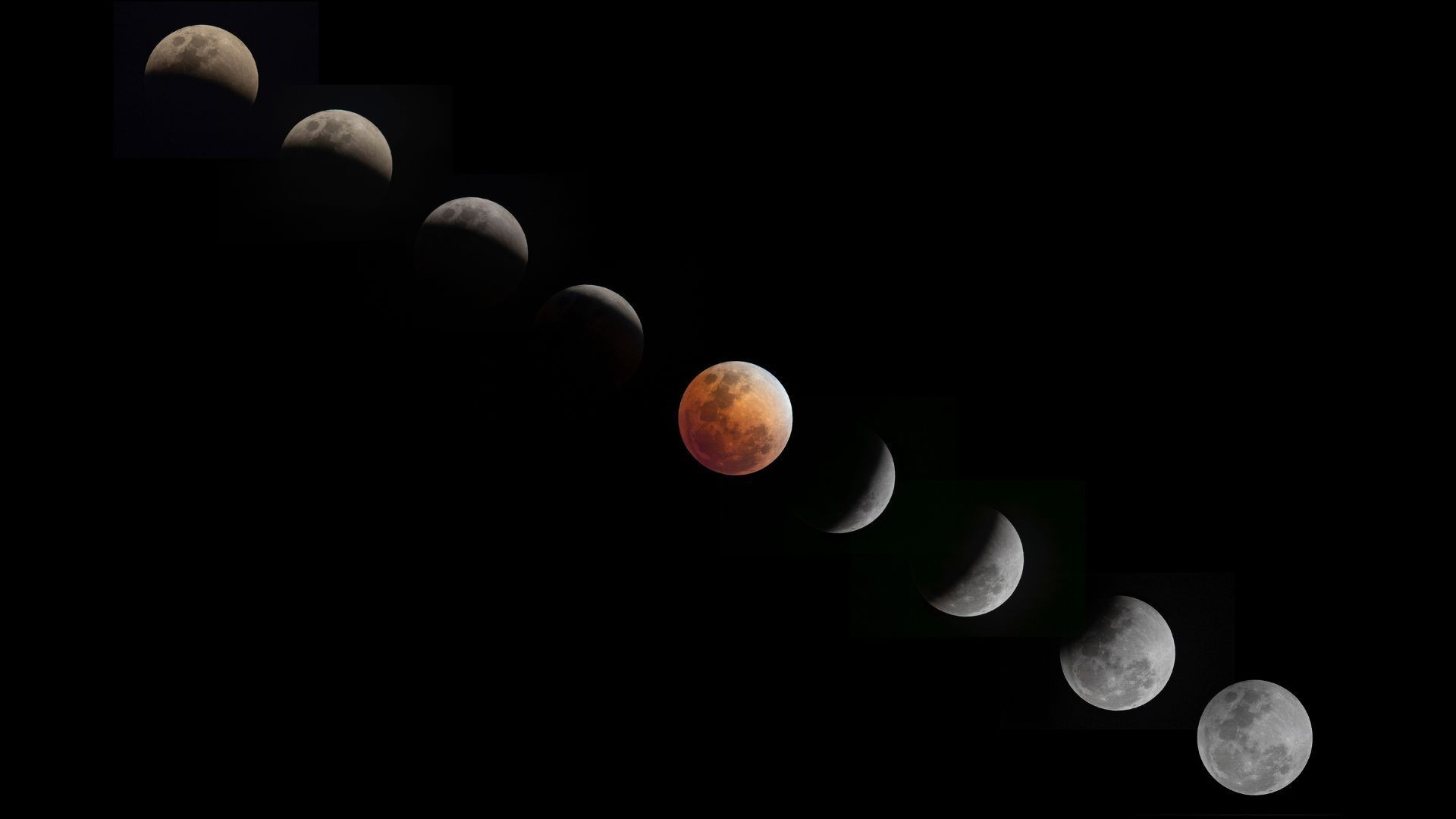
The total lunar eclipse on March 3rd captivated observers worldwide with a striking celestial event: the transformation of the full moon into a deep crimson “blood moon” as it passed fully into Earth’s shadow. This eclipse wasn’t just visually arresting; it provided a clear illustration of orbital mechanics in action, as Earth temporarily blocked direct sunlight from reaching the lunar surface.
Why Lunar Eclipses Turn Red
During totality, no direct sunlight reaches the moon. Instead, the lunar disk is illuminated by sunlight filtered through Earth’s atmosphere. Our atmosphere efficiently scatters blue light, allowing longer, redder wavelengths to pass through more easily. This process casts a rusty, blood-red hue over the moon, making it appear dramatically different than its usual bright white.
Global Views of the Eclipse
The eclipse was visible across the Americas, Asia, and Oceania, with photographers capturing breathtaking images. Here’s a selection:
- New Zealand: Phil Walter caught Earth’s shadow creeping over the western edge of the moon from Auckland. The perspective from the southern hemisphere flips the familiar view for northern observers.
- Philippines: Ted Aljibe photographed the orange-glowing moon rising over Manila. The color wasn’t solely from the eclipse; it was also intensified by the prolonged journey of sunlight through Earth’s atmosphere near the horizon.
- China: Fred Lee captured the moon over Beijing, highlighting Mare Crisium, a vast ancient lava plain formed by volcanic activity over a billion years ago.
- Turkey: Tayfun Coskun documented the blood moon soon after totality began, showcasing the deep orange-red hue. A bluish band, sometimes called the “turquoise band,” was also visible, caused by blue light scattering through the ozone layer.
- Utah, USA: Keith Odendahl’s detailed image revealed bright ejecta rays from young impact craters, a testament to the immense forces behind their formation.
- Vietnam: Trần Hữu Thịnh captured a composite view of the total and waning phases over Ho Chi Minh City, showing the sweeping progress of Earth’s shadow.
The Science Behind the Spectacle
The photos show how light behaves in different atmospheric conditions. The intensity of the red hue can vary depending on the amount of dust or cloud cover in Earth’s atmosphere at the time. The eclipse also offers a unique chance to study subtle features on the lunar surface, such as ancient lava plains and impact craters, under altered lighting conditions.
Looking Ahead
The next total lunar eclipse won’t occur until New Year’s Eve 2028. However, skywatchers have other events to anticipate this year, including a total solar eclipse on August 12th, visible from Greenland, Iceland, and Spain. Safe viewing requires specialized eclipse glasses or sunoculars to protect your eyes.
The total lunar eclipse served as a stunning reminder of the grand scale of our solar system and the complex interplay of light, shadow, and atmospheric conditions. The eclipse is a beautiful, natural phenomenon that occurs when Earth passes between the sun and the moon, casting a shadow on the lunar surface.


