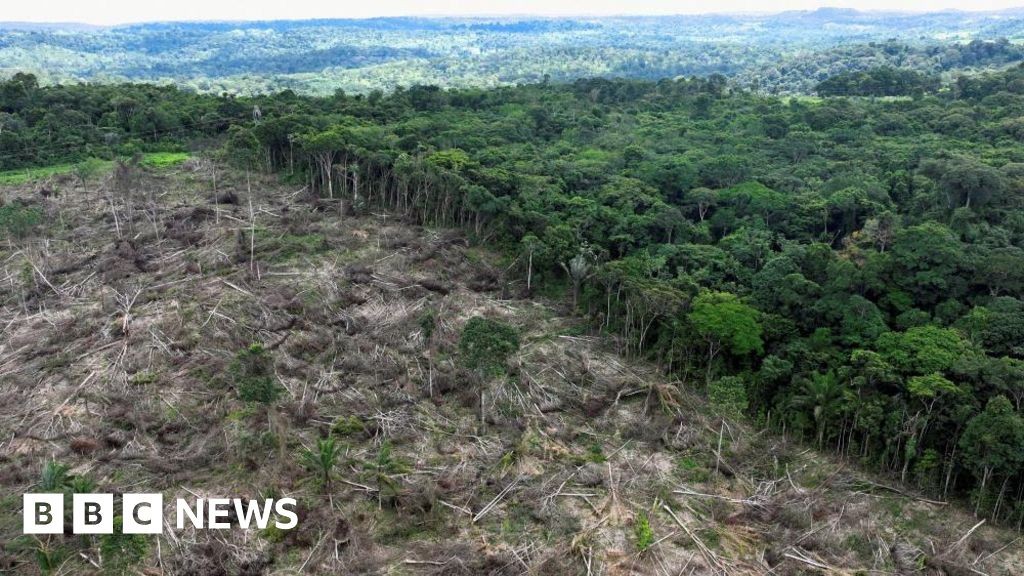
The accelerating decline of global ecosystems is no longer just an environmental issue, but a clear and present danger to the United Kingdom’s national security and economic stability. A recently published intelligence report confirms that the degradation of critical environments worldwide – from rainforests to coral reefs – will trigger cascading risks including resource scarcity, mass migration, and heightened geopolitical instability.
Ecosystem Collapse: A Chain Reaction of Threats
The report, compiled by the Joint Intelligence Committee and released by the Department for Environment, Food and Rural Affairs (Defra), identifies six ecosystems vital to the UK’s security: the Amazon and Congo rainforests, Russia and Canada’s boreal forests, Southeast Asia’s coral reefs and mangroves, and the Himalayas. These regions are on a documented “pathway to collapse” if current rates of environmental destruction continue.
This matters because the UK is heavily reliant on these ecosystems for essential resources, including food, timber, and critical supply chains. The report emphasizes that ecosystem failure will directly challenge the UK’s food security, as global markets for food and fertilizer become increasingly unstable. While the UK cannot become fully self-sufficient in food without drastic price increases, reliance on degraded regions leaves it exposed to price shocks and scarcity.
Geopolitical and Economic Implications
The implications extend beyond food supplies. Ecosystem collapse will likely exacerbate migration pressures as populations are displaced by environmental disasters and resource conflicts. Competition for dwindling resources will intensify geopolitical tensions, increasing the risk of instability in key regions. Moreover, degraded ecosystems are breeding grounds for new zoonotic diseases, raising the probability of future pandemics.
“This is a cost-of-living crisis, driving up food prices on supermarket shelves for UK households,” notes Gareth Redmond-King of the Energy and Climate Intelligence Unit, highlighting the immediate economic impact.
Delayed Disclosure and Government Response
The report’s publication was delayed for months, reportedly due to concerns within No. 10 that its findings were overly pessimistic. However, Defra maintains that the UK has a resilient food system, supported by international trade, which mitigates immediate risks. The government also points to investments in flood defenses and sustainable agriculture as evidence of its commitment to environmental protection.
Despite these efforts, the UK’s reluctance to fully fund international conservation initiatives – such as Brazil’s “Tropical Forests Forever Facility” – has drawn criticism from environmental groups. The government cites economic pressures but continues to encourage private sector investment instead.
The Urgency of Action
The intelligence report underscores a fundamental truth: the health of global ecosystems is inextricably linked to national security. The rate of biodiversity loss has reached unprecedented levels since 1970, with an estimated one million species facing extinction. Ignoring this reality is not an option; the consequences will be felt directly in the UK through economic disruption, political instability, and increased human suffering.
The report serves as a stark warning that environmental degradation is not merely an ecological crisis, but a systemic threat that demands immediate and comprehensive action.