


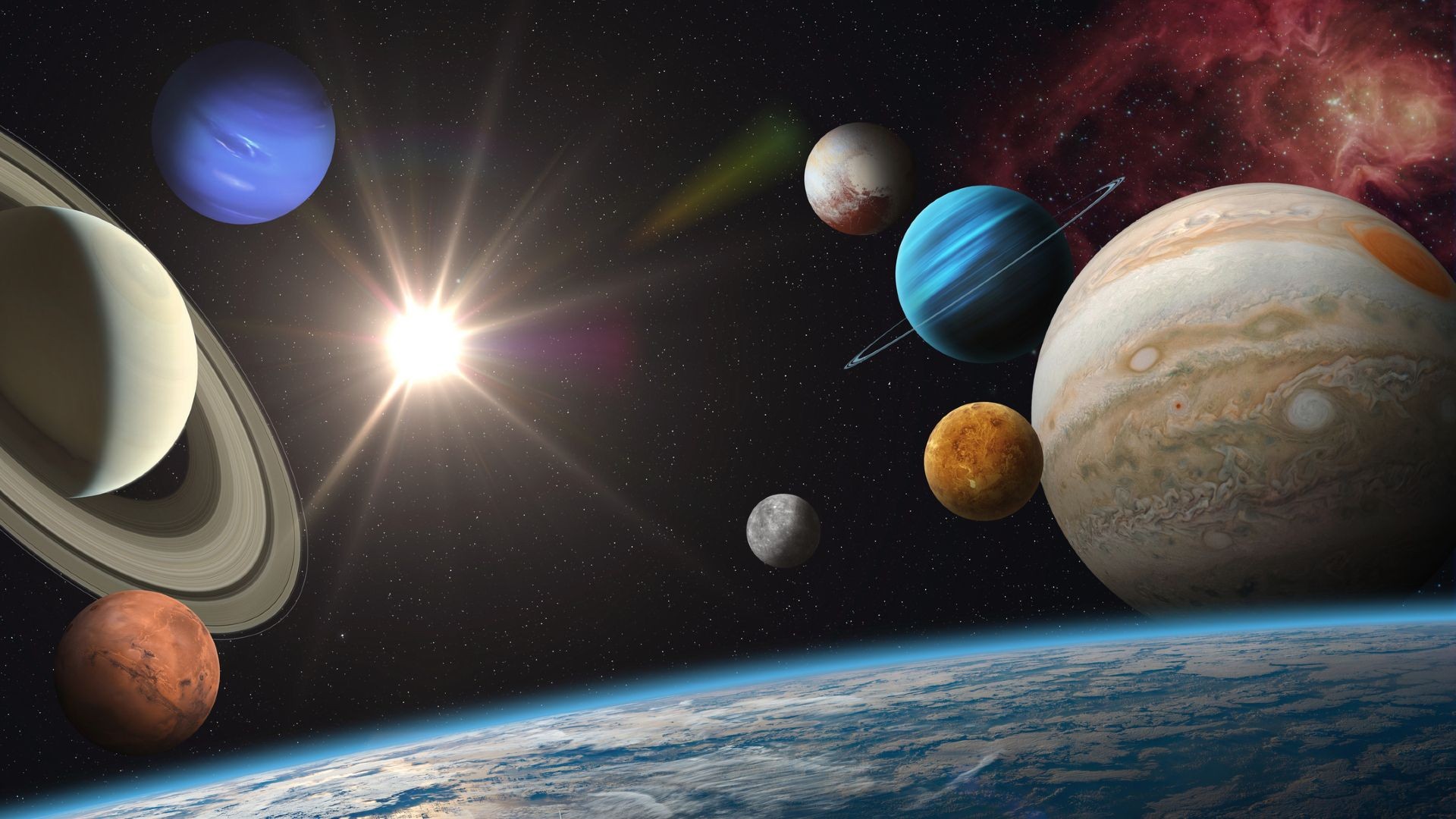
Planets aren’t eternal. Like stars, they undergo distinct life cycles: formation, evolution, and eventual demise. However, the duration of these stages varies dramatically depending on the type of star a planet orbits. While Earth’s fate is tied to the sun’s evolution, many planets around smaller, cooler stars could exist for trillions of years. Understanding planetary lifespans isn’t just about theoretical astronomy; it clarifies how rare Earth-like conditions are and raises questions about the long-term habitability of other worlds.
The Stages of Planetary Existence
Planets begin as microscopic dust grains within the disks surrounding young stars, gradually growing through collisions. Gas giants like Jupiter first form rocky/icy cores before accreting gas, while rocky planets like Earth experience late-stage bombardment after the gas disk dissipates. The exact order of these processes is still debated among scientists.
But defining a planet’s “end” is complex. Is it destruction, or simply a shift in conditions? As Stanford planetary scientist Matthew Reinhold explains, a planet may “end” when it no longer sustains the environment we associate with it.
The Sun’s Influence on Earth’s Fate
Earth’s lifespan is directly linked to the sun’s evolution. In roughly 5 billion years, our sun will exhaust its hydrogen fuel, expand into a red giant, and ultimately collapse. According to astrophysicist Sean Raymond, this means Earth will first become uninhabitable as the sun brightens and vaporizes the oceans. It may then be swallowed by the expanded sun or ejected into interstellar space.
Calculations suggest Earth will last approximately 9.5 billion years overall. However, this is relatively short compared to planets orbiting red dwarf stars.
Red Dwarfs: The Longevity Champions
Most stars aren’t yellow dwarfs like our sun; they’re red dwarfs – smaller, cooler, and with dramatically longer lifespans. These stars burn fuel so slowly they can last for trillions of years.
For planets around red dwarfs, the end may come not from stellar death, but from internal processes. Reinhold’s models suggest that Earth-like planets orbiting red dwarfs will likely become uninhabitable due to the cessation of mantle convection (30-90 billion years) or mantle melting (16-23 billion years) long before their stars die. Even on the shortest timelines, these worlds could remain habitable for billions of years.
The Fate of Gas Giants and Larger Stars
Larger, hotter stars have much shorter lifespans. A planet orbiting an A-type white star, for example, may only survive for 100 million to 1 billion years. Gas giants can also lose their atmospheres over millions to billions of years if exposed to intense stellar radiation.
Over vast timescales, even stable planets face the possibility of collisions or ejection from their star systems. Ultimately, the fate of these worlds may depend on the universe’s own end, as kicked-out planets will wander the void for eternity.
In conclusion, planetary lifespans are incredibly diverse, ranging from billions to trillions of years. The star a planet orbits dictates its fate far more than any internal process. While Earth’s time is limited by the sun’s evolution, countless worlds around red dwarfs could endure for unimaginable durations, suggesting that long-term habitability is far more common than previously thought.


