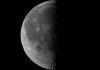
The world held its breath on July 21, 1969, as Neil Armstrong descended the ladder of his spacecraft, uttering words that would become legend: “That’s one small step for man, one giant leap for mankind.” This feat, achieved a mere 66 years after the Wright brothers’ first flight, represented a profound acceleration in human ambition. But nearly six decades later, as NASA prepares to send astronauts circling the moon again with the Artemis II mission, the question arises: can the same magic be recaptured?
For nearly half a century, no human has set foot on lunar soil since Apollo 17 in 1972. Now, Artemis II aims to loop four astronauts around the moon, a prelude to Artemis IV, the mission slated for an actual landing, though not for several years. The challenge isn’t just technical; it’s cultural. The Apollo program was born of the Cold War, a direct response to Soviet space advancements. President Kennedy framed it not merely as a race but as an intrinsic human drive: “We choose to go to the moon… not because they are easy, but because they are hard.”
Today, the urgency is gone. NASA’s lunar ambitions have fluctuated with presidential priorities, with even Donald Trump framing the mission in vague terms of “American leadership” and future Mars exploration. The agency initially tried to highlight the historic nature of including the first Black astronaut, Victor Glover, and first female astronaut, Christina Koch, on a lunar mission. However, under pressure from Trump’s administration, NASA quietly removed this messaging from its website.
The reality is blunt: this isn’t a first; it’s a repeat. Apollo 8 orbited the moon in 1968. Artemis IV, if successful, will merely replicate what six previous Apollo missions already achieved. To some, this feels less groundbreaking than, say, the seventh expedition to the North Pole. The more significant breakthroughs may lie elsewhere — in the search for extraterrestrial life on Jupiter’s moons or a future human mission to Mars.
Yet, dismissing the moon entirely would be shortsighted. Throughout history, it has exerted a unique fascination over humankind. From Neolithic art to Romantic painters like Joseph Wright of Derby, who saw it as an unreachable symbol of longing, the moon has inspired art, music, and literature. Conspiracy theories surrounding the original landings arose almost immediately, suggesting an inherent human resistance to fully rationalizing its existence. Galileo’s 17th-century sketches revealed its rough surface, while the Soviet Luna 3 probe first showed us the far side in 1959. It took lunar rocks brought back by Apollo 11 to prove the moon formed from a collision between Earth and a Mars-sized planet, Theia.
Even the first lunar explorers were struck by the moon’s alien quality. Buzz Aldrin described Tranquility Base as “magnificent desolation,” while Armstrong noted its “stark beauty.” Collins, orbiting above, felt no welcome, calling it a “scary place.” This sense of otherness may be exactly what stirs renewed interest.
As Artemis II prepares to send Koch, Glover, Wiseman, and Hansen on their lunar journey, the world may rediscover its fascination with the moon. Perhaps this time, it will inspire a new kind of lunacy back on Earth.