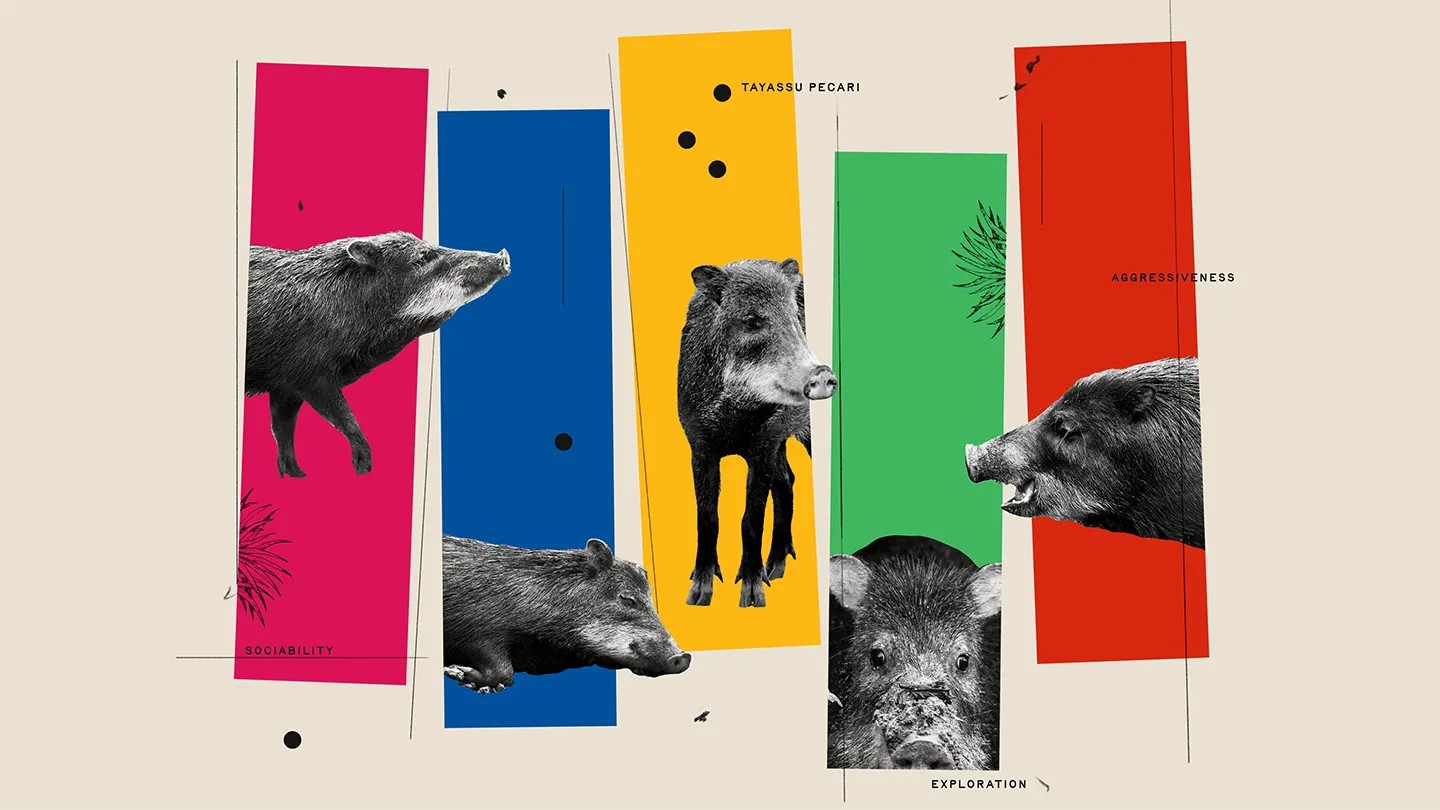
For decades, conservation focused on numbers: population size, habitat loss, and genetic diversity. Now, a growing body of research reveals a critical missing piece: personality. Just as individual humans differ in boldness, sociability, and adaptability, so do animals. And these differences aren’t random; they profoundly impact a species’ ability to survive, particularly when reintroduction efforts are underway.
The Case of Naruto the Peccary
The story of Naruto, a white-lipped peccary born in captivity, illustrates this point vividly. Researchers in Brazil sought to understand how behavioral traits affected survival after releasing peccaries into the wild. Naruto stood out as a loner, less social than his peers. After release, his asocial behavior continued, contributing to the group’s dispersion. Tragically, he was later found injured and died within a year—a stark example of how personality can make or break an individual’s chances in a harsh environment.
This isn’t an isolated incident. Researchers now understand that groups need a mix of personalities to thrive. Bold individuals explore new territories, while social butterflies maintain cohesion. A population lacking diversity in behavior is less resilient to change, predation, or competition.
Why Personality Matters: An Evolutionary Perspective
For years, scientists assumed evolution favored uniformity. If a particular behavior was optimal, all individuals would eventually converge on it. However, research published in 2004 challenged this notion. These papers argued that behavioral diversity enhances survival prospects. Species with a range of personalities are better equipped to adapt to unpredictable conditions.
This isn’t just theoretical. Studies of foxes, turtles, parrots, and even mollusks confirm that personality influences outcomes in the wild. For example, bold swift foxes released into Montana had a higher mortality rate, while bolder Santa Catalina Island foxes thrived in the absence of predators. The key takeaway? Boldness isn’t universally beneficial; its impact depends on the environment.
Bridging Behavior and Conservation
The recognition of animal personality is transforming conservation practices. Biologists are now incorporating behavioral assessments into reintroduction programs. Carlos Ruiz-Miranda, working with black-fronted piping guans in Brazil, uses tests inspired by human personality assessments to evaluate traits like friendliness, aggression, and risk aversion. The goal is to identify individuals best suited for survival.
Even in situations where detailed assessments aren’t possible—such as the recent relocation of wolves from Oregon to Colorado—understanding baseline behavioral patterns can inform management decisions. Despite the loss of some wolves, wildlife officials are learning to adapt strategies based on how animals respond to challenges.
The Future of Conservation: Beyond Numbers
The shift toward recognizing animal personality is more than a scientific trend; it’s a fundamental change in how we approach conservation. It means acknowledging that individuals matter, not just populations. By considering behavioral traits alongside genetic diversity and habitat health, conservationists can increase the success of reintroduction programs and help species adapt to a rapidly changing world.
The lessons from Naruto and other animals are clear: personality isn’t just a quirk of nature; it’s a crucial factor in survival. Ignoring it means risking extinction—one shy peccary, one hesitant guan, at a time.