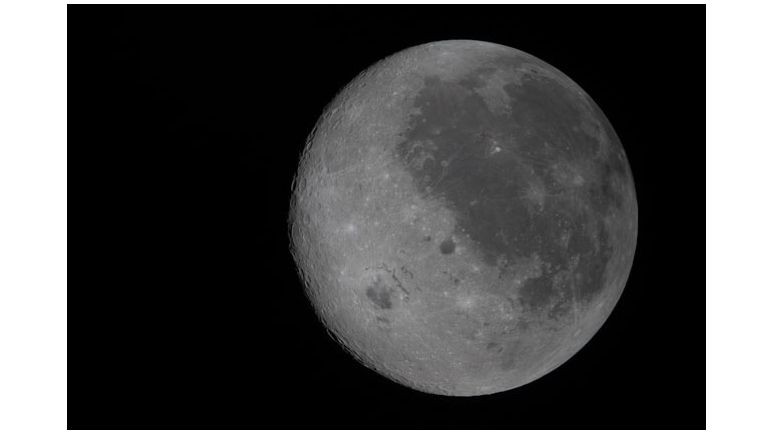
For the first time in over 50 years, humans are returning to the Moon for a close-range encounter. Since the final Apollo mission departed in 1972, our perspective of our celestial neighbor has been limited to robotic probes and distant telescopes. The Artemis 2 mission is changing that, turning four astronauts into active scientific observers as they perform a historic lunar flyby.
The Mission: More Than Just a Journey
Launched on April 1 aboard a Space Launch System rocket, the Orion capsule carries a diverse crew: NASA’s Christina Koch, Reid Wiseman, and Victor Glover, alongside the Canadian Space Agency’s Jeremy Hansen.
While the mission serves as a critical test of deep-space transit, it is also a sophisticated mobile laboratory. Over their 10-day journey, the crew is tasked with capturing high-resolution data to help scientists understand the lunar environment more intimately than ever before.
High-Tech Eyes and Human Intuition
To document the Moon, the crew is utilizing a blend of advanced technology and traditional observation:
– Photography: Using a Nikon D5 DSLR equipped with an 80-400mm lens to capture detailed landscapes.
– Digital Documentation: Crew members use tablets to annotate findings and record real-time observations.
– Onboard Systems: The Orion vehicle’s own cameras provide a continuous stream of data to round out the scientific dataset.
– Naked-Eye Observation: Astronauts are performing visual and audio observations, providing a human perspective that sensors alone cannot replicate.
This mission represents a structural shift in space exploration. For the first time, NASA has fully integrated a dedicated Science Evaluation Room and mission operations specifically designed to support lunar science during a human flight.
Primary Scientific Objectives
The Artemis 2 crew isn’t just looking at the Moon; they are searching for specific answers to long-standing questions. Their research is categorized into three primary priorities:
1. The Human Element in Lunar Science
The foremost goal is to determine what research can be performed uniquely by humans in a lunar environment. This includes:
* Surface Analysis: Observing color variations on the lunar surface.
* Impact Monitoring: Detecting “flashes” on the Moon caused by meteoroid strikes.
2. Environmental and Geological Mapping
Scientists are using the flyby to investigate the Moon’s exosphere, its tectonic features, and its volcanic history. Crucially, the crew is scouting potential future landing sites, looking for evidence of lunar ice deposits which are vital for long-term human habitation.
3. Deep Space Perspectives
The mission also allows for unique observations of the “lunar limb” (the edge of the Moon’s disk) and provides a rare opportunity to view Earth from deep space, offering a new perspective on our own planet’s place in the solar system.
Citizen Science: How You Can Help
The search for meteoroid impact flashes isn’t limited to the astronauts. Through the “Impact Flash!” project—part of the GEODES team—the public is invited to participate in “citizen science.”
By using ground-based telescopes to observe the Moon on April 6 and 7, observers can help scientists distinguish between actual meteoroid strikes and “false positives” caused by cosmic rays. This collaborative effort bridges the gap between professional space agencies and enthusiasts worldwide.
Preparation for the Lunar Frontier
This level of scientific rigor is the result of intensive training. Before launch, the crew underwent “lunar fundamentals” classroom sessions and conducted field expeditions to Earth-based analogs. From the Kamestastin Impact Crater in Canada to the volcanic highlands of Iceland, these locations serve as terrestrial mirrors to the lunar landscape, preparing the astronauts for the rugged reality of the Moon.
The Artemis 2 mission marks a fundamental shift from simply traveling to the Moon to actively studying it through a human lens, setting the stage for permanent lunar presence.