Earth’s orbit is becoming increasingly crowded, and the unchecked expansion of space activities poses a growing environmental threat. For centuries, space was an unreachable frontier, but within a single generation, it has transitioned from largely empty to heavily congested with satellites, and now faces a new wave of resource competition focused on the Moon.
The Shifting Relationship with Space
The current era is marked by a rapid shift from space exploration to space occupation. Major world powers – the U.S., China, and Russia – are aggressively pursuing long-term lunar presence, driven by scientific advancement and the potential for resource extraction. This competition is escalating as private companies join the race, aiming to mine valuable materials on the Moon. The United Nations, caught in the middle, struggles to regulate this politically charged expansion.
Environmental Concerns Rise
The environmental impact of this new space age is already visible. A recent study revealed that roughly 10% of particles in the stratosphere contain metals originating from rocket launches. While the long-term effects are still being investigated, researchers fear potential disruption of atmospheric chemistry and damage to the ozone layer. A UN report has emphasized the “urgent need for sustainable practices” to manage orbital congestion and minimize environmental harm.
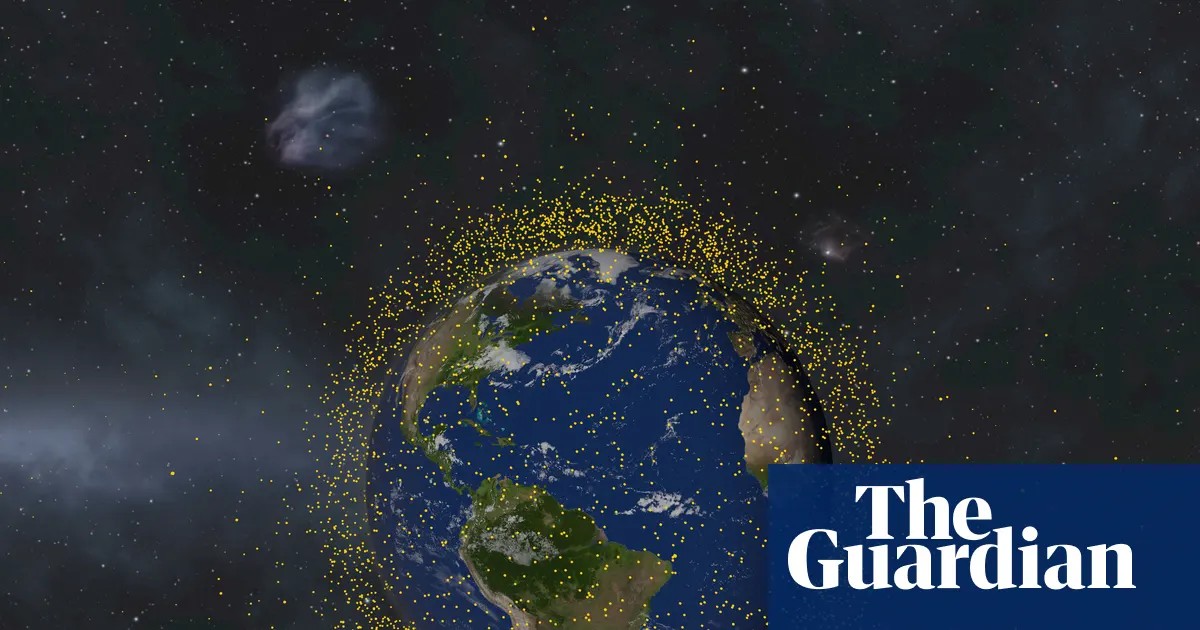
The most striking illustration of this impact is the sheer volume of human-made objects now circling Earth. More than 14,000 satellites, along with discarded rocket stages and defunct spacecraft debris, create a dangerous environment. Collisions have already occurred: in 2007, China destroyed a weather satellite, generating a cloud of dangerous debris, and in 2009, a U.S. and Russian satellite collided, creating nearly 2,000 pieces of shrapnel.
The Risk of Orbital Cascade
Tens of thousands of tiny, high-velocity metal fragments now orbit Earth. The primary concern is a potential domino effect: future collisions could create a cascade of debris, turning Earth’s orbit into a hazardous minefield. This poses a serious threat to critical infrastructure, including communication, navigation, and weather monitoring systems that billions rely on daily.
Why This Matters
The rapid expansion of space activities is not just about technological progress; it’s about the future of our shared environment. The lack of clear international regulations and sustainable practices means the space domain is becoming another example of a common resource exploited without regard for long-term consequences. The issue demands urgent attention because disruptions to satellite services could have cascading effects on global economies, scientific research, and even national security.
The current trajectory suggests that without intervention, space will become another frontier marred by pollution and unsustainable practices, echoing historical mistakes made on Earth. The time to establish robust, enforceable environmental standards for space activities is now.