


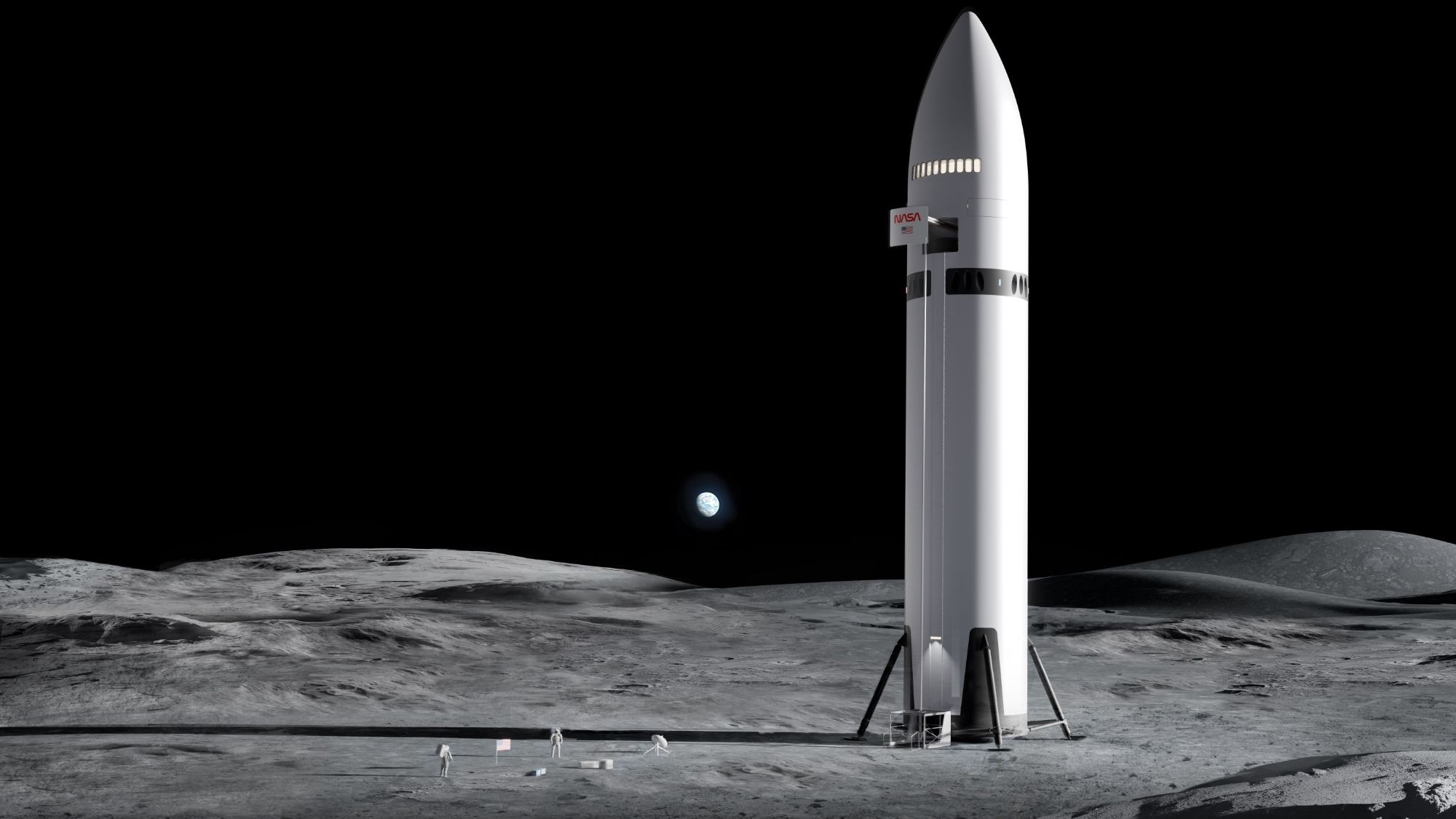
NASA has revised its Artemis program, delaying the Artemis 3 mission – originally slated to land astronauts on the moon using SpaceX’s Starship – to 2027 and opening the landing contract to competition between SpaceX and Blue Origin. The shift reflects a desire for redundancy and faster progress in the face of rising geopolitical competition, particularly from China, which aims to land astronauts on the moon by 2030.
Artemis 3: A Shift in Strategy
The updated plan keeps Artemis 3 in low Earth orbit, focusing on demonstrating technologies like rendezvous and docking between the Orion crew capsule and commercial landers from SpaceX and Blue Origin. This decision follows growing concerns about the pace of Starship’s development, despite recent successful test flights. NASA officials have expressed dissatisfaction with relying solely on SpaceX, particularly as Blue Origin’s Blue Moon lander becomes a viable alternative.
Competition and Redundancy
NASA’s move isn’t just about speed; it’s also about avoiding over-reliance on a single contractor. According to Don Platt, head of the Department of Aerospace at the Florida Institute of Technology, the agency appears determined to foster competition between SpaceX and Blue Origin. Blue Origin has underscored its commitment to lunar development, recently pausing suborbital tourism flights to prioritize its human lunar capabilities.
Artemis 4 and Beyond
The first crewed lunar landing under the revised program is now targeted for Artemis 4 in 2028, with a potential second landing on Artemis 5 the same year. NASA is also prioritizing continuity in its Space Launch System (SLS) rocket configuration, opting to stick with the current “Block I” variant instead of upgrading to the more advanced “Block IB” as previously planned.
The Bigger Picture
This strategic adjustment underscores NASA’s broader goal of establishing a permanent human presence on the moon within the next decade. The agency is facing pressure to accelerate its timeline, not only to maintain U.S. leadership in space but also to counter China’s aggressive lunar ambitions. As NASA Administrator Jared Isaacman stated, “With credible competition from our greatest geopolitical adversary increasing by the day, we need to move faster, eliminate delays and achieve our objectives.”
The reshaped Artemis program demonstrates a pragmatic shift towards redundancy and urgency in the new space race. NASA is no longer willing to wait for a single provider to deliver on its lunar goals, choosing instead to leverage competition as a catalyst for faster, more reliable progress.


