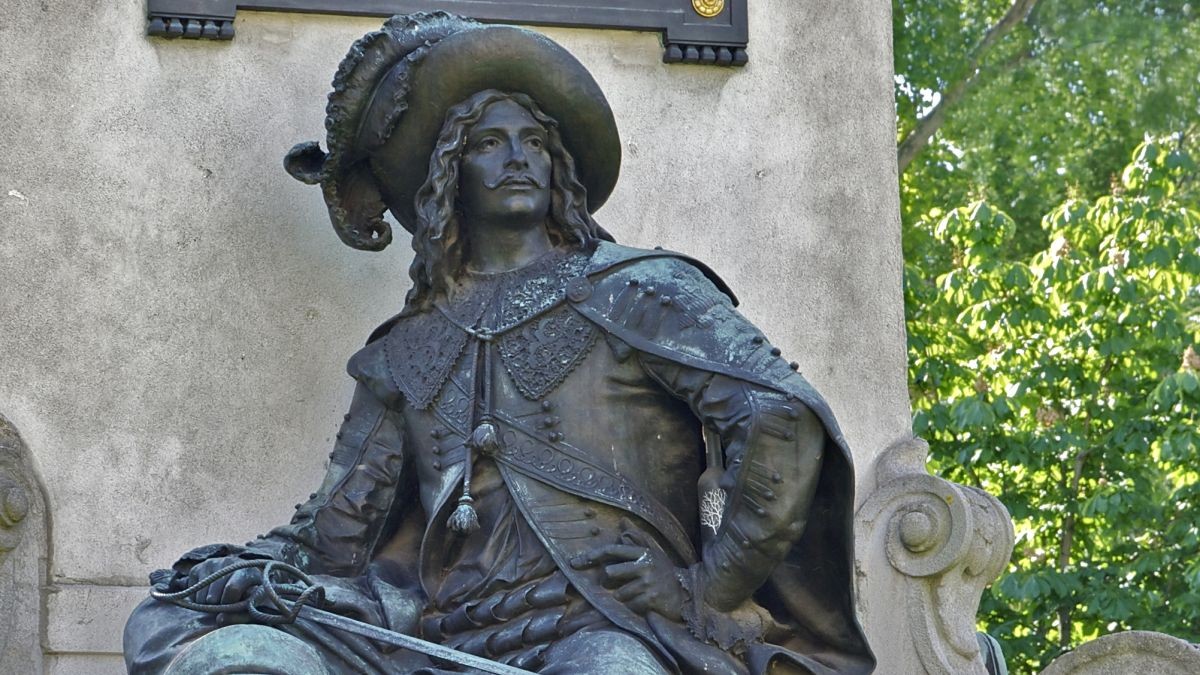
Archaeologists may have discovered the long-lost remains of Charles de Batz de Castelmore d’Artagnan, the historical figure who inspired the iconic character from Alexandre Dumas’ The Three Musketeers. The bones were found beneath a church in Maastricht, Netherlands, near the site where d’Artagnan was killed in action during the 1673 siege of the city.
The Search for a Historical Hero
D’Artagnan was a real 17th-century French soldier who served as captain of the Musketeers under King Louis XIV. He died from a musket wound to the neck, and his final resting place has remained unknown for over 350 years. The discovery is significant because it connects a beloved literary figure to a documented historical reality.
How the Remains Were Found
The remains surfaced unexpectedly during church repairs. Ground subsidence shifted floor tiles, revealing a skeleton buried beneath what was once the church’s altar. Wim Dijkman, a retired archaeologist who dedicated 28 years to this search, was contacted immediately.
According to local records, high-ranking soldiers killed in battle were often buried in nearby churches. The St. Peter and Paul Church in Wolder was a prime candidate due to its proximity to the French army’s campsite during the siege. The absence of church burial records previously hindered the search until this chance discovery.
Supporting Evidence
The skeleton was found with a French coin dated to 1660, and a bullet lodged in the chest – consistent with historical accounts of d’Artagnan’s death. The remains are well-preserved, despite the skull being damaged. These findings strengthen the possibility that these are indeed d’Artagnan’s remains.
DNA Confirmation Pending
To confirm the identity definitively, DNA samples have been extracted from the jawbone and will be compared to genetic material from descendants of d’Artagnan’s father.
“We want to be absolutely certain… whether it is the famous musketeer, who was killed here near Maastricht,” archaeologist Wim Dijkman stated.
Results are expected within weeks, as researchers conduct further analyses at labs both domestically and abroad.
The discovery not only offers a tangible link to a legendary historical figure but also underscores how historical research can sometimes rely on unexpected opportunities. If confirmed, it will finally resolve a centuries-old mystery, bringing the tale of d’Artagnan full circle.