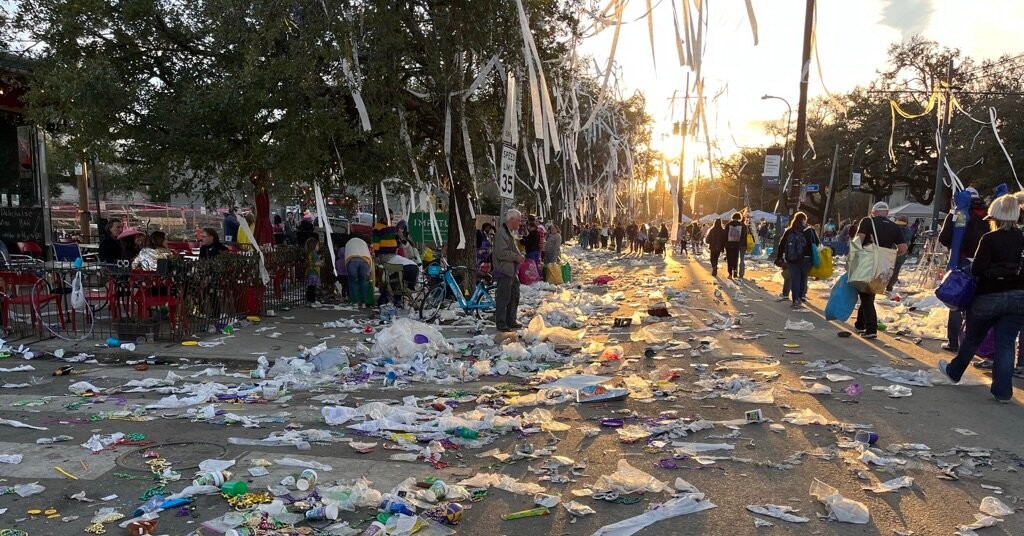
For decades, the spectacle of Mardi Gras in New Orleans has grown alongside a silent, mounting crisis: waste. The city’s iconic celebration generates over 1,100 tons of trash annually, a figure that has steadily increased over the last ten years and poses a growing environmental threat.
The Scale of the Problem
The sheer volume of discarded materials – plastic beads, cups, doubloons, and foam throws – is staggering. While the beads may seem harmless in the moment, they quickly become pollution. Over 60% of Mardi Gras beads tested in 2013 contained dangerous levels of lead, raising public health concerns. Beyond toxicity, the debris clogs drainage systems, exacerbating flood risks in a city already battling coastal erosion and increasingly frequent hurricanes.
The issue is more than just volume. New Orleans, situated in a highly vulnerable region, is facing the harsh realities of climate change. Ignoring the waste problem during Carnival is a short-sighted approach that undermines long-term sustainability. For years, the city measured Carnival’s success by how much trash it collected – a metric that has finally come under scrutiny.
A Growing Movement for Change
A coalition of organizations, officials, and researchers is now pushing for a cultural shift. Brett Davis, of the nonprofit Grounds Krewe, describes the current situation as an “environmental catastrophe” and advocates for solutions like bead reuse programs and a broader re-evaluation of Carnival traditions.
The city’s perspective is evolving. Kevin Ferguson, chief of staff for the New Orleans mayor, admits that past metrics were flawed and that change is essential. The focus is shifting toward mitigating environmental impact rather than simply measuring excess.
What’s Next?
The challenge lies in reshaping a deeply ingrained culture. For generations, Carnival has been defined by excess. Reusing beads, implementing stricter waste management, and reducing reliance on single-use plastics are key steps, but require a collective effort from revelers, organizers, and local authorities.
New Orleans is at a critical juncture: It can either continue down the path of unsustainable excess, or embrace a more responsible Carnival that balances tradition with environmental stewardship. The future of the celebration—and the city itself—may depend on it.