


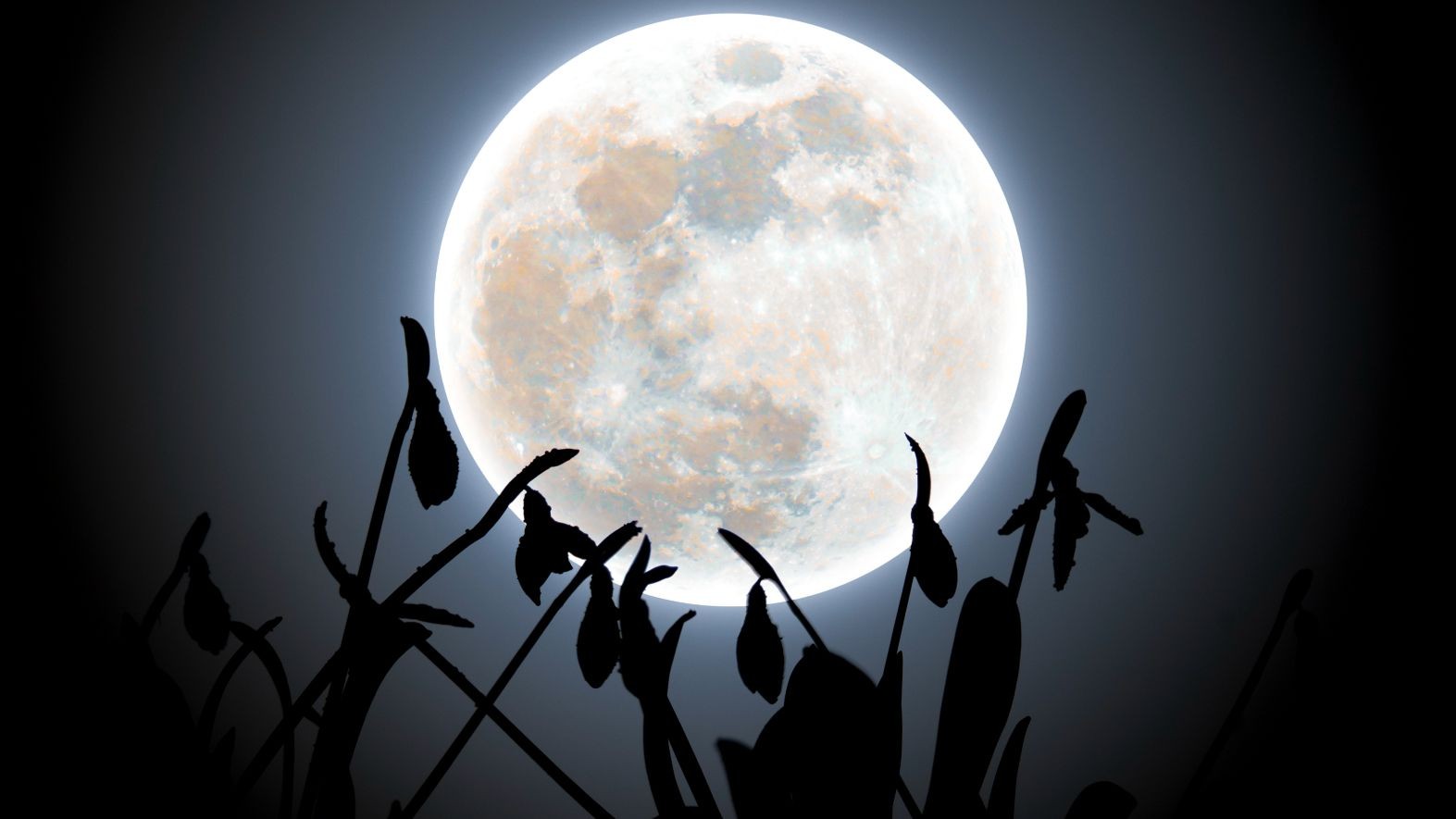
February’s full moon, traditionally known as the Snow Moon due to the heavy snowfall common in northern regions this time of year, recently graced the night sky with a breathtaking spectacle. Astrophotographer Josh Dury captured a particularly striking image on February 1st, showcasing the moon’s silvery glow alongside delicate snowdrops silhouetted in the foreground.
The Science Behind the Shot
The photograph reveals dark lunar seas and impact craters across the moon’s surface—details visible thanks to Dury’s expert technique. He used a Sony A7S III camera with a Sigma 150-600mm Sport Telephoto Lens, stabilized by a Benro Tortoise Tripod. The final image is a composite of multiple exposures, carefully stacked to preserve sharpness in both the foreground and the lunar surface.
Timing and Significance
Dury notes that this shot was achieved after three attempts due to persistent cloud cover, with the clear sky lasting only briefly. He connects the image to Imbolc, the first quarter day, describing it as “a voice from nature itself” signaling the shift from winter to spring. This timing is culturally significant; the Snow Moon traditionally marks a period of transition in many Northern Hemisphere cultures.
Why This Matters
The Snow Moon’s name isn’t merely poetic. Historically, February’s heavy snows made this lunar phase a key marker for communities reliant on winter hunting and resource management. Today, images like Dury’s remind us of the natural rhythms still shaping our world, even as human activity increasingly dominates the landscape. The image underscores the enduring beauty of celestial events and the skill required to capture them.
The Snow Moon serves as a striking reminder that even in the depths of winter, nature continues its cycle of renewal.
For those inspired to try astrophotography, expert guides and quality equipment are available to help capture similar stunning images of the night sky.


