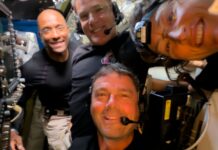
The Artemis II mission has officially entered a new era of space exploration. On Monday, the NASA-led crew aboard the Orion spacecraft broke the long-standing record for the furthest distance humans have ever traveled from Earth, surpassing the milestone set by the Apollo 13 mission in 1970.
This achievement marks a pivotal moment in the Artemis program, which serves as the technological bridge between the lunar missions of the past and the ambitious goal of sending humans to Mars.
A Record-Breaking Journey
At approximately 13:56 EDT on Monday, the Orion spacecraft eclipsed the previous record of 248,655 miles (400,000 km). By traveling even further into the deep space beyond Earth’s orbit, the four-person crew has proven the capabilities of modern deep-space transit.
Canadian astronaut Jeremy Hansen reflected on the magnitude of the feat, noting that the milestone is a tribute to the “extraordinary efforts and feats” of the pioneers who came before them.
Witnessing the Unseen: The Lunar Far Side
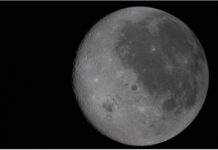
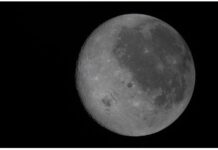
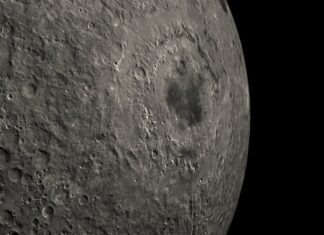
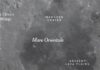
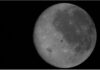
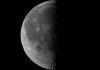
The mission’s primary objective during this phase was a high-altitude flyby of the lunar far side —the hemisphere that is never visible from Earth. While satellites have mapped this region from orbit, this mission provided the first opportunity for human eyes to observe the Moon’s vast craters and lava plains up close.
To capture this unprecedented view, the crew utilized a sophisticated array of imaging tools:
– Professional Digital SLR cameras with both wide-angle and high-zoom lenses.
– Mirrorless cameras designed to mimic human visual perspective.
– Rugged video cameras mounted on the solar array wings for continuous, sweeping views.
– Personal smartphones to document the daily realities of life in deep space.
Beyond mere photography, NASA scientists emphasized the importance of human observation. Dr. Kelsey Young, NASA’s lunar science lead, noted that the human brain is uniquely capable of detecting subtle nuances in color, texture, and geological features that digital sensors might overlook.
The 40-Minute Silence
The mission faced its most intense psychological challenge during the “loss of signal” phase. As Orion passed behind the bulk of the Moon, all radio and laser communications with Earth were severed. For 40 minutes, the astronauts were completely isolated from mission control and their families.
Before the silence fell, Pilot Victor Glover shared a poignant message with the public: “As we prepare to go out of radio communication, we’re still going to feel your love from Earth… We will see you on the other side.”
When contact was finally restored, the relief was palpable. Astronaut Christina Koch’s first words—“It’s so great to hear the Earth again” —underscored the profound isolation of deep-space travel.
A Celestial Spectacle
As the spacecraft moved through its lunar orbit, the crew witnessed a rare phenomenon: a total solar eclipse from the Moon’s perspective. As the Moon blocked the Sun, the astronauts were able to observe the solar corona—the Sun’s shimmering outer atmosphere—which is typically obscured by intense glare.
Why This Matters
The Artemis II mission is far more than a series of record-breaking flights; it is a critical stress test for the hardware and human protocols required for long-duration spaceflight.
By successfully navigating the far side of the Moon and managing the communication blackouts, NASA is gathering the data necessary to:
1. Validate the Orion spacecraft’s life-support and navigation systems.
2. Prepare for the eventual return of human landings on the Moon (the first since 1972).
3. Lay the groundwork for the much more complex journey to Mars.
“We will explore. We will build ships. We will visit again… But ultimately, we will always choose Earth. We will always choose each other.” — Christina Koch
Conclusion
The Artemis II flyby has successfully demonstrated that humanity can push further into the cosmos than ever before, turning a record-breaking distance into a stepping stone for the next great leap in space exploration.