Scientists are pushing the boundaries of biology and computation, creating systems where living brain cells and emulated minds operate within digital environments. Recent breakthroughs show petri dishes of human neurons playing the 1993 shooter Doom, while a virtual fruit fly navigates a simulated world with its scanned brain. This raises questions about sentience, the future of AI, and the potential for biological computing to surpass traditional silicon-based systems.
The Rise of Biological Computing
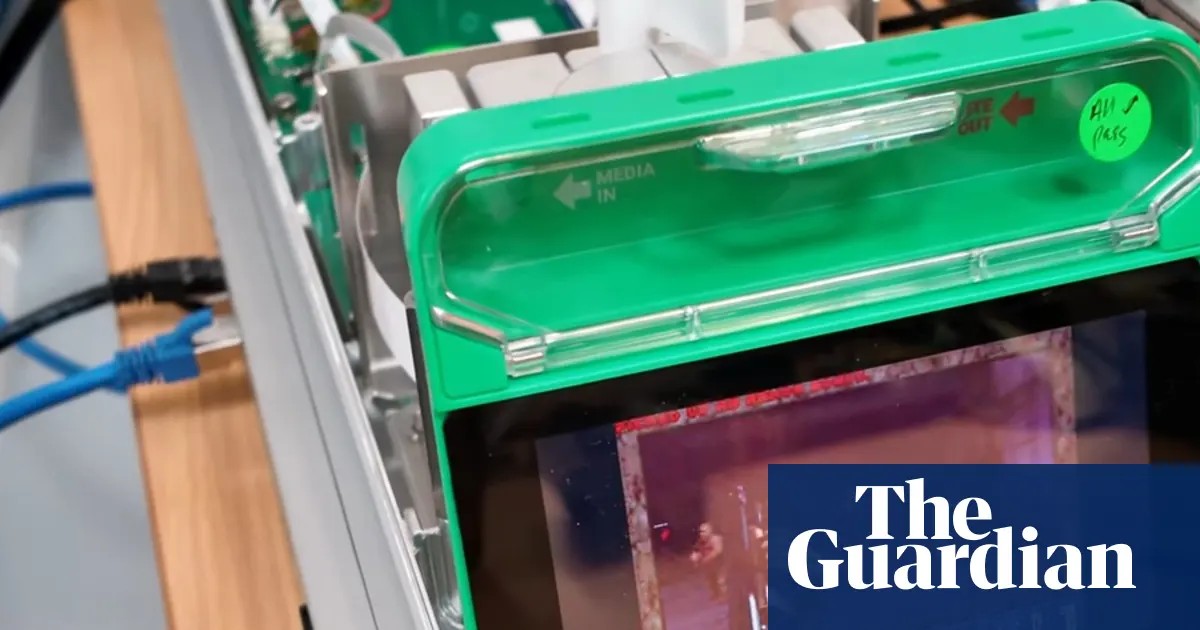
Researchers at Cortical Labs in Melbourne have achieved what they call the “world’s first code-deployable biological computer.” Using approximately 200,000 human brain cells harvested from the CEO’s blood and reprogrammed into neurons, they’ve built a system capable of playing Doom. The process involves converting game data into electrical signals that the neurons understand, allowing them to make decisions and take actions within the game.
This isn’t about creating conscious entities, but about demonstrating the potential of living tissue as a computational substrate. As Sean Cole, the AI engineer who wrote the code, explains, the neurons learn through trial and error, even showing signs of self-preservation by prioritizing targets.
The experiment highlights a critical shift: moving beyond traditional AI training to explore inherent biological intelligence. Cortical Labs’ work builds on previous success teaching neurons to play Pong, but Doom represents a leap in complexity.
Fly Brains in the Machine
Meanwhile, Eon Systems in San Francisco has taken a different approach, scanning and emulating the brain of a fruit fly. The digital fly can now behave like its biological counterpart, navigating a virtual environment without explicit training. This challenges the assumption that intelligence must be learned; instead, much of it may be pre-programmed into neural structures.
The implications are significant. If a fly’s behavior can be replicated through emulation, the possibility of digitizing more complex brains – even human ones – becomes less science fiction and more engineering challenge. The company’s CEO, Michael Andregg, notes that the goal is to create indistinguishable artificial systems, blurring the line between biology and computation.
Why This Matters
These experiments aren’t just technological stunts; they point toward a paradigm shift in how we approach intelligence. The Moravec’s paradox explains why computers excel at abstract reasoning while humans struggle with basic motor skills. Biological systems, honed by millions of years of evolution, may solve problems that traditional computers cannot.
Biological computing could revolutionize fields like medicine, allowing for personalized drug testing on lab-grown neurons. But the ethical implications are immense: what if brain-computer interfaces become powerful enough to manipulate memories or override individual autonomy?
The question isn’t whether this technology will advance, but how we prepare for a future where biological and digital intelligence are inextricably linked. The fact that brain cells can learn to play Doom is less frightening than the realization that the tools to replicate and manipulate minds are rapidly becoming a reality.