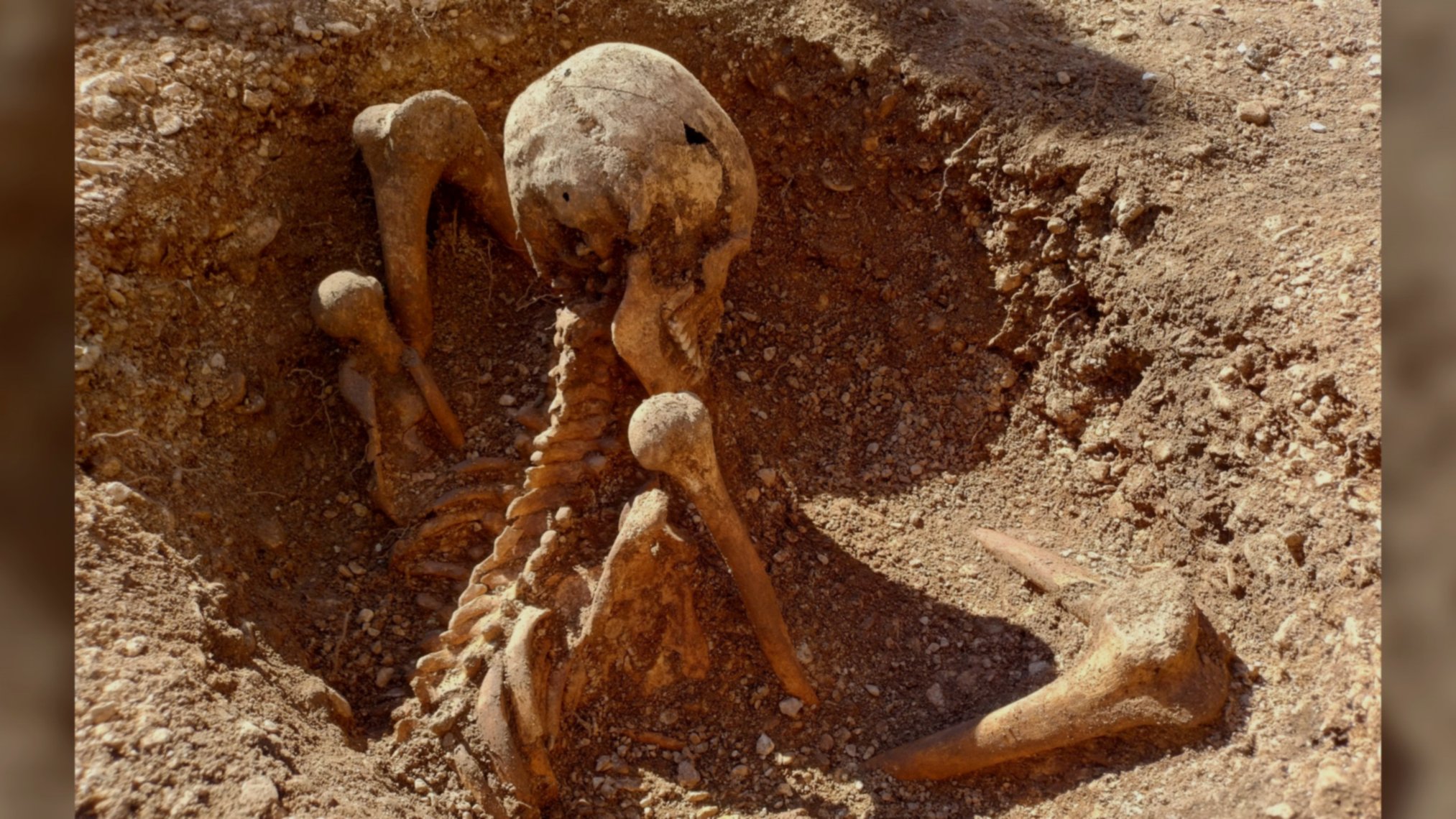
Archaeologists in Dijon, France, have uncovered the remains of at least 18 Celtic men buried in a highly unusual manner dating back over 2,400 years. The discovery, made by France’s National Institute for Preventive Archaeological Research (Inrap) in 2025 and 2026, suggests these individuals – likely warriors or elites – died violent deaths during the Late Iron Age (450–25 B.C.).
The Distinctive Burial Ritual
The skeletons were found seated upright within circular pits arranged in two straight lines. Each pit measured roughly 3.3 feet (1 meter) in diameter, and the bodies were positioned facing west with arms at their sides and legs spread apart. This burial method is rare, with only around 50 similar sites documented across France and Switzerland.
Why it matters: The seated position is not random. It indicates a deliberate ritual reserved for specific individuals. These weren’t common burials, but rather a distinct honor — or a grim message — given to those deemed worthy. The positioning suggests a society that clearly stratified its dead, potentially based on status, role in the community, or battlefield prowess.
Evidence of Brutal Conflict
Initial analysis reveals the deceased were physically robust men aged between 40 and 60. However, key findings point to violent ends. Several skeletons bear unhealed cut marks, indicating fatal wounds inflicted by sharp weapons, likely swords. One individual was found with a black stone armband, dating his death between 300 and 200 B.C. His skull showed two distinct blows from a bladed weapon. At least five others displayed similar injuries on their arm bones.
The significance: The wounds aren’t accidental. They imply these men died in combat or were victims of targeted attacks, reinforcing the idea that they held a warrior-like status. The preservation of these injuries suggests the bodies were buried shortly after death, allowing the wounds to remain fresh at the time of interment.
Contrasting Roman-Era Cemetery Found Nearby
The same excavation also revealed a Roman-era cemetery dating to the first century A.D. This site contained 22 infant burials, interred in coffins with occasional grave offerings like coins or ceramics. The contrast between the violent Celtic burials and the more peaceful Roman infant graves highlights the stark differences in cultural practices and the brutal realities of life during the Late Iron Age.
“The discovery of these seated burials offers an unprecedented insight into Celtic burial customs and the violence that shaped their world.” – Inrap statement
The site’s history is layered, with later use for grape farming and the construction of a convent in 1243. Today, it borders a modern primary school, a stark reminder that the past lies just beneath the surface.
In conclusion: The discovery of these Celtic warriors buried in ritualistic violence is a critical window into a turbulent era. It confirms that warfare and elite status were deeply intertwined in Late Iron Age Gaul, and that death itself was often a violent spectacle. The unusual burial practices underscore a society preoccupied with power, honor, and the brutal realities of survival.