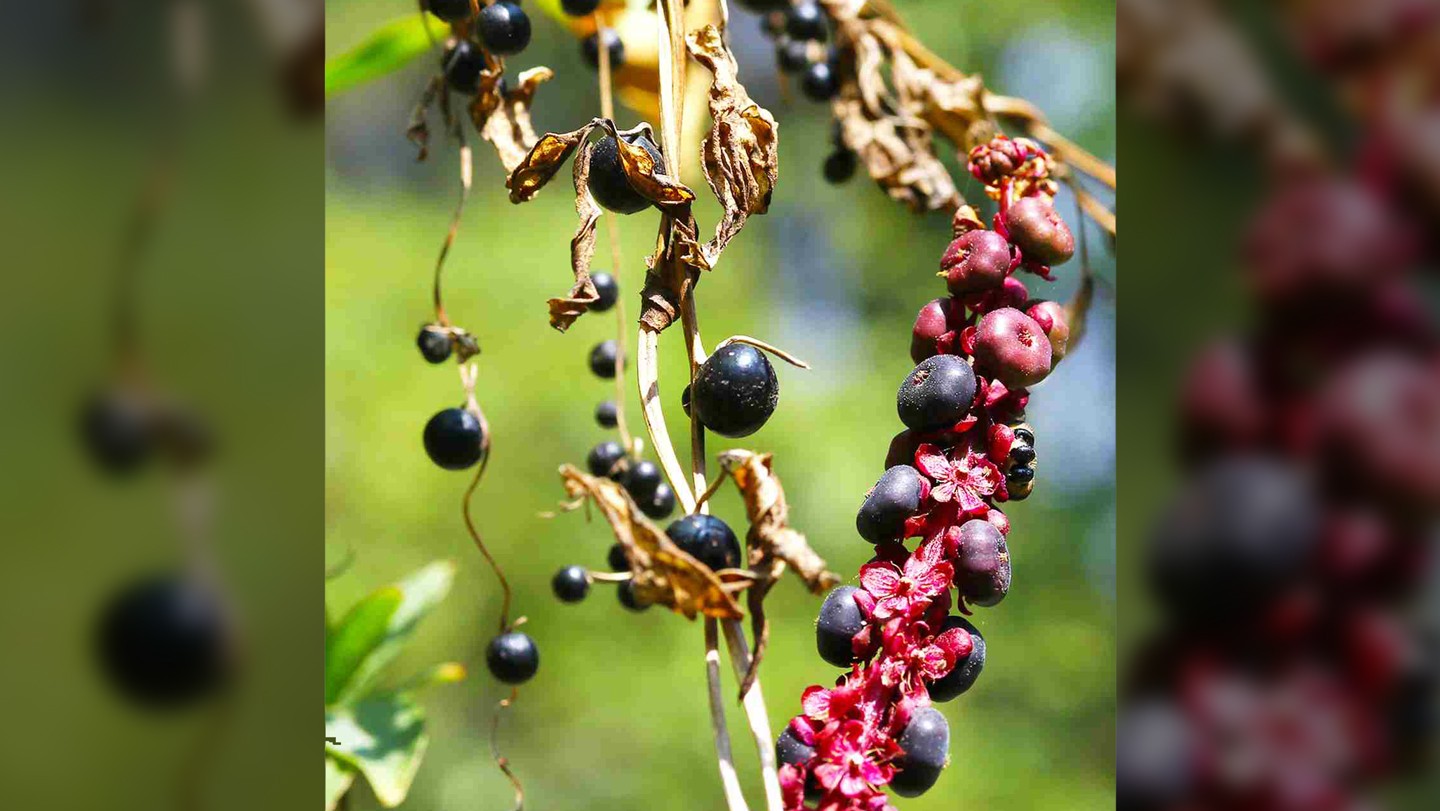
A climbing yam species, Dioscorea melanophyma, has evolved an extraordinary form of deception: it produces bulbils that mimic berries to trick birds into dispersing its clones. Researchers report in the Proceedings of the National Academy of Sciences that these fake berries allow the yam to spread its seeds much more effectively than it could through traditional clonal reproduction.
The Problem with Cloning
The black-bulb yam has lost the ability to reproduce sexually, leaving it dependent on cloning to survive. While cloning is effective, it often limits the spread of the plant to nearby areas. This yam has overcome this limitation by evolving bulbils—small, detachable buds—into convincing berry look-alikes. This is a rare adaptation because bulbils are usually dull in color, not shiny or black like berries.
How the Deception Works
Researchers initially stumbled upon the trick when collecting seeds in Southwest China in 2019. They found bulbils that looked and felt like berries but contained no seeds. Further analysis revealed that the yam’s bulbils closely resemble the berries of at least 15 other species in the area. Camera trap footage confirmed that 22 bird species visit these bulbils, with some actively eating them.
The brown-breasted bulbul (Pycnonotus xanthorrhous ) is particularly susceptible, preferring actual berries when available but readily consuming the yam’s bulbils when fruit is scarce. These bulbils pass through the bird’s digestive system unharmed within about 30 minutes, allowing them to be transported up to 750 meters away.
Broader Implications
This discovery extends the concept of mimicry to nonreproductive plant structures. Plants previously known to employ deception, such as Japanese dogsbane (which lures flies with flowers that smell like dying ants) and certain South American vines (which change their leaves to resemble host plants), all reproduce sexually. The yam’s adaptation is unique because it relies entirely on deceiving animals for dispersal.
As biologist John Pannell notes, “The birds are foxed into dispersing the bulbils because of their resemblance to fruits they are used to eating.” The evolution of these bulbils to perfectly mimic berries is a remarkable example of natural selection at work, as described by evolutionary ecologist Kenji Suetsugu: “It’s a clever evolutionary workaround.”
The yam’s trick highlights the sophisticated ways plants can manipulate their environment to ensure survival, even when they lose traditional reproductive methods. This case underscores that deception in nature is not exclusive to animals; plants are equally capable of elaborate and effective trickery.