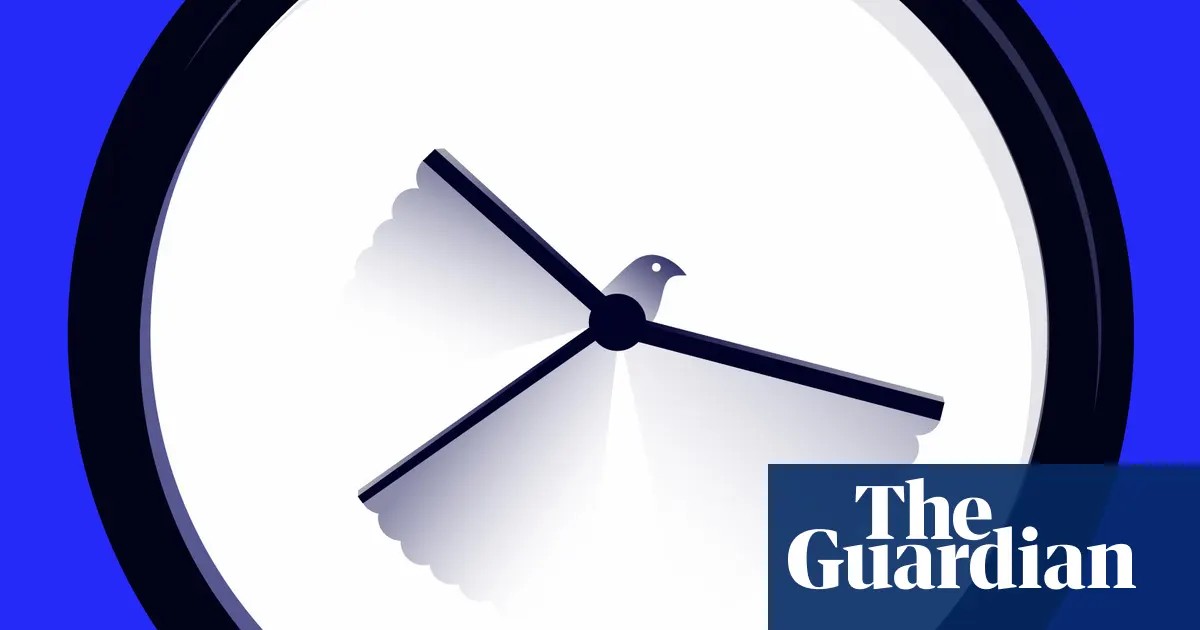
For centuries, humans have been enslaved by the relentless march of time. We structure our lives around clocks, deadlines, and appointments, treating time as an external, unforgiving force. But what if this perception is fundamentally flawed? Emerging scientific research suggests that “clock time” – the rigid, measurable sequence we obsess over – isn’t an objective reality at all. It’s a human construct, a mathematical tool we use to coordinate our actions, but one without independent existence.
The Paradox of Efficiency
The modern obsession with time efficiency has ironically led to what psychologists call “time famine.” The more precisely we measure and pack into our schedules, the less time we feel we have. This scarcity isn’t a matter of physics; it’s a psychological phenomenon. People experiencing time famine are less likely to engage in enjoyable activities, prioritize their health, or nurture relationships. We become trapped in a cycle of chasing seconds, diminishing our quality of life in the process.
How We Perceive Time
Human perception of time is notoriously unreliable. We have no dedicated sensory organs for detecting it, and our experience varies wildly based on emotional state. Boredom stretches minutes into eternities, while excitement compresses hours into fleeting moments. Even neurological conditions demonstrate time’s subjective nature: individuals with akinetopsia perceive motion as a series of frozen stills, while others experience distorted loops or complete temporal breakdowns.
Quantum Reality and The Observer Effect
The illusion of time extends into the realm of physics. Quantum experiments, like the double-slit experiment, reveal that the act of measurement influences reality. A physicist’s decision on how to observe a particle can retroactively affect its past trajectory. This suggests that time isn’t a pre-determined flow but a product of observation. As William Faulkner put it, “The past is never dead. It isn’t even past.”
Indigenous Perspectives
Some cultures further challenge our linear notion of time. The Aymara people of Chile perceive the future as behind them, hidden from view, while the Amondawa of the Amazon lack a concept of time altogether. These perspectives highlight that time isn’t a universal truth but a cultural construct.
The Power of “Lived Time”
Releasing ourselves from the tyranny of clock time allows us to embrace “lived time” – a personal, fluid experience of change. Unlike mechanical measurements, lived time isn’t fragmented into seconds but woven into the rich tapestry of our experiences. Savoring a meal, recalling a memory, or engaging in conversation aren’t isolated moments; they are continuous flows of sensation and connection.
Reclaiming Your Time
To combat time famine, we must recognize the clock as a tool, not a master. Minimizing digital interruptions, consciously slowing down, and focusing on long-term patterns can help reclaim our perception of time. By paying attention to the rhythms of life – the flow of conversation, the changing seasons, the emergence of new experiences – we expand our sense of time rather than shrinking it.
Time, then, isn’t something we chase; it’s something we create. It’s a subjective experience shaped by our interactions with the world, a flow that connects us to each other and to the present moment. By shifting our focus from the relentless beat of the clock to the richness of lived time, we can reclaim control over our own reality.