For centuries, Hatshepsut, one of the few women to rule ancient Egypt as pharaoh, was remembered as a ruthless usurper. Modern scholarship, however, is rewriting her story: she wasn’t a villain, but a shrewd leader whose reign brought prosperity and artistic flourishing. The historical record, long shaped by later kings eager to erase her memory, is finally being re-examined.
The Rise of a Female Pharaoh
Hatshepsut came to power in the 15th century B.C. through a bold power play. As the daughter of Thutmose I, she married her half-brother, Thutmose II. When he died unexpectedly, she took the throne as regent for her young stepson, Thutmose III. Within a few years, she boldly declared herself pharaoh, ruling Egypt for nearly two decades. To legitimize her reign, Hatshepsut presented herself as a living god—a common practice for Egyptian rulers—styling herself “Lord of the Two Lands.”
This was not a simple power grab. Hatshepsut oversaw a period of economic growth, commissioning ambitious building projects (including the magnificent temple complex at Deir el-Bahri) and revitalizing trade routes. Her reign wasn’t marked by conquest or warfare, but by cultural expansion and prosperity.
The Damaged Legacy
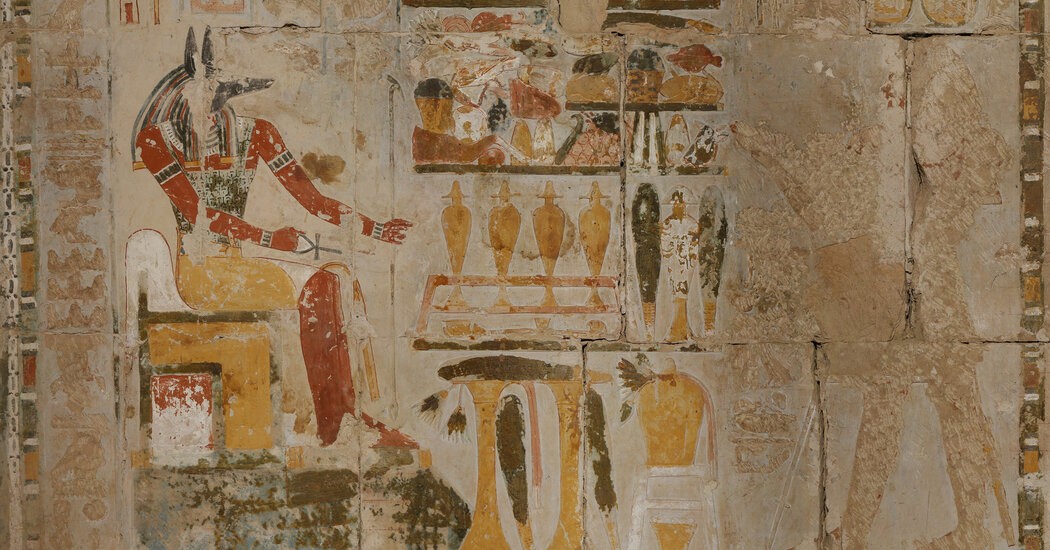
After Hatshepsut’s death, a systematic effort was made to erase her from history. Statues were smashed, reliefs defaced, and her name removed from official records. For decades, scholars assumed this destruction was ordered by Thutmose III, driven by spite or a desire to restore traditional male rule.
The scale of the desecration was discovered in the 1920s, when archaeologists uncovered thousands of shattered images of the female pharaoh. Initially, the brutality of the act reinforced the narrative of Thutmose III’s vengeance.
A New Perspective
Recent research, however, suggests a more complex story. Egyptologist Jun Yi Wong, in a study published in Antiquity, re-examined decades-old excavation records, including unpublished notes and photographs. He found that the damage wasn’t as immediate as previously thought, but occurred over a period of roughly 25 years after Hatshepsut’s death.
Wong also argues that the destruction wasn’t as thorough as earlier accounts suggested. Some of Hatshepsut’s monuments were deliberately left intact, while others were damaged in ways that suggest political rather than purely vengeful motives. Thutmose III may have sought to diminish her influence, not erase her completely.
Why This Matters
Hatshepsut’s story reveals how easily history can be manipulated. For centuries, her actions were framed as villainous because the narrative was controlled by those who followed her. The recent re-evaluation shows that power struggles often lead to historical revisionism. By revisiting primary sources, scholars are uncovering a more nuanced picture of Hatshepsut’s reign: she wasn’t a wicked stepmother, but a capable ruler whose legacy was unjustly tarnished.
The ongoing effort to understand Hatshepsut’s story underscores the importance of questioning established narratives and examining historical events through multiple lenses. Her case serves as a reminder that even in ancient times, power, politics, and memory were deeply intertwined.