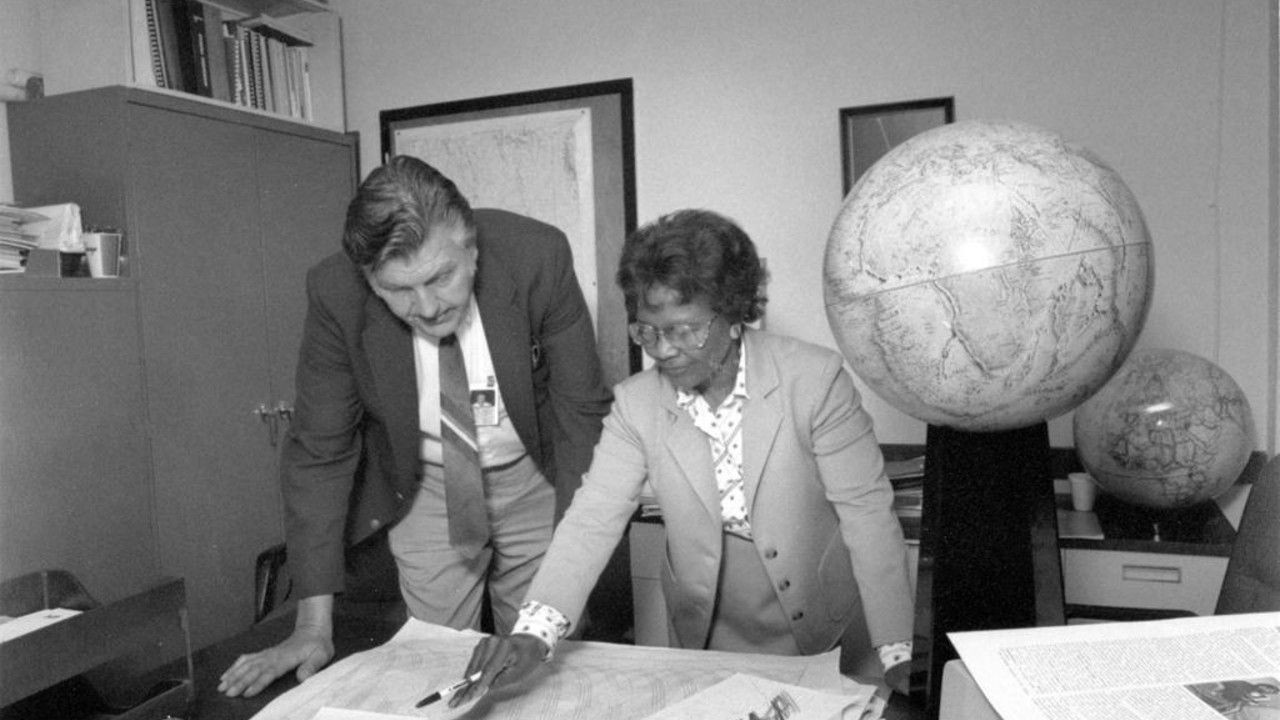
Gladys West, a groundbreaking mathematician whose work was essential to the development of modern global positioning systems (GPS), has died at the age of 95. Her passing, confirmed by a family post on X (formerly Twitter) cited by National Public Radio (NPR), marks the loss of a pivotal figure in technological history. West died of natural causes surrounded by loved ones.
From Segregation to Space Age Innovation
West’s life story is a testament to overcoming systemic barriers. Born in rural Virginia in 1930, during the height of the Jim Crow era, she rose from humble beginnings as the daughter of sharecroppers to become a key innovator in satellite-based navigation. She was one of the few Black professionals working in STEM at the Naval Proving Ground in Dahlgren, Virginia, where she began her career in 1956 – the same year President Eisenhower banned discrimination in federal hiring.
West excelled academically, graduating as valedictorian of her high school class before earning a full scholarship to Virginia State College (now University). She earned degrees in mathematics, defying expectations for Black women in that era. This education set the stage for her 42-year career at the Naval Proving Ground.
The Mathematics Behind GPS
West’s contributions weren’t about building hardware; they were about the complex algorithms needed to accurately model the Earth’s shape. Her work in the 1970s and 1980s refined calculations for the Earth’s geoid – its irregular shape caused by gravity, tides, and other forces. She programmed the IBM 7030 computer, one of the earliest supercomputers, to deliver increasingly precise calculations for the GPS orbit used by satellites.
This is important because without accurate models of the Earth’s shape, GPS wouldn’t work. Satellites rely on precise calculations to determine location, and West’s algorithms made that possible.
A Reluctant User of Her Own Invention
Despite her monumental contribution, West remained humble. When asked about her use of GPS in 2020, she admitted to using it “minimally,” preferring traditional maps. This illustrates a quiet dedication to science, driven by intellectual curiosity rather than personal gain.
Late Recognition and Lasting Legacy
West’s story remained largely unknown until the publication of Margot Lee Shetterly’s “Hidden Figures” in 2016, which brought her work to light alongside other overlooked Black women in STEM. She received several accolades in the years that followed, including induction into the Air Force Space and Missile Pioneers Hall of Fame (2018), the Webby Lifetime Achievement Award (2021), and the Prince Philip Medal from the Royal Academy of Engineering (2021).
Gladys West leaves behind a legacy that reshaped navigation technology. Her perseverance in the face of adversity, combined with her brilliance in mathematics, ensured her place in history. She is survived by her three children and seven grandchildren. Her story serves as a reminder that innovation often comes from those who are least celebrated.