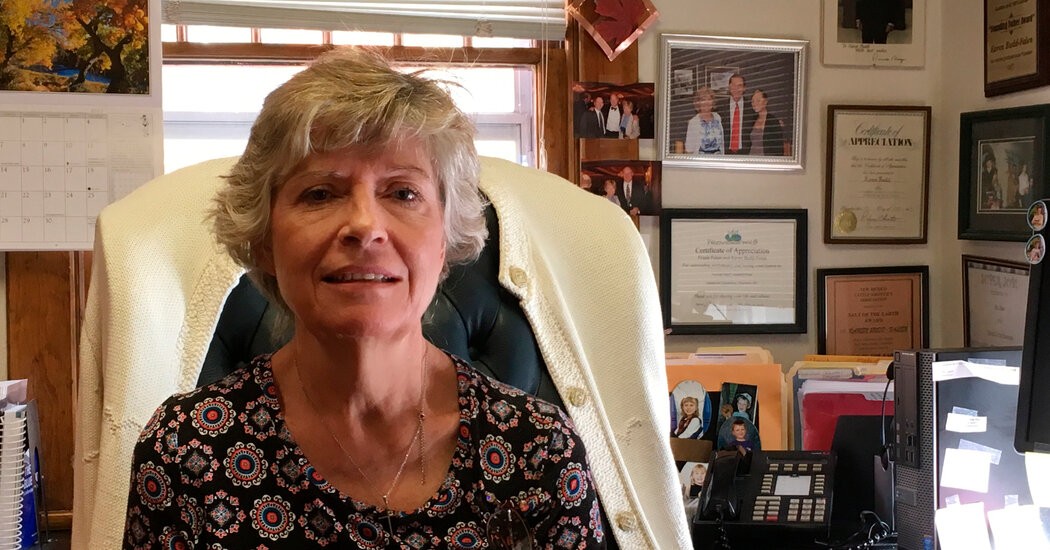
House Democrats have formally requested an investigation into potential conflicts of interest involving a high-ranking Interior Department official, Karen Budd-Falen. The inquiry centers on a $3.5 million transaction between her husband and the developer of a proposed lithium mine while she held a key position within the agency.
The Allegations
Representatives Jared Huffman and Maxine Dexter have accused Ms. Budd-Falen of withholding critical financial disclosures from Congress. Records indicate that in November 2019, while serving as the deputy solicitor responsible for wildlife at Interior, she met with Lithium Nevada Corporation executives as they sought a permit for the $2.2 billion Thacker Pass mine.
Prior to these meetings, in 2018, Ms. Budd-Falen’s husband, Frank Falen, sold water rights from their Nevada ranch to Lithium Nevada (a subsidiary of Lithium Americas) for $3.5 million. Crucially, the majority of this payment was contingent on the mine’s permit approval – a decision that fell under the purview of the Interior Department where Ms. Budd-Falen worked.
Missing Disclosures
Reports from The New York Times and Public Domain reveal that Ms. Budd-Falen did not disclose this financial arrangement in any of the four federal ethics filings she submitted during her tenure at Interior from 2018 to 2021. She returned to the agency in 2023 as the associate deputy secretary.
Why This Matters
This situation raises serious questions about transparency and potential undue influence in federal permitting processes. Lithium is a critical component in electric vehicle batteries, and the Thacker Pass mine is seen as a major domestic source. The controversy underscores the growing scrutiny of financial ties between government officials and industries seeking regulatory approvals.
The Interior Department has not yet responded to requests for comment. The acting inspector general, Caryl Brzymialkiewicz, has received a formal letter from the lawmakers demanding a full investigation.
This case highlights the increasing need for strict ethics oversight in the rapidly expanding clean energy sector, where government decisions can have substantial financial implications for both industry players and public stakeholders.