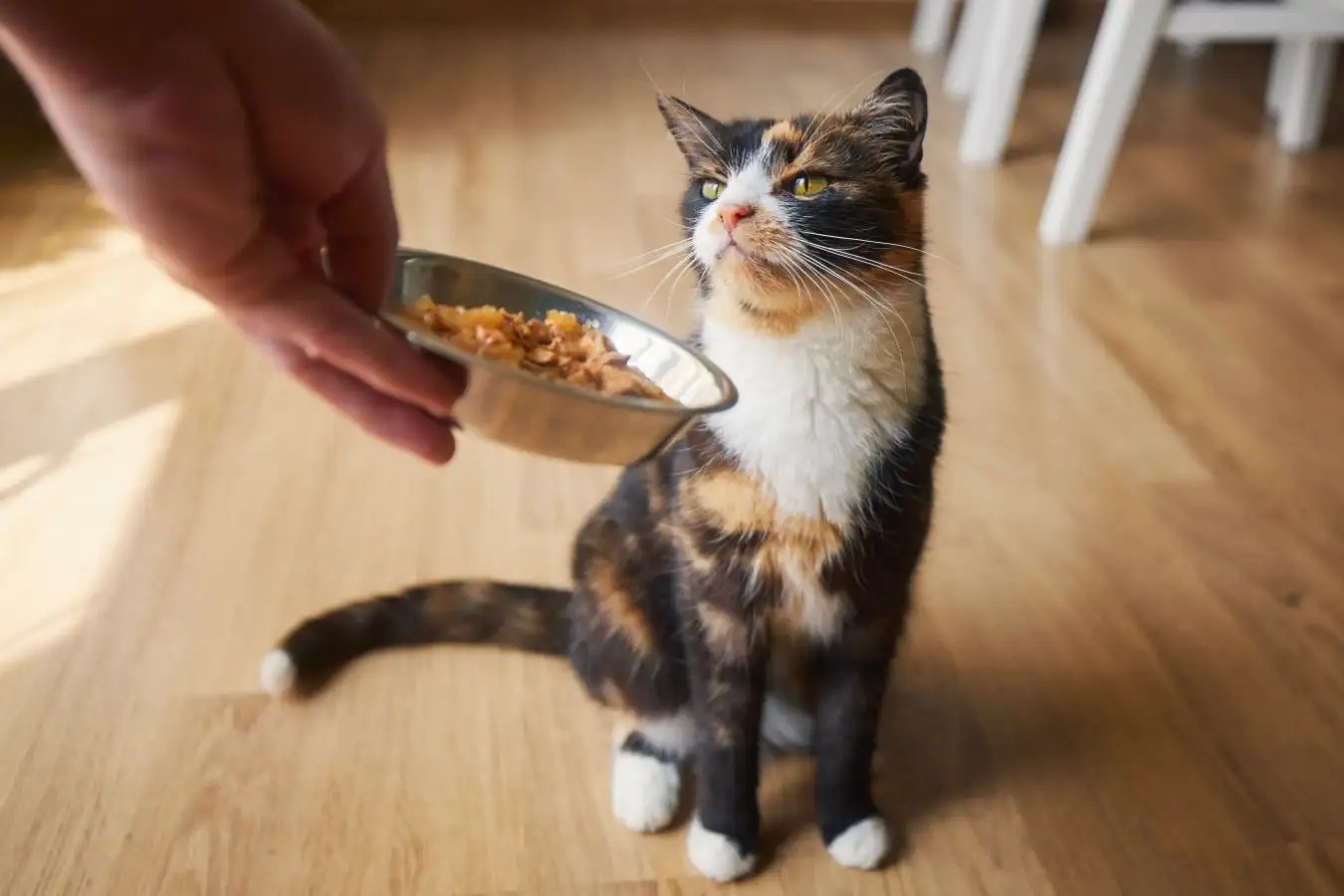
If you have ever watched your cat turn their nose up at a bowl of expensive food they previously loved, you might assume they are being difficult or demanding. However, recent research suggests that what looks like “pickiness” may actually be a response to scent fatigue.
New findings indicate that cats don’t necessarily dislike their food; they simply lose interest when the aroma becomes too familiar.
The Science of Scent Fatigue
A study led by Masao Miyazaki at Iwate University investigated how repetitive feeding affects appetite. By monitoring 12 cats over several sessions, researchers observed a clear pattern: as the cats were repeatedly offered the same dry food, their consumption dropped significantly.
To isolate the role of smell, the researchers conducted a clever experiment using a double-compartment bowl:
– The Setup: Cats could eat food in the top compartment but could only smell food in the bottom compartment.
– The Variable: For most rounds, the food in both compartments was identical. In the final round, the researchers swapped the bottom food for a different variety with a distinct aroma.
– The Result: Even though the cats could not touch the new food, the mere presence of a different scent caused a “rebound” effect. Cats ate roughly twice as much in that final round compared to the previous one.
This suggests that a change in olfactory stimulation—the way food smells—is a powerful driver for feline eating behavior.
Practical Strategies for Pet Owners
The research provides a roadmap for owners struggling with “finicky” eaters. Rather than simply switching brands, which can be costly and disruptive, owners can use “aroma hacks” to re-engage their pets:
- Add “Toppers”: Sprinkling a different food or a flavorful topper on top of their regular meal can refresh the scent profile.
- Mix Textures: Combining wet and dry food can provide a more complex sensory experience.
- Clean the Equipment: Behavior expert Mikel Delgado emphasizes the importance of washing food bowls regularly. Residual odors from previous meals can make a fresh serving of food seem unappealing.
- Vary the Environment: Occasionally changing where or how the food is presented can help break the monotony.
The Double-Edged Sword: Appetite vs. Health
While increasing variety can solve mealtime struggles, experts warn of potential side effects.
“This also partly explains why modern feeding strategies with greater variety of flavours… may result in weight gain in cats,” notes David Thomas of Massey University.
The very thing that makes food enticing—variety and strong aromas—can lead to overconsumption and feline obesity. The challenge for pet owners is to provide sensory variety without increasing total caloric intake.
Furthermore, experts urge caution: if a cat refuses food despite these aromatic adjustments, it may not be a matter of preference, but a sign of an underlying medical issue that requires veterinary attention.
Conclusion: A cat’s refusal to eat is often less about taste and more about a lack of olfactory stimulation. By strategically varying scents and maintaining clean bowls, owners can encourage healthy eating, provided they remain mindful of weight management and underlying health.