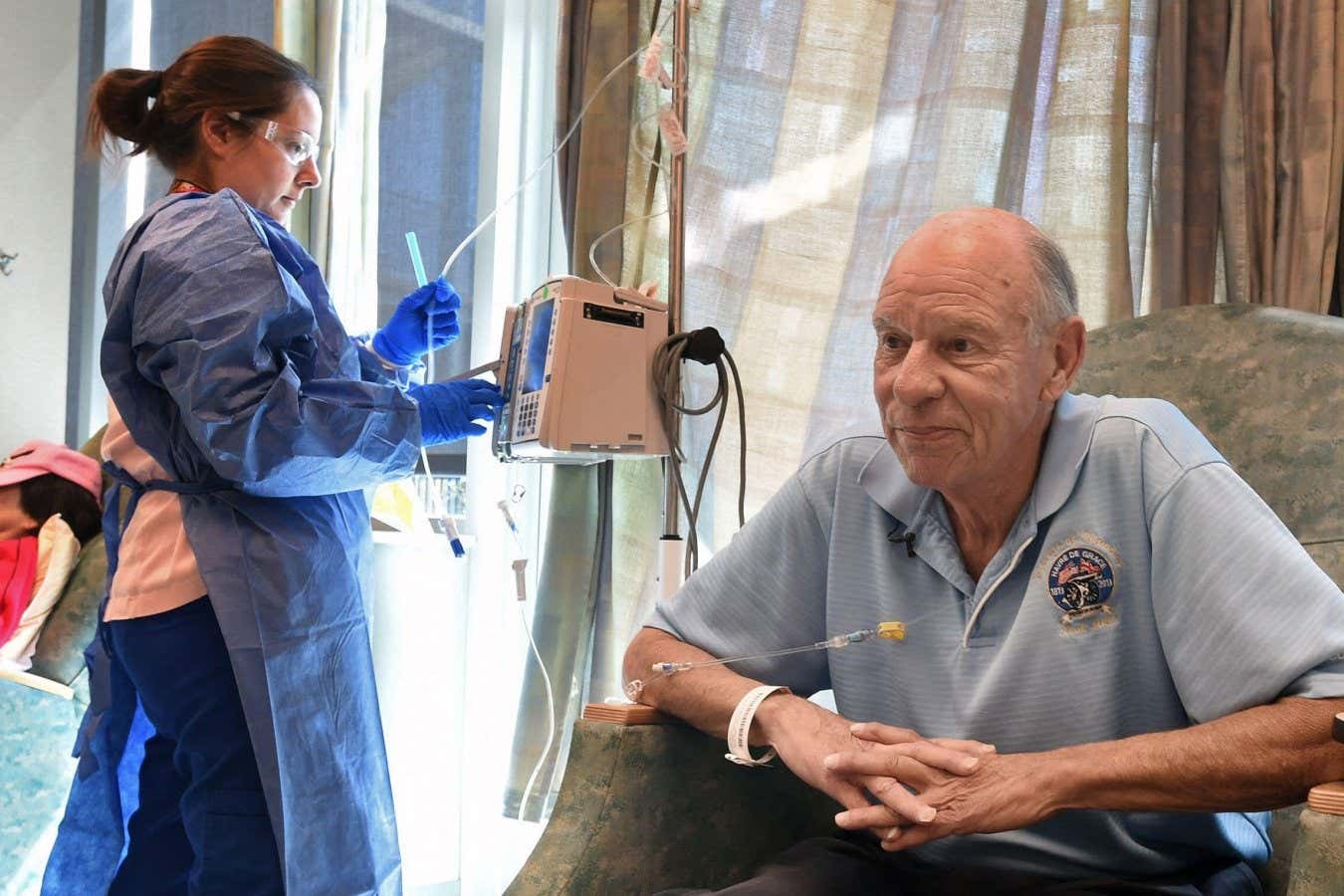
Administering cancer immunotherapy before 3 PM may nearly double patient survival times, according to the first randomized controlled trial directly testing the impact of treatment timing on outcomes. This landmark study, led by researchers at Paris-Saclay University, confirms and expands upon over a dozen previous observational studies suggesting a link between circadian rhythms and cancer treatment effectiveness.
The Science Behind Circadian Timing
The human body operates on a 24-hour internal clock, known as circadian rhythms. These rhythms govern not just sleep and mood, but also fundamental biological processes like metabolism and immune function. This means the effectiveness of drugs, particularly immunotherapies that rely on the immune system, can vary dramatically based on when they are administered.
Checkpoint inhibitors—immunotherapy drugs that unleash the body’s own T-cells to kill cancer—have shown improved outcomes in patients who received them earlier in the day. The new trial, involving 210 non-small cell lung cancer patients, was designed to move beyond correlation and prove causation.
Trial Design and Results
Participants received either pembrolizumab or sintilimab (checkpoint inhibitors) alongside chemotherapy. Half were treated before 3 PM, while the other half received their dose later. After the initial four cycles of this combined immunochemotherapy, treatment continued until tumors progressed, but without strict timing controls.
The results were striking: patients treated before 3 PM survived an average of 28 months, nearly double the 17 months seen in those treated later in the day. Researchers tracked outcomes for an average of 29 months post-treatment. This is a significantly larger effect than seen in many new drug approvals.
Why Does Timing Matter?
The key may lie in the behavior of T-cells, the immune cells activated by checkpoint inhibitors. These cells tend to concentrate around tumors in the morning, before dispersing into the bloodstream later in the day. Delivering immunotherapy when T-cells are already positioned near the tumor maximizes their effectiveness.
Future Research and Implications
While this study provides strong evidence, further research is needed to refine timing protocols. Exploring more precise schedules (e.g., 11 AM instead of a broad “before 3 PM” window) could yield even better results. Additionally, the benefits may extend to other cancers that respond to immunotherapy, such as skin and bladder cancers, but likely won’t work for tumors unresponsive to the intervention in the first place.
The findings underscore the importance of considering biological rhythms in cancer care. Optimizing treatment timing has the potential to dramatically improve survival rates and represents a simple yet powerful shift in how cancer therapy is delivered.