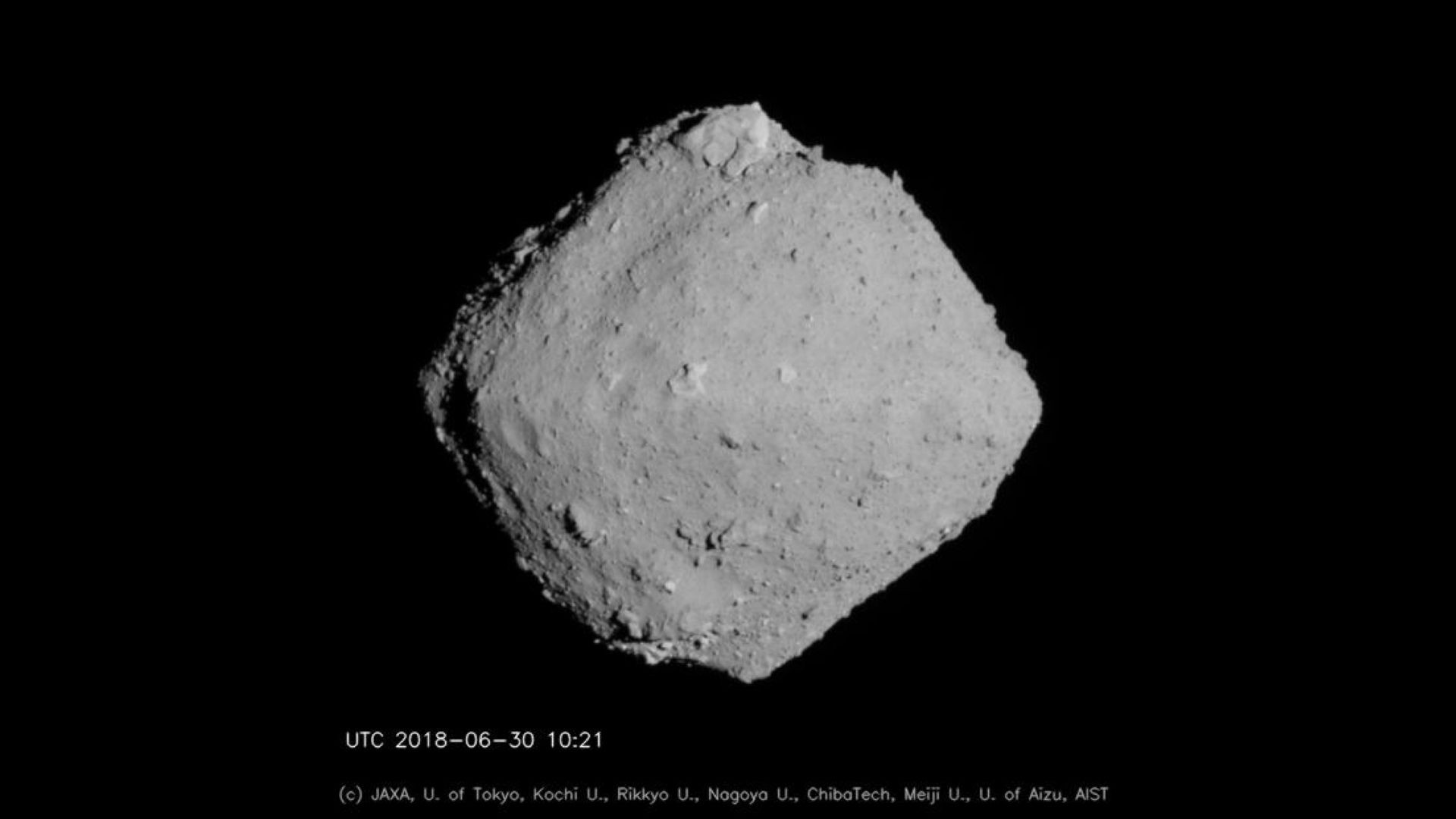
The discovery of all five “letters” of DNA on the asteroid Ryugu, a 900-meter space rock currently hurtling through our solar system, adds significant weight to theories that the essential ingredients for life may be common across the cosmos. This finding, published in Nature Astronomy, doesn’t mean life exists on Ryugu — but it does suggest that the chemical foundations of life can form and survive in the harsh conditions of space.
Key Findings from Ryugu
Researchers analyzed samples collected by Japan’s Hayabusa2 mission, which returned dust from Ryugu to Earth in 2020. The samples, though small (less than the weight of a quarter), revealed a complete set of nucleobases – adenine, guanine, cytosine, thymine, and uracil – which are the molecular building blocks of DNA and RNA. This is not an isolated incident: similar nucleobases were previously detected on asteroid Bennu by NASA’s OSIRIS-REx spacecraft and in several meteorites.
Why this matters: The widespread presence of these compounds suggests that they aren’t unique to Earth and could have been delivered to our planet via asteroids and comets during the early solar system.
The Origins of Life: Earth or Space?
The question of how life began remains one of science’s greatest mysteries. Theories range from life originating in Earth’s deep-sea vents to being seeded from elsewhere in the solar system. These new discoveries do not confirm that life began in space, but they do strengthen the possibility that prebiotic molecules – the precursors to life – formed outside of Earth and were later transported here.
César Menor Salván, an astrobiologist at the University of Alcalá in Spain, notes that these findings demonstrate which organic materials can form in non-biological conditions, regardless of where life ultimately originated.
Ammonia’s Role in Nucleobase Formation
The Ryugu analysis also uncovered a surprising correlation between the ratio of purines and pyrimidines (two classes of nucleobases) and the concentration of ammonia in the asteroid material. This suggests that ammonia may have played a previously unrecognized role in the formation of these compounds, potentially under unique conditions present in early solar system rocks.
This is significant because: ammonia is another molecule critical for life, and this connection hints at a more complex chemical pathway for the origin of life than previously understood.
Implications for Future Research
Ryugu and Bennu are both carbonaceous asteroids, representing 75% of all asteroids in our solar system. Evidence suggests they may have originated from the same parent body, broken apart billions of years ago. The detection of nucleobases in these asteroids, along with the Orgueil meteorite, supports the hypothesis that carbonaceous asteroids were vital in delivering the chemical components necessary for life to early Earth.
The findings from Ryugu reinforce the idea that the building blocks of life are widespread and that asteroids may have played a key role in seeding our planet with the ingredients for life’s emergence. Further study of these space rocks will be crucial to understanding the pathways that led to life on Earth – and perhaps elsewhere in the universe.