


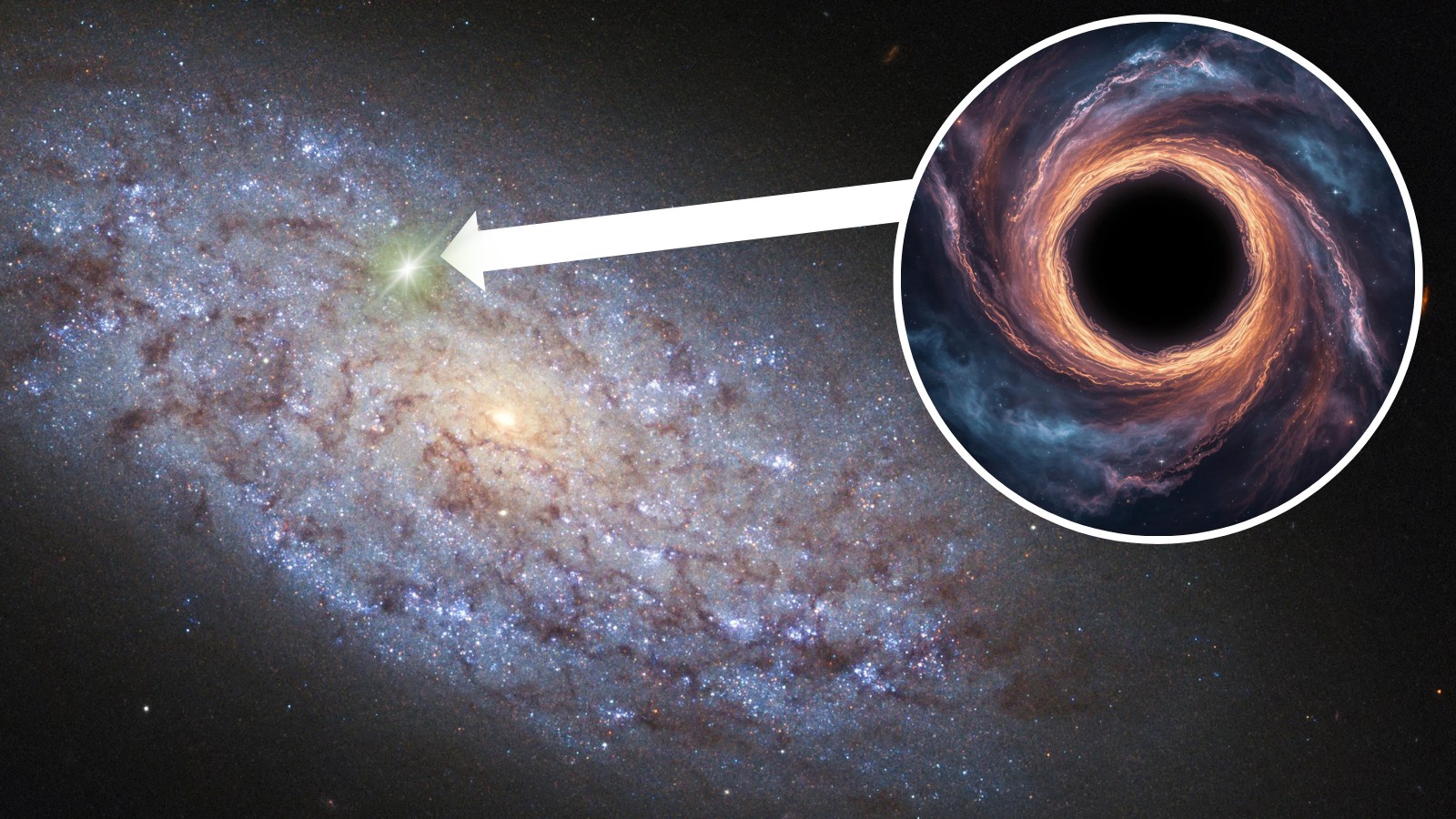
Astronomers using the Hubble and Chandra space telescopes have discovered potential evidence of “wandering” black holes in small dwarf galaxies. These findings may hold clues to how supermassive black holes grew so rapidly in the early universe, a long-standing puzzle in cosmology. The discovery suggests that some black holes don’t settle at the centers of galaxies, instead drifting through them like cosmic nomads.
The Mystery of Early Supermassive Black Holes
Supermassive black holes – millions or billions of times the mass of our Sun – are now known to exist at the cores of most large galaxies. However, the James Webb Space Telescope (JWST) is revealing that some existed shockingly early in the universe’s history, less than a billion years after the Big Bang. This challenges current theories, which suggest that it would take over a billion years for these giants to form through mergers and accretion.
One explanation is the existence of early “black hole seeds.” These smaller black holes could have jump-started the growth process, but they’ve remained elusive in direct observations. Dwarf galaxies offer a unique testing ground for this idea, because they have simpler, less chaotic histories than larger galaxies. Their relative quietness means they may preserve a “fossil record” of these early black hole seeds.
Why Dwarf Galaxies Matter
Dwarf galaxies, with masses billions of times that of the Sun, are ideal for studying black hole formation. Unlike massive galaxies where mergers and intense activity obscure the origins of their black holes, dwarf galaxies offer a clearer view. The researchers hypothesize that in these smaller systems, black holes can form outside the galactic center and remain there, never spiraling inward.
Models predict that up to half of the black holes in dwarf galaxies might be wandering. This means current surveys focused on galactic centers could be missing a significant population of massive black holes.
Distinguishing Wandering Black Holes From Other Signals
Identifying these rogue black holes is difficult. They must be distinguished from other bright sources, such as starburst regions (areas of intense star formation) and supernova explosions. The team analyzed 12 dwarf galaxies previously detected in radio waves, finding eight with active galactic nuclei (AGNs) offset from the center. These AGNs suggest the presence of wandering black holes.
The challenge lies in confirming these signals. Dimmer than their larger counterparts, these dwarf galaxy AGNs are hard to detect in optical and X-ray wavelengths. One candidate (ID 64) turned out to be a distant AGN aligned by chance with the dwarf galaxy, highlighting the difficulties in verification.
Next Steps: JWST’s Role
The team used Hubble and Chandra to confirm one off-center AGN, but seven remain unconfirmed. The next step could involve the James Webb Space Telescope (JWST), which could resolve the sources of the radio emissions with greater precision. It could reveal whether the signals come from wandering black holes within star clusters or from distant galaxies overlapping in the sky.
“Identifying the origin of the off-nuclear radio sources may be possible with the exquisite capabilities of the JWST,” said Megan R. Sturm, the team leader.
The search for wandering black holes in dwarf galaxies is a promising avenue for understanding the early universe and the origins of supermassive black holes. If confirmed, these findings would reshape our understanding of black hole formation and evolution.


