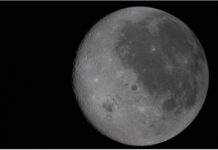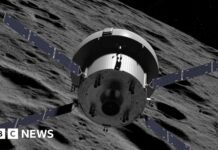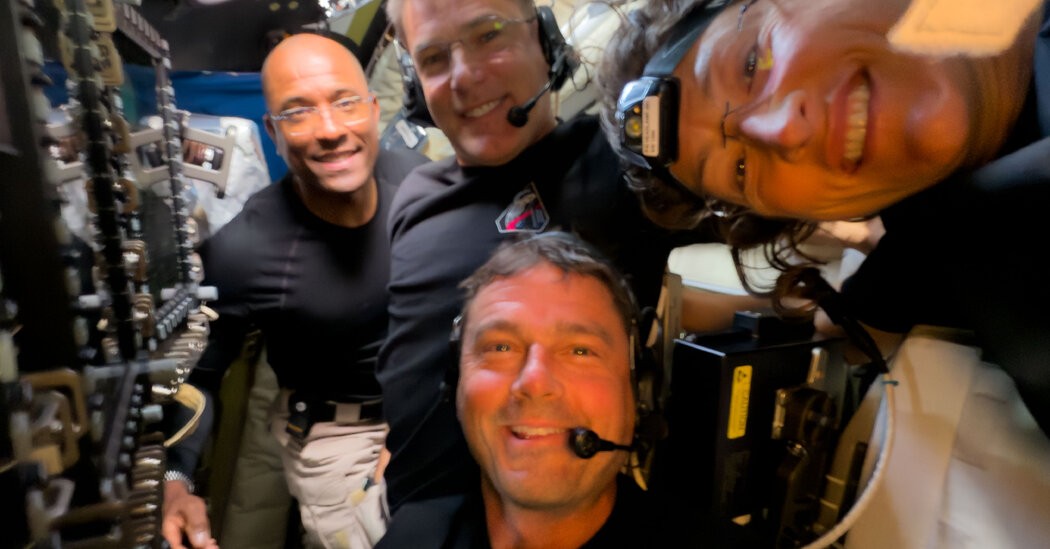
The Artemis II mission is proving that space exploration is about more than just telemetry and technical checklists; it is a profoundly human experience. As the crew of the spacecraft Integrity conducted their historic lunar flyby this past Monday, their reports to Mission Control shifted from the purely scientific to the deeply personal, offering a rare glimpse into the emotional impact of seeing our celestial neighbor up close.
A Shift from Technical to Transcendental
While the primary objective of the mission involves the rigorous identification and photography of geological features on the far side of the moon, the astronauts’ communication style has taken an unexpected turn. Rather than sticking to the dry, objective language typical of space agency reports, the crew has shared a sense of genuine awe.
Mission specialist Christina Koch provided one of the most striking reflections during the mission. Rather than merely reporting coordinates or visual data, she described an “overwhelming sense of being moved” by the lunar view.
“The moon really is its own unique body in the universe,” Koch remarked to Mission Control. “It’s not just a poster in the sky that goes by — it’s a real place.”
The Human Element in Scientific Inquiry
This shift in tone highlights a fascinating intersection between hard science and human emotion. Traditionally, scientific inquiry is presented as a colorless, detached process. However, the Artemis II crew is modeling a different approach—one where wonder and observation go hand in hand.
As the spacecraft approached the lunar surface over the weekend, the crew’s excitement became palpable:
– Commander Reid Wiseman actively documented impact craters and distinct swirls on the lunar surface with visible enthusiasm.
– The crew’s descriptions of lunar hills, valleys, and plains serve to bridge the gap between complex astronomical data and the public’s imagination.
Why This Matters
This emotional connection is more than just “feel-good” commentary; it serves a critical role in modern space exploration. By sharing their sense of wonder, the astronauts help transform abstract scientific goals into a shared human experience. This narrative approach can foster greater public engagement and support for long-term lunar and deep-space exploration programs.
Conclusion
The Artemis II mission is successfully blending technical achievement with a profound human perspective, reminding us that the moon is not just a scientific subject, but a tangible, awe-inspiring destination.