


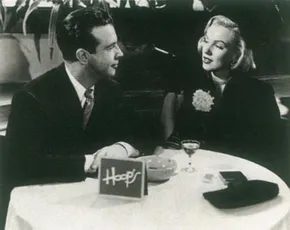
Marilyn Monroe was hungry. Not just for fame, but for a contract that would actually stick.
You look back at her filmography and see the icons. But before the gold records, the box office numbers, and the tragic end, there was a period of grinding obscurity in Los Angeles. It was 1950. The Asphalt Jungle had dropped, proving she had screen presence. That’s it. That’s the resume she was working with.
She needed work. So she took what MGM gave her. Or rather, what MGM didn’t give her led her elsewhere.
The Minor Roles Nobody Talks About
Right before The Asphalt Jungle hit theaters, Monroe picked up two minor gigs. Both were distributed by MGM. Neither made her a star.
First up was Right Cross. A prizefight drama. She played Dusky Ledoux. Unlikely name for a Hollywood actress, right? She had one scene. A dinner date with Dick Powell. She said a few lines. Trivial ones. You can barely hear her over the sound of the plot moving on without her.
Then there was Hometown Story. This one is weird. It was an industrial film. Financed by General Motors. Monroe played Miss Martin, a secretary in a newspaper office. It was propaganda for American industry. Hour-long. Boring as hell, probably.
Did it get a wide release? No. The only public showing was at Loew’s Metropolitan in Brooklyn in June 1950. After that? Nothing. It vanished. Until 1962. Then, suddenly, it popped up in Australia as a “Monroe oddity.” A curio. A collector’s item. That was its life.
The MGM Rejection
Here is the rub.
She had The Asphalt Jungle. She had Right Cross. She had this weird GM film. She was hoping for a contract. MGM was the big dog. She wanted in.
They didn’t offer one.
None.
So where did she go? The Fireball.
A Mickey Rooney vehicle. Rooney was hitting rock bottom here. Before the comebacks, before the magic, he was struggling through a bleak stretch. The Fireball was a lightweight story about a roller-skating star. It attracted zero notice. It did nothing for Monroe. It didn’t help her career. It just existed.
Cynthia and the Gasoline Pitch
If the films weren’t working, the TV ads were.
Monroe did a commercial for the Union Oil Company of California. She’s in it. Introducing her car. “Cynthia.”
She speaks in a provocative voice. Confidence radiating off the screen. She’s talking about Royal Triton gasoline. The only gas good enough for Cynthia’s “little tummy.”
It aired in California during the 1950-1951 season. It’s a relic. A time capsule of a specific kind of marketing. But it’s real. It’s her.
She was trying. She was taking bits. She was being told no by the studio that could have made her. But she kept going. Right Cross. Hometown Story. The Fireball. A gas pitch.
The contract didn’t come. Not yet. But the grind? The grind was just getting started.
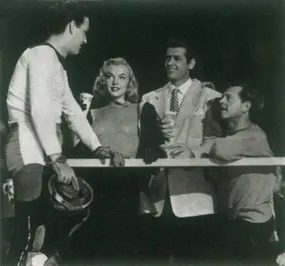

The early 1950s were a grind for Monroe. Johnny Hyde, her agent and lover, was pushing hard to lock her into a lucrative studio contract. He knew that credibility was the only currency that mattered in Hollywood then. To get there, he booked her a role in Joseph L. Mankiewicz’s All About Eve.
The studio had just seen a massive hit, and Hyde knew exactly where she fit in. Her part was smaller than her work in The Asphalt Jungle. Some might call that a step back. Hyde saw it as a strategic masterstroke. Why take a leading role in a B-movie when you can hold screen time in a masterpiece? He convinced her that working with a major director outweighed the spotlight of a minor one.
He was right.
Her character, Miss Caswell, was a specific kind of empty-headed starlet. The script had her graduating from the “Copacabana School of Dramatic Art.” She didn’t hide her methods. She used her looks. She used her body. She was blunt about it.
This contrasted sharply with Anne Baxter’s Eve Harrington. Eve was a cunning manipulator. She climbed the ladder through underhanded tricks and psychological games. Miss Caswell was transparent. Her ambition was naked.
When Eve’s true nature was exposed, the audience—and the other characters—saw the difference. Eve’s cruelty felt personal and calculated. Miss Caswell’s approach felt almost honest by comparison. It was a small role, but it stuck. It proved Monroe could hold her own in high-stakes drama. It wasn’t just a job. It was a validation.
The industry started to take notice. Not because she was the biggest star on screen, but because she was undeniable in the details. Hyde had secured more than a paycheck. He had secured a reputation. And reputations are harder to shake than bad contracts.
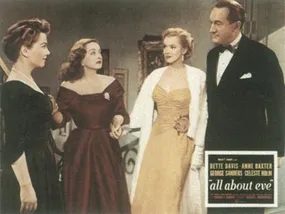

The lineup was stacked. You’ve got Barbara Stanwyck. Bette Davis. George Sanders. Celeste Holm. A powerhouse ensemble that didn’t leave much room for anyone else to shine. But Marilyn Monroe? She carved out space anyway.
It wasn’t just another role. It was a callback to her earlier work in The Asphalt Jungle, a reminder of the raw, magnetic quality that had already caught industry eyes. Here, she played Miss Caswell. The part wasn’t huge, but it was sharp. Precise. A small slice of screen time that somehow dominated the atmosphere.
Darryl F. Zanuck didn’t just notice. He was hooked.
The head of Twentieth Century-Fox saw something in her performance that couldn’t be ignored. It wasn’t just star power in the making. It was a specific, undeniable talent. So he made a move. He offered her another screen test. Another shot at a contract.
Why does this matter? Because it wasn’t a guarantee. It was a pivot point. One test. One chance. If she nailed it, she stayed. If she missed? Back to the chorus lines.
The pressure was absolute. Zanuck was looking for a reason to keep her on the payroll, to mold her into the next big thing. He saw the potential. Now he needed to see if it was real.
The next step was the test itself.

