


Luc Besson didn’t just write and direct Léon: The Professional. He crafted a jagged, beautiful, and deeply unsettling piece of cinema that refused to play nice with Hollywood standards. It’s an action film that bleeds. A story about loneliness that somehow feels like a warm hug dipped in cyanide. You know the plot. An assassin. A kid. A plant. The rest is pop culture history. But the road this film took to get to your screen was anything but straight.
Here is what you actually need to know about the 1994 cult classic.
Why The US Version Feels Different
If you’ve watched The Professional, you might have noticed the pacing feels slightly off. Or maybe the emotional beats don’t land quite the same way they do in the original cut. That’s not your imagination.
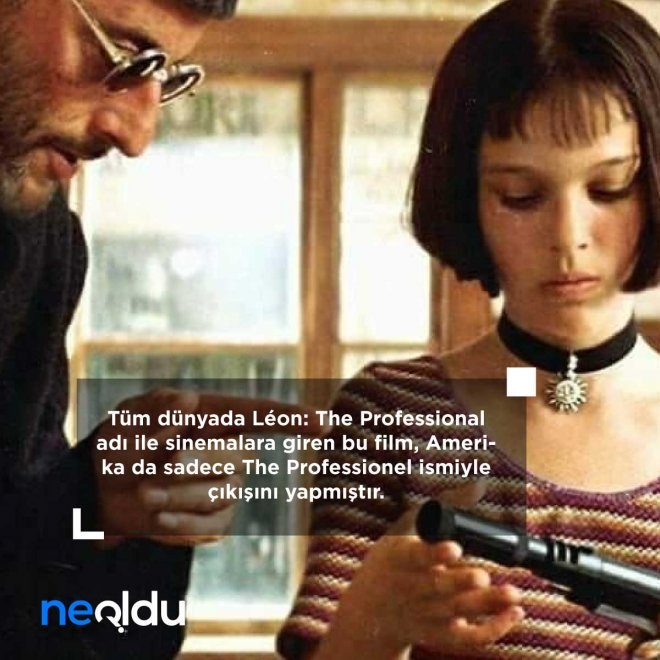
The film was released globally as Léon: The Professional. In the United States, it dropped simply as The Professional. That name change alone tells you everything about how American distributors viewed it. They wanted to sanitize it. They wanted to make it palatable.
And they succeeded, at a cost.
During the Los Angeles premiere, test audiences reacted violently to the developing relationship between Léon and Mathilda. It wasn’t just discomfort. It was rejection. The studio panicked. They took 25 minutes out of the runtime. Scenes cut. Context lost. The tension that made the film so electric was diluted.
Then came the Turkish release. April 28, 1995. The title? Sevginin Gücü (The Power of Love). They turned a gritty neo-noir thriller about trauma and isolation into a romantic melodrama. The original Léon remains the definitive version. The cut US version is a shadow. The Turkish dub is a fever dream.
The Cast That Defined a Generation
You can’t talk about Léon without talking about the people who inhabited its cold, sterile apartments and chaotic streets. Three names. Three performances that reshaped how audiences view genre films.
1. Jean Reno as Léon
Reno didn’t play the hitman. He played a man who had forgotten how to be human. His Léon is precise. Silent. Domestic. He cleans his apartment with the same rigor he uses to clean up a hit. Reno brought a quiet dignity to a character who could have easily become a caricature. He wasn’t cool. He was competent. And that made him terrifying.
2. Natalie Portman as Mathilda
She was 12. She had no professional training. And she delivered one of the most complex coming-of-age performances in cinema history. Portman didn’t act like a child. She acted like someone who had been forced to grow up too fast. Her Mathilda isn’t cute. She’s damaged. She’s angry. She’s looking for a father figure and finds a mentor instead. The dynamic between her and Reno is the engine of the film. Without Portman’s raw, unpolished energy, the story collapses.
3. Gary Oldman as Stansfield
Oldman didn’t just play the villain. He invented a new kind of monster. Norman Stansfield isn’t just evil. He’s chaotic.

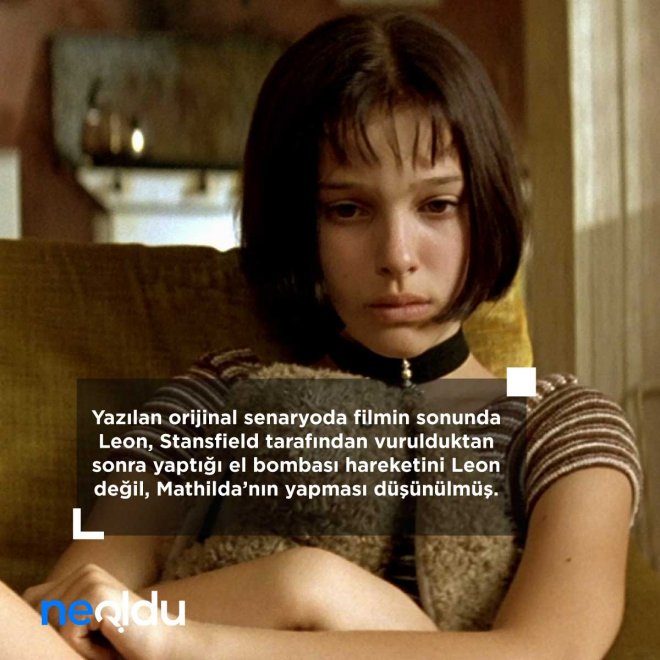
The original script for The Matrix took a much darker turn than what eventually appeared on screen. In the deleted ending, when Agent Smith shoots Leon, Leon does not pull the grenade pin himself. Instead, Mathilda makes the move.
Director Luc Besson had a clear vision for this. He knew that Mathilda’s character was characterized by her need for peace and stability. Having her detonate a hand grenade didn’t seem to match his personality. The studio and filmmakers were probably worried about the audience’s reaction to such a shocking character change.
Instead of forcing a quiet character to do a violent act, they edited the scene. Leon is the one dealing with the explosive consequences. It’s a small change, but it keeps the story grounded in what makes the characters believable.
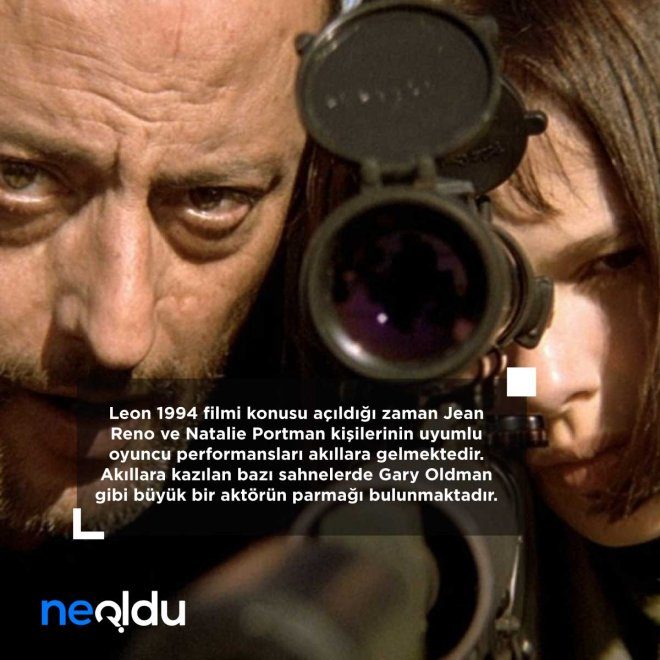
Leon: The Professional (1994) is often remembered for the unlikely pairing of Jean Reno and a teenage Natalie Portman. Their on-screen chemistry defined the film, but its legacy has another layer. It lives in moments where the presence of Gary Oldman turns up the heat.
Take the scene where his character Stansfield threatens Mathilda’s father. The tension is palpable. But what sticks in your mind is the fact that Oldman was working off-script. He improvised the entire encounter.
He didn’t just act near to Michael Badalucco who plays the father. He came uncomfortably close. Then he started sniffing him. Badalucco had no idea what was happening. He responded to the real intrusion.
Years later, Badalucco admitted the discomfort he felt. He said it came directly from Oldman’s improvised performance. Wasn’t planned. It wasn’t in the script. It was just Oldman’s decision to push the boundary.
Result? A scene that feels more dangerous than anything written down. You can’t plan for that kind of raw discomfort. It has to happen in the moment.
This moment changed our view of the villain. Stansfield isn’t just evil. He is unpredictable. He is chaotic. And this unpredictability makes him terrifying.
Oldman didn’t need dialogue to make his point. He used proximity. He used scent. He used silence.
It’s a reminder that some of the film’s best moments aren’t scripted. They get stolen. Taken directly from another actor’s personal space.
Does it make the scene better? Perhaps. It definitely makes it memorable. You remember it because it feels real. Because it feels unsafe.
And in a movie about safe houses and hidden identities, it’s about feeling unsafe.
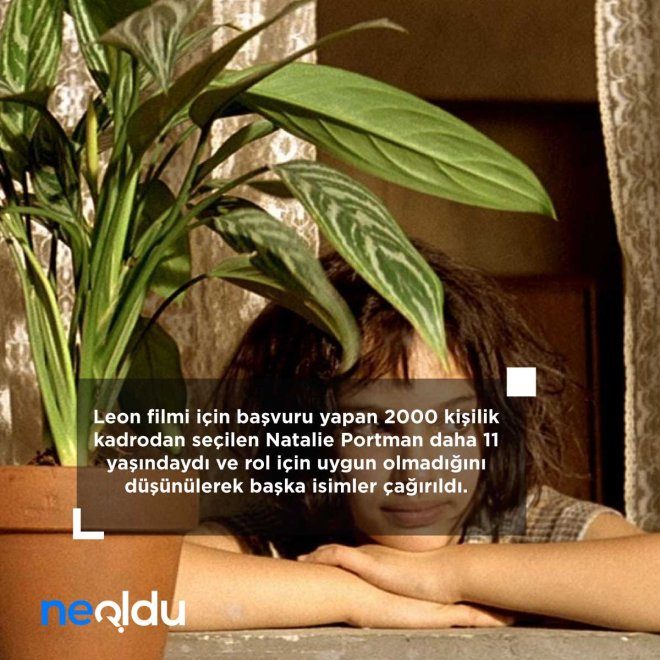
Casting the iconic role of Mathilda in Léon: The Professional was a chaotic back-and-forth process involving thousands of candidates. From an original pool of 2,000 applicants, Natalie Portman was one of the few selected for the final round. She was only 11 years old at the time, young enough to capture the character’s innocence, but perhaps too young for the film’s darker themes.
After the directors initially rejected Portman, they turned to Liv Tyler. Tyler was 15, which made her a more mature candidate on paper. But that maturity became a problem. The filmmakers thought she was too old for Mathilda. The role required a special precocious vulnerability that seemed to hide Tyler’s age.
So the casting directors did something unusual. They brought Portman back.
Director’s feeling
This time it wasn’t just about age. It was about presence. When casting director Todd Thaler saw Portman again, the decision was immediate. He didn’t hesitate. He didn’t hold the meeting. He didn’t weigh the pros and cons.
She was perfect. The role was hers.
Thaler was so impressed with her performance that he gave the role to Portman without a second thought. It was a gamble that paid off spectacularly. Portman’s portrayal of Mathilda, a young girl navigating a world of violence and loneliness, became one of the most memorable debuts in film history.
Why Liv Tyler was considered
It’s easy to forget that Liv Tyler was nominated. In 1994, she was just starting to build his career. At 15, she had a different energy than Portman. But the character Mathilda had to be a child, not a teenager. Portman and Tyler weren’t just four years apart in age; There were differences in how the audience would see the relationship between the killer and the girl.
Portman’s return to the casting room was a turning point. She didn’t just read for the part; she embodied it. Her ability to convey fear, loneliness and strange affection with a single glance sealed the deal.
Effect of the decision
If Léon: The Professional cast Tyler, the movie would be remembered differently. Portman’s youth added a tragic layer to the story. It emphasized the loss of innocence that drives the narrative. Thaler’s instinct to ignore her initial hesitation and choose a younger girl changed not only Portman’s career, but also the film’s legacy.
Portman earned critical acclaim and even an Oscar nomination for her performance. It was a role that required more than just acting; it required raw, unfiltered emotional honesty.
Review
Today, the casting story is almost as famous as the film itself. It’s a reminder of how unpredictable the industry can be. Two actors. Two ages. Role. The difference was a single moment when the casting director trusted his gut.
The rest is history. Portman’s Mathilda is still the benchmark for young actresses. And Tyler’s brief consideration is just a footnote in the film’s production history.
Do it
Similar origin of Nikita and Leon
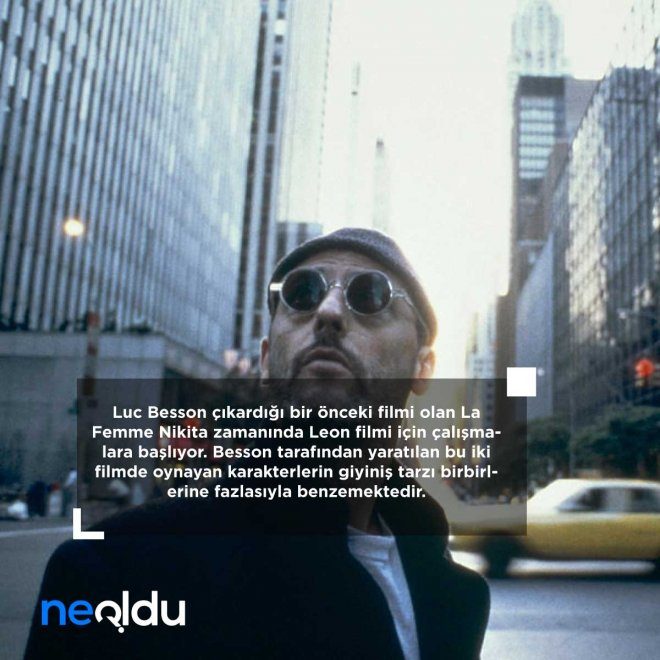
Luc Besson doesn’t just make one movie. He builds the world, even if the characters don’t know it yet. When La Femme Nikita was filmed, Besson was already deep in development on The Professional (known as Leon in some markets).
This connection is not temporary. This is aesthetics.
Check out the wardrobes from both movies. The style is almost the same. dark coat. Utilitarianism cuts. A special scary urban area curated by Besson himself. He felt that the plot of “The Woman in Nikita” swallowed up the personal identity of the main character. This task cast a dark shadow on the woman. So he took the same visual language and the same thematic core and applied it to Leon.
The characters in Besson’s films from the early 1990s have a clear visual DNA characterized by austere and functional fashion.
This is a stylistic echo. It’s a fingerprint. You can trace the lineage of this cool and level-headed agent from Nikita to Leon. It’s the same director. We have the same eyes. Their faces are just different.
Cheesecake Factory’s real name wasn’t even that
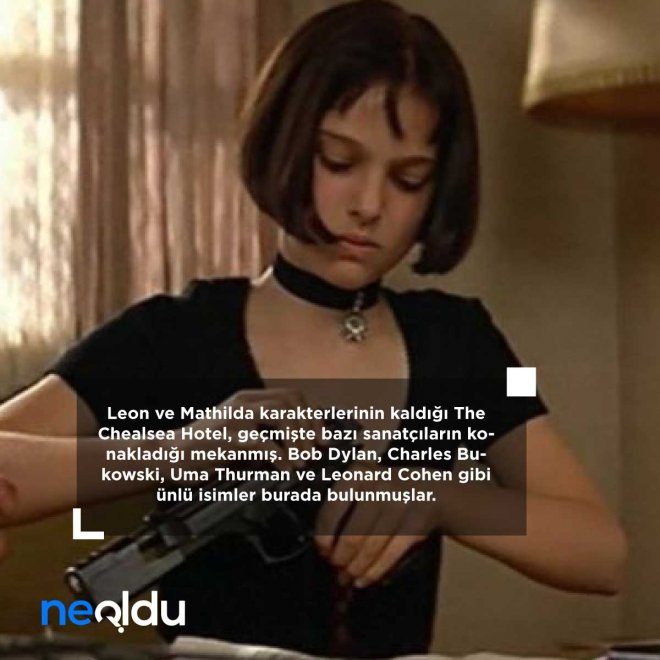
The Chelsea Hotel is not just a backdrop. It’s a character.
Leon and Mathilda stay there. For a movie, it’s a dark haven. But to the real world, it’s a legend. Famous people didn’t just come here. They lived here. They broke up here. They wrote books here.
Bob Dylan stayed here. Charles Bukowski stayed here. Leonard Cohen stayed here. Uma Thurman stayed here.
They are all in the history books. Or rather, about the history of the building.
But one writer did something different. He didn’t just stay. He created something enormous within these walls.
Arthur C Clarke.
He wrote 2001: A Space Odyssey right in the hotel. Not in a quiet cabin. Not in a university. At the Chelsea Hotel.
Think about it. A book about the future. Written in a hotel known for its past.
The contrast is strong. Outside, there is chaos among the artists. And inside, a mind mapping out stars.
It makes you wonder which is more intense. Party outside or silence inside?
The film uses this location to show Leon’s isolation. But the building has its own noise. A century of it.
Leon isn’t the first to hide there. He’s just the latest.
Why Jean Reno was always Luc Besson’s first choice for The Professional
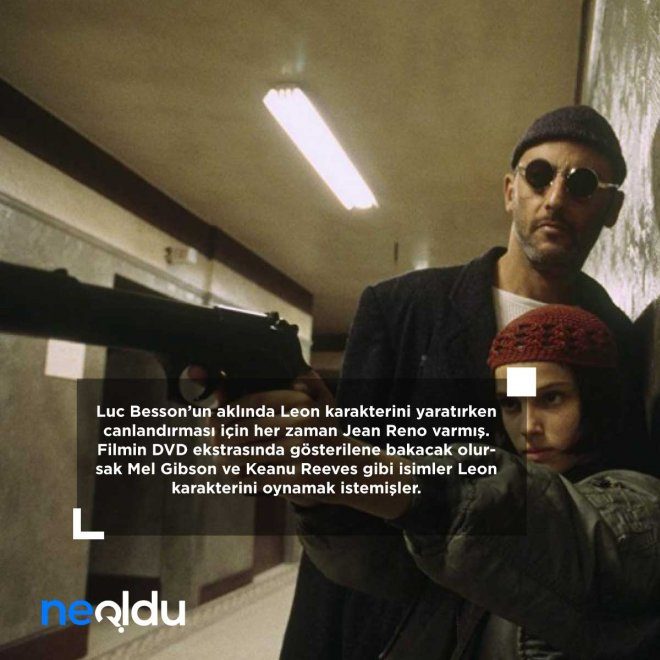
The casting history of “Leon: The Professional” is one of those intriguing “what ifs” in the industry that almost derails the movie before it even starts. Jean Reno is now synonymous with the stoic, flower-loving killer, but he’s not the only one who wears this hat. In fact, Luc Besson had a specific vision from the start. According to the DVD releases, the director never saw anyone other than Reno in the role. This was not a passing idea. This was a fixed point in Besson’s creative compass.
But Hollywood rarely does this. When you’re working on a project of this size, you’re surrounded by bigger names. According to the files, the A-list actors who auditioned for Leon included big names like Mel Gibson and Keanu Reeves. Both were interested. Both are strong candidates. This adds excitement to the final film. What happens when the director’s muse is replaced by the leading man of Braveheart or the rising man of Bill & Ted’s Excellent Adventure?
Reeves presents a case of one particularly interesting incident. He was in the middle of his own breakthrough moment. Earlier that year, he starred in the action thriller Speed, which catapulted him from a TV favorite to a global action icon. The film was a huge commercial success and cemented his place as a mainstay at the box office. Because of this momentum, being cast by a major European director like Besson felt like the perfect career move.
But that didn’t happen.
Why did or wasn’t Reeves accepted? The record doesn’t give details, but the timeline suggests a scheduling conflict, or perhaps a mutual decision that Speed was too valuable to pass up. While Reeves continued to shape the 90s action genre in very different directions, Besson still held his own. He brought in Jean Reno, an actor whose looks and sensitive emotional range fit the role like a tailored suit.
その結果、映画を定義するダイナミクスが生まれます。 もしリーブスがこの役を演じていたら、ゲイリー・オールドマン演じるノーマン・スタンスフィールドとの相性は違ったものに感じられたかもしれない――おそらくもっと上品で、よりアメリカ的なものになっただろう。 しかし、リノのレオンはギザギザで物静かで人間味に溢れています。 監督の当初の選択に固執するという決定により、映画の独特の質感が保たれました。 これは、適切な俳優が最大のスターではなく、監督のビジョンを否定できないものにする俳優である場合があることを思い出させてくれます。
振り返ってみると、the near-miss adds weight to the final product. リーブスのキャリアの背景では、スピード エンジンのエコーが聞こえてきそうです。一方、リノのキャラクターは部屋の隅に座ってシダの世話をしています。 Both choices would have created different classics. But the one we got? それは必然だと感じます。
The improvised scream that changed everything
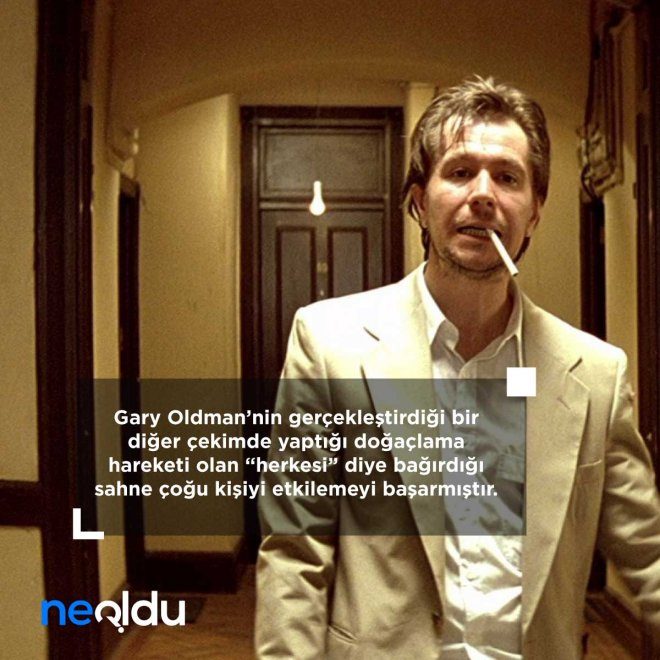
There’s one particular moment in The Fifth Element that refuses to go away, largely because it wasn’t in the script. Gary Oldman’s character Ruby Rhod is completely manic, and in one of the final takes, the actor decided to break character just enough to shout the word “everyone” at the top of his lungs. It was pure, unscripted energy.
Why did he do that? According to Oldman, the goal was simple: to make director Luc Besson laugh. The studio set was probably tense, the pace hectic and the pressure high. A sudden, absurd outburst cuts through this tension like a knife. And it worked. Besson cracked. More importantly, the scene landed with such force that it remained in the final cut.
Over the years, Oldman has found that people still recognize him on the street at that very moment. It’s a testament to how well the performance translates to the screen. You don’t need a line of dialogue to be memorable. Sometimes you just have to yell at the universe. Or at least yell at the camera.
The scene became the focus of fan discussions. Not because it made narrative sense in the traditional sense, but because it captured the film’s chaotic soul. Ruby Rhod is a character somewhere between satire and nightmare. That scream? It bridged the gap.
“The scene stuck because it felt real. In a movie full of stylized nonsense, a genuine moment of chaos stands out.”
It’s a reminder that sometimes the best parts of a movie are the accidents. Ones that cannot be planned. The kind where you watch the screen and wonder if the actor has lost his mind or if he’s finally found it.
Hitchcock easter egg hidden in #Leon:The Professional
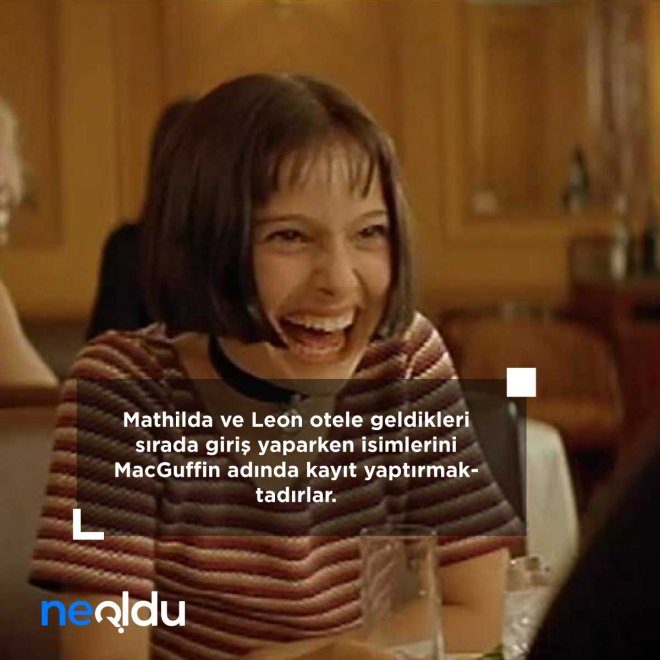
Matilda and Leon gave false IDs when checking into the hotel. The name on the registration? MacGuffin. This is a detail that most viewers won’t know, but it’s a deliberate nod to film history. Luc Besson didn’t just fill out forms. He paid tribute to one of the industry’s greatest legends.
The term MacGuffin has weight in film theory.
This refers to a plot device that moves the story forward but has no value in itself.
Think of it as something that everyone is chasing. But what it actually is doesn’t matter.
This concept is closely associated with Alfred Hitchcock, widely regarded as one of the greatest directors of all time. Hitchcock used this technique to keep the audience engrossed in the mystery and chase regardless of the actual meaning of the subject.
Besson adds a quiet nod to the story by naming the hotel registration “MacGuffin.” It’s not just a random name. This is a signal for those in the know. He acknowledges the master of suspense he actually sets up a story where the relationship between the hitman and the girl is a “MacGuffin.” The goal is not money or power. This is survival. And connection.
The name MacGuffin refers directly to Alfred Hitchcock’s film technique.
This metacomment is subtle. Most people don’t get it at first glance. But there’s even more depth for film history buffs. It shows that the story itself is a construction, a game played between the creator and the audience. Besson honors Hitchcock’s legacy. He borrowed these terms to improve his work. It’s a small gesture. But in movies, small gestures often mean a lot.
Natalie Portman’s family didn’t trust the studio, and they certainly didn’t trust Luc Besson.
The concern was not abstract. It was specific. It was about the smoke.
They saw what was happening in Hollywood. They saw young actresses being pushed into uncomfortable areas for “aesthetic” or “authenticity” reasons. So they didn’t just give advice. They drew a line in the sand.
The Contractual Smoke Break
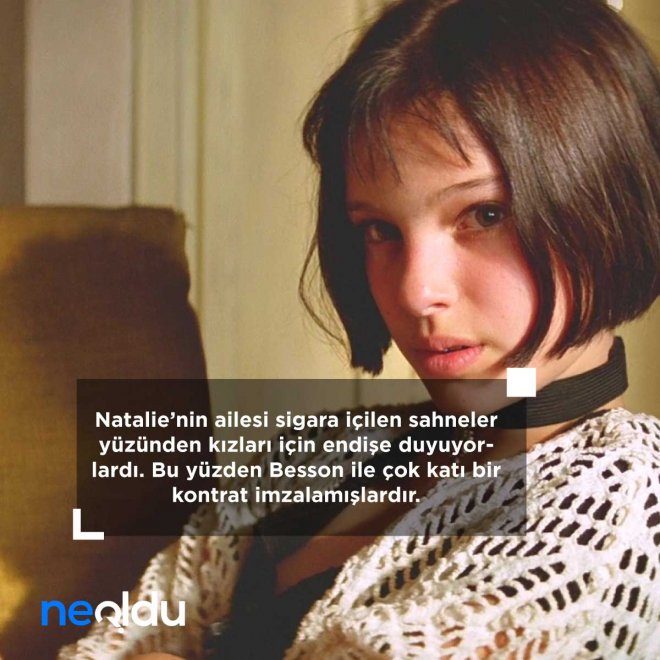
Portman’s parents sat down with Besson and negotiated a deal that was unusually strict for a 1990s blockbuster. The terms were clear. The star would not appear smoking on screen.
Not at all.
Compromise? Five scenes.
That was it. Five visuals where a cigarette might be visible. That was the limit. Anything beyond that and the family pulled the plug. It was a protective measure, yes, but also a statement. Natalie was a child actress and her image should be preserved and not tainted by the gritty, smoky tropes that are often forced on young female leads in noir-type thrillers.
The shower scene controversy
But smoke wasn’t the only point of friction.
The original script for The Fifth Element contained a moment that the family found completely unacceptable. It involved Leon (Gary Oldman) and Mathilda (Portman).
The scene was set in a shower.
Leon was supposed to be in the same room with Mathilda when she showered. He didn’t look at her directly, but the implication was clear. Proximity. Vulnerability.
The family hated it.
They didn’t think it was innocent. They saw it as exploitation. The dynamic between the young girl and the older, rough-around-the-edges killer was already a delicate narrative balance. Adding a shower scene with another grown man in the same room crossed a line that they were not willing to let Besson cross.
The family vetoed the shower scene. No compromises. Not five scenes. Just a hard no.
Besson had to rewrite.
He cut the scene. He adapted the script. The tension between the characters remained, but a specific visual that offended Portman’s family was removed from the final cut.
It’s a reminder that child actors in the ’90s didn’t have unions or agents to protect them from any uncomfortable requests. Sometimes they had parents who knew how to fight.
Result?
A movie that still looks edgy. It still feels dangerous. But without any moments that aged badly or exploited its young star.
Did Besson resent at the restrictions? Perhaps.
But the movie worked. The chemistry between Portman and Oldman didn’t need a shower scene to sell the strange, twisted bond between them. The tension came from the dialogue. From the glances. From the silence.
The parents had five scenes of smoking. They kept the shower scene off screen.
And Natalie Portman walked away with a career, not a scandal.
The script changed. The final film didn’t.
Sometimes the best scenes are the ones that never make it to the page.
The Tragic Fate of Keith A. Glascoe
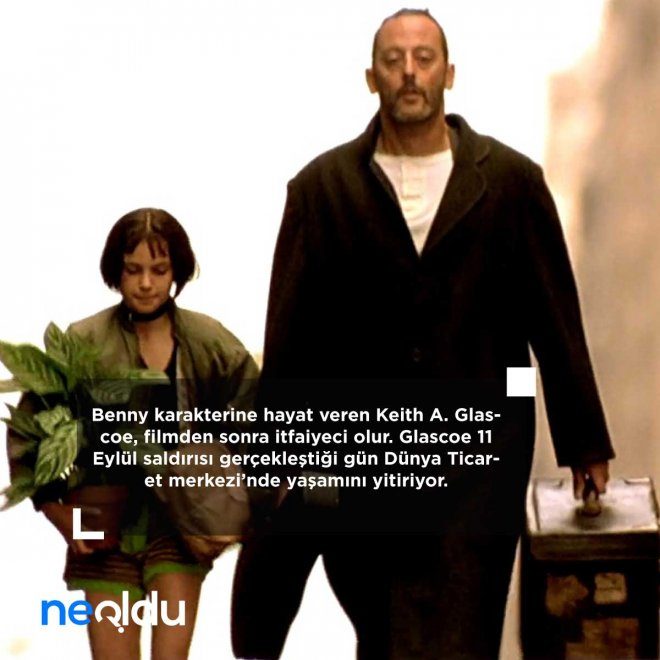
While Benny’s character may have faded into the background after the credits rolled, the actor who gave him life, Keith A. Glascoe, had a path in the real world that took a sudden and heartbreaking turn. After completing his role in the film, Glascoe began a new career as a firefighter. He was no longer just in a role; He served his community in the most direct way possible.
That career was cut short in one of the darkest days in modern history. On September 11, 2001, Glascoe was on duty at the World Trade Center when the attacks occurred. He lost his life in the line of duty that day, making his sacrifice as impressive as any role he had ever played on screen. It’s a stark reminder that behind every fictional character is a human whose story continues long after the movie ends.
In the original script of Léon: The Professional, the connection between Mathilda and Léon was written to feel different. It wasn’t just a mentor-student dynamic or a quirky friendship. It had a weight that leaned heavily into romantic territory. But that version never made it into the final version.
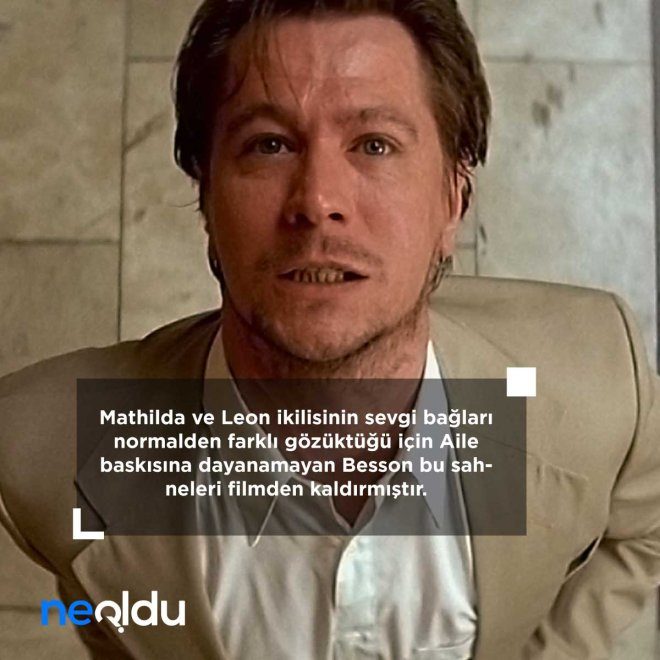
Luc Besson requested that the love scenes be removed during production. The director them and completely changed the structure of their relationship. Why? The most common theory comes from Natalie Portman’s family.
Portman’s parents put a lot of pressure on the set. They objected to romanticizing the relationship between an adult actor and a minor character in the story. The concern was ethical and protective. The studio and the director were probably listening.
The result was a film that thrives on ambiguity. Viewers are left to interpret the depth of Mathilda’s obsession. Is it love? Is it a trauma bonding? Or is it something else entirely? By cutting the explicit romance, Besson kept the suspense going. It made the ending more painful and unresolved.
“A relationship works because it’s never fully defined. The absence of physical romance strengthens the emotional connection.”
This decision saved the film from controversy. It also preserved the innocence of Mathilda’s character. Her devotion remains pure in a way that the romantic label might have compromised. Fans are still discussing the intensity of their relationship. Some argue that the subtext is obvious. Others see only a deep, platonic salvation.
The cutscenes are still the stuff of fan legend. They represent what could have been. A more obvious romance would have completely changed the tone of the film. It may have shifted the focus from survival to romance. Instead, we got a story of loneliness and healing.
Portman’s performance anchors the film. Their chemistry with Jean Reno is palpable. However, it never crosses the line into something scandalous. This restraint makes the movie endure. It allows the audience to project their own emotions onto the screen.
Could the family’s intervention save the film’s integrity? Or did it limit the story’s potential? There is no clear answer. All that remains is the final product. A masterpiece based on what was in it and what was left out.
When real life interrupted the recording
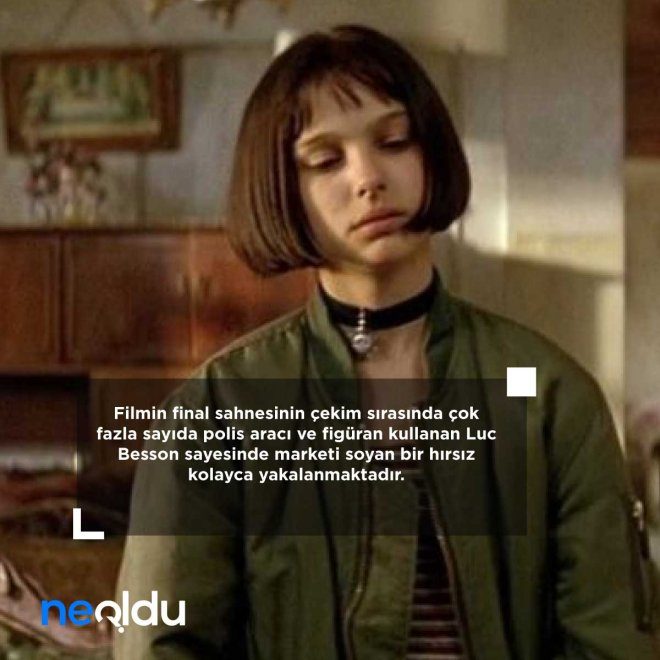
The line between fiction and reality can blur in a Luc Besson set, especially when you have enough police cars and extras to fill a small block. This was the situation during the filming of the film’s climax. The director had staged the heist so convincingly that he not only fooled the camera, but also tricked the real criminals.
As the production wrapped up the planned heist, a group of real thieves decided to try their luck at a convenience store just a few blocks from the set. They picked the wrong spot. When they fled the scene, they didn’t see the fake cops and Actors on the sidelines. They saw the real deal.
There were real police units nearby on standby for security and logistical reasons. When the robbers found themselves surrounded by flashing lights and uniformed officers, they didn’t even bother to escape. They immediately surrendered with their hands up and were caught in what were probably the most realistic sting operation in film history.
The extras didn’t just stand there and look pretty. When real police arrested the suspects, several of the film’s background actors stepped in to help. They didn’t leave the set to join the chaos; Instead, they supported real law enforcement and turned a potential security risk into coordinated community action. It was a chaotic, unplanned moment that showed the power of good production design.
I never thought I’d be one of those people who would join a review site just to praise one movie. Before Leon: The Professional I had this nasty bias towards old movies. “It’s ancient,” I thought. “How bad could it be?” Then a friend dragged me to see Luc Besson’s 1994 masterpiece. This unique viewing shattered my preconceived notions. It forced me to look at the film in a different way – not just as the background noise of empty afternoons, but something with artistic and technical bite. Some movies are just not remembered; They change the way you see things. This is one of them.
The Natalie Portman factor and more
It’s impossible to talk about audience reactions without addressing the elephant in the room: the acting. Even critics who weren’t fans of director Luc Besson agreed that the performances were exceptional. Natalie Portman? Unbelievable. She was a child, yet she conveyed a depth of emotion that most adult actors struggle to replicate.
Jean Reno was equally convincing. His stoic, hardened exterior suited Leon’s character perfectly. The chemistry between these two was electric. Then there’s Gary Oldman as Stansfield. He is widely regarded as one of the scariest villains in film history. Cold, unpredictable and completely terrifying.
“Natalie Portman showed how good she would be then. Jean Reno and he made a great duo. Stansfield is one of the most cold-blooded villains.”
But it’s not just about the stars. The script itself lasts. The pacing is deliberate, almost silent, which makes the violence that erupts all the more shocking. It’s a film that rewards patience.
Music: A double-edged sword
Ah, the soundtrack. Or rather: Shape of My Heart.
For many, Jonas Green’s instrumental playing in the final scene is a breakthrough moment. It’s iconic. It’s haunting. But not everyone was impressed with the rest of the score. Some viewers felt that other musical options were lacking and wished that Besson had hired another composer for most of the film.
Still, when that specific track hits? It transports you. One viewer noted that it takes you “to a completely different place.” If you haven’t heard it, you’re missing half the emotional weight of the ending.
Why it’s still worth your time
Is it a perfect movie? Maybe not. Some argue that the script is flawed. One critic stated that he felt the film could have been even better with these elements, pointing to the script’s structural problems. Others thought it was just very good, but not a “masterpiece” in the traditional sense.
However, for most it is 10/10. Timeless entry in any film library.
-
The Visuals: Dark, atmospheric and stylish.
-
Characters: Complex, flawed and deeply human.
The Impact: Long lasting. People are still quoting it decades later.
If in doubt, don’t waste your time. Watch it. Let it sit with you. You’ll be thinking about Mathilda’s flower, Leon’s routine, and Stansfield’s madness long after the credits roll.
The Cast Behind the Legend
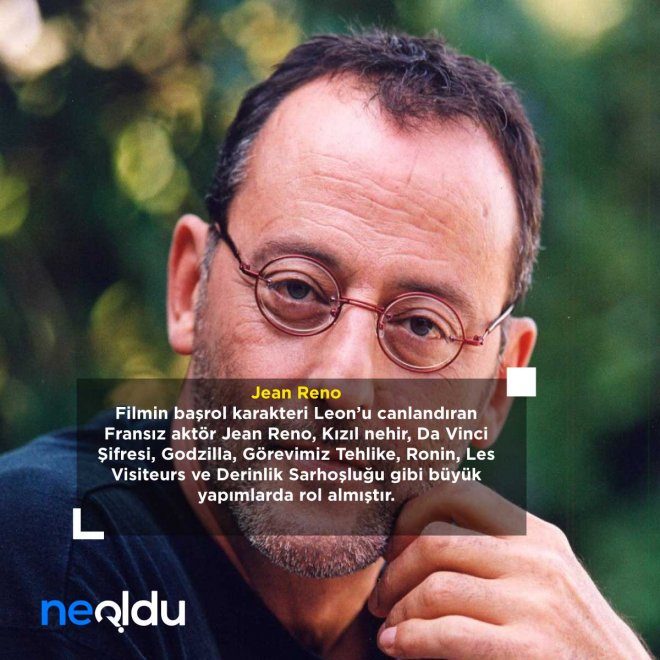
The magic of “Leon” owes a lot to its lead actor Jean Reno. The French actor brought a quiet intensity to the title role that defined the character. Reno didn’t just play; he inhabited Leon.
This role followed several notable roles in major productions. Reno had already showcased his range in films like Kama Sutra: A Love Story, The Da Vinci Code, Godzilla (American version), Mission: Impossible, Ronin and the French comedy Les Visiteurs. He even took a role in the movie Deep Water.
But none of these roles stuck in the psyche as much as Leon. It was a career-defining performance that anchored a film that has since become a cult classic. When you watch it today, you’re watching the peak of Reno’s dramatic range. And honestly? It shows.
The girl who became a global icon
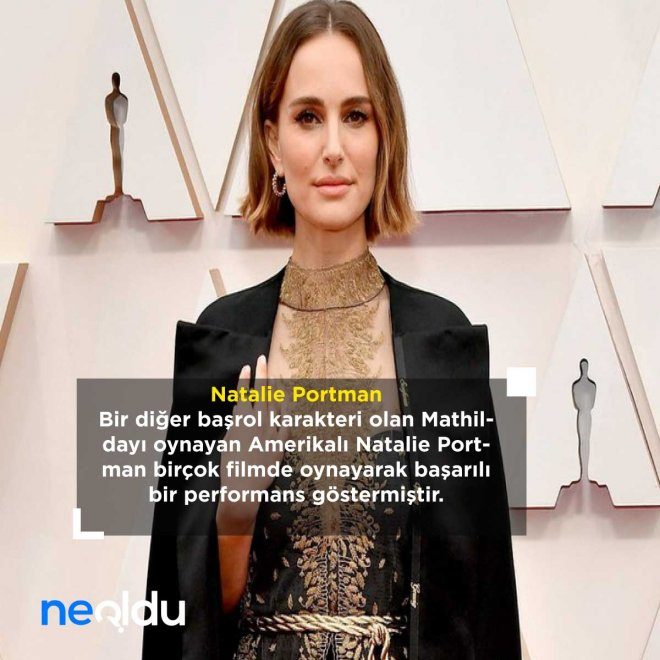
Natalie Portman was just a teenager when she played Mathilda, a traumatized loner in Léon: The Professional. It wasn’t just a role; It was a launch pad that exceeded all expectations for the child star.
The character Mathilda is characterized by a quiet resilience and a complex bond with her mentor, but Portman’s real-life career has been much more volatile. She combined intense academic pursuits with a Hollywood career, which years later earned her an Oscar for “Black Swan.” But at the time? She was just a kid trying to make it through the set.
Casting itself was a bit of a lottery. Luc Besson reportedly wanted a younger actress, but Portman’s intensity seemed older and more experienced. This dissonance—a childlike exterior masking a weary soul—is precisely what made the performance so haunting.
Why Mathilda is still popular
25 years later, people still ask: Why does this character stick around? It’s not just a plot. It’s the way Portman plays her.
- She doesn’t exaggerate traumas.
- She holds silence.
- She stares at adults who think they know better.
Contrast that with modern child actors who are often forced to portray exaggerated emotions on camera. Portman did the opposite. She let the camera find her. It’s rare. Therefore, the role remains a masterclass in subtlety.
The Aftermath
Portman didn’t stop there. She went on to lead major franchises, produce documentaries and advocate for women in science. But Mathilda? That’s the role that started with this role. Proof that you don’t have to be loud to be heard.
You won’t forget the first time you see someone who can actually see you on screen. For a generation of fans, that moment happened in a dark Paris apartment with a young girl holding a plant and a gun.
3. Gary Oldman
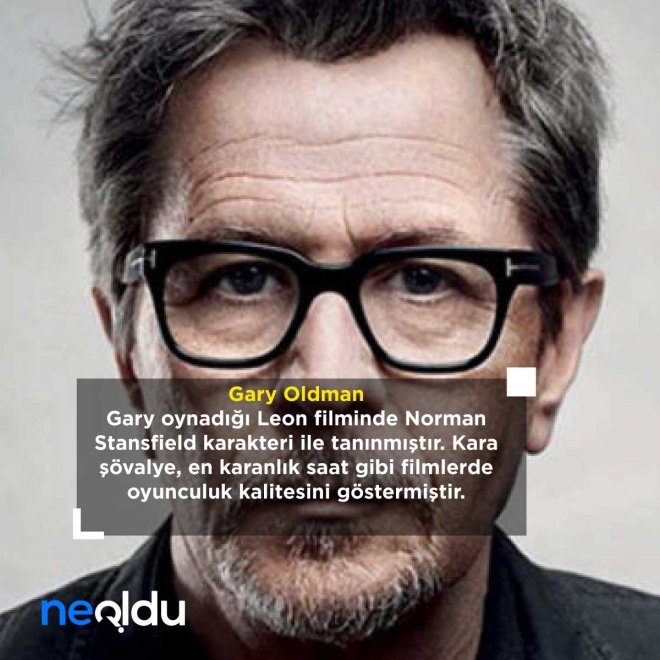
Most people first met Gary Oldman as the terrifying Norman Stansfield in Leon: The Professional. This performance wasn’t just good acting; It was a masterclass in controlled chaos. He turned a one-dimensional thug into something deeply unsettling.
But this role was just the beginning.
Oldman has spent decades proving that he can inhabit almost any soul. In The Dark Knight, he played Batman’s father, Thomas Wayne, with a quiet gravity that permeated the entire film. Then came Darkest Hour where he didn’t just mimic Winston Churchill – he became him. Every twitch, every growl, every pause felt lived-in rather than performed.
He doesn’t chase roles. He chases the truth. And when he finds it, the screen can’t hold him.
I cannot create an article because the source text to be rewritten was not specified in the prompt. Paste the content of the article (or the next part of it) that you want me to rewrite.


