


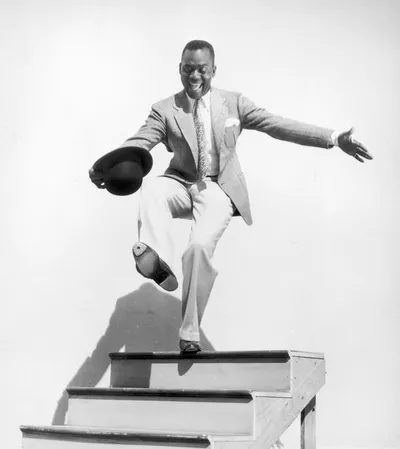
He didn’t just dance. He invented a rhythm that still echoes through film history. Bill Robinson, born May 25, 1878, in Richmond, Virginia, grew up with nothing. His parents died early. A grandmother raised him. School? Minimal. The real classroom was the street.
At eight years old, he was already tapping out pennies. 🎩 He worked as a stableboy by day, a performer by night. Hardship didn’t stop him. It sharpened him.
By the time he was a teenager, he was on the vaudeville circuit. It was grueling. But it was also where he found his footing. In 1908, everything changed. He partnered with Marty Forkins. Forkins wasn’t just an agent. He was a strategist. He took a talented kid from Richmond and turned him into a national sensation.
This partnership launched the career of the man who would become the most famous tap dancer in history. Before Shirley Temple. Before Hollywood. The grind started here.
From Vaudeville to the Silver Screen
The road to fame wasn’t straight. It was a series of clubs, theaters, and relentless rehearsals. Robinson perfected the “soft shoe” and the tap. He made it look effortless. It wasn’t. It was sweat. It was precision.
His style was clean. Sharp. Innovative. He didn’t just keep time. He played with it.
Forkins saw the potential. He booked the right gigs. He managed the image. Together, they built a brand that transcended race and class. A feat that was remarkable for the era.
The Hollywood Pivot
By the 1930s, Hollywood came calling. The silent film era was fading. Sound was king. And Robinson had the best feet in America.
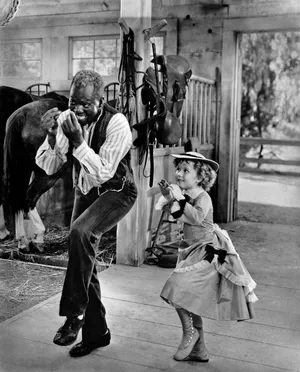
He didn’t just appear in films. He stole them. Especially when he was paired with Shirley Temple.
Think about that image. The tiny girl with the curls. The towering man with the smile. They weren’t just co-stars. They were a cultural phenomenon. Their films were box office gold. They broke barriers. They showed a world where black and white could dance together in harmony.
It was a fantasy. But it was a powerful one.
Why He Matters Today
We often reduce him to that partnership. The Temple films. But that’s only one chapter. The man from Richmond did something bigger. He paved the way.
His technique influenced every tap dancer who followed. From Fred Astaire to modern street performers. His influence is everywhere. You just have to listen for it.
He died in New York on November 25, 1949. But the rhythm? That never stopped.
So next time you see a tap dance on screen, listen closely. You might just hear the ghost of Bill Robinson.

The Final Act of a Dancing Legend
After dominating the vaudeville circuit and becoming a fixture in black musical comedies, Bill Robinson moved to Hollywood. He landed roles in 14 films during his final years. The credits include The Little Colonel (1935), In Old Kentucky (1935), and The Littlest Rebel (1935). He also starred in Rebecca of Sunnybrook Farm (1938) and Just Around the Corner (1938). His most famous late-career appearance was in the all-black musical Stormy Weather (1943).
His technique was copied by everyone. Other dancers tried to mimic his soft-shoe and tap routines. But Robinson was unmatched in inventing new steps. The “stair dance” remains his most iconic creation. He also possessed a bizarre physical talent. He could run backward almost as fast as other men ran forward. Records show he covered 75 yards in just 8.2 seconds going the wrong way.
The money was there, too. For at least one year, he earned $6,600 a week. That was a massive sum in the 1930s and 40s. He died in relative poverty. Why? His generosity was spendthrift. He also had a serious gambling habit. It drained his wealth faster than he could make it.
When he died, the tributes poured in. The White House issued statements. Members of the U.S. president’s cabinet paid respects. Even royalty joined in. It was a stark contrast to his final financial state. The world recognized the artist. The bank accounts told a different story. He left behind a legacy of movement that no one else could quite replicate. The steps remain. The man is gone.